
Beautiful Plants For Your Interior
Beautiful Plants For Your Interior
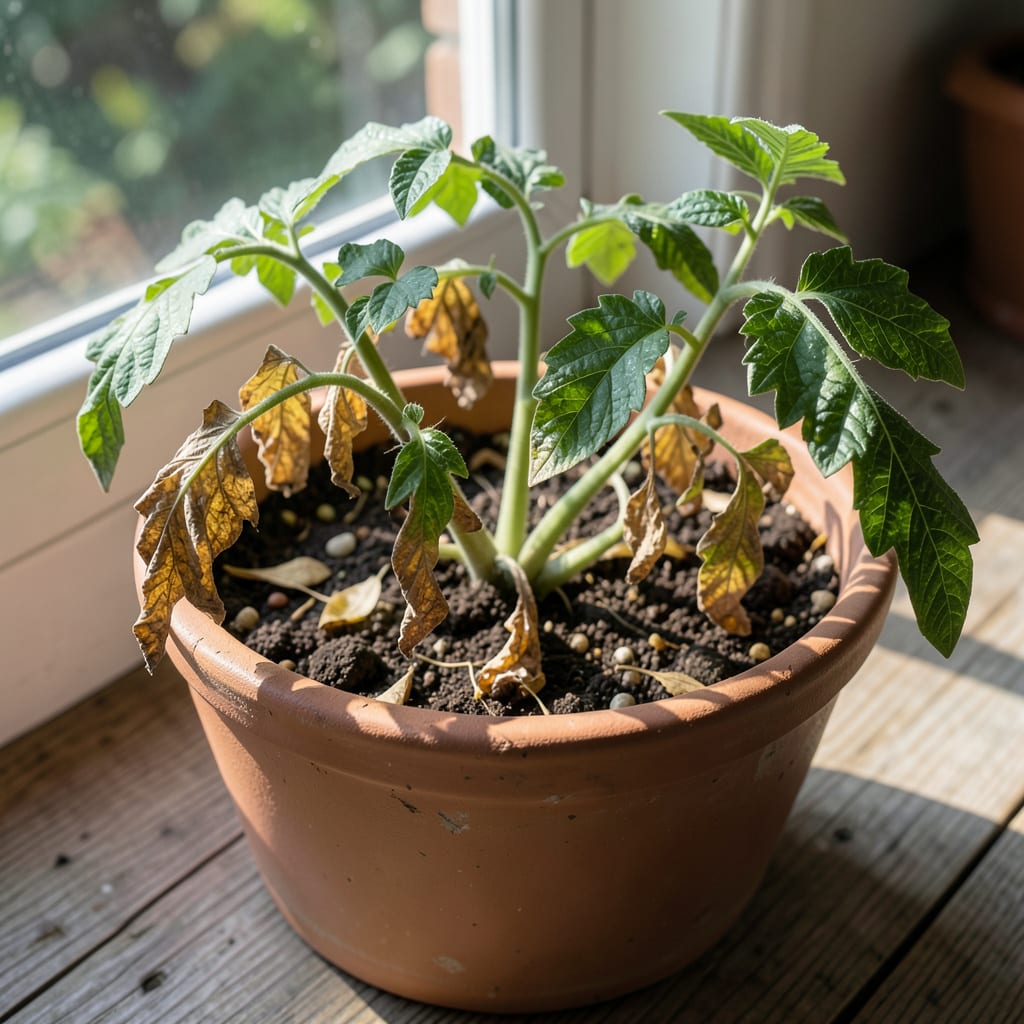
Your tomato seedlings were thriving yesterday. Today, their leaves are crispy, yellow, or wilting. I’ve been there—watching hope turn to compost in 24 hours.
Most of the time, it’s not disease but something simpler: too much water, not enough light, or a draft from that open window. The fix is often just adjusting your routine.
With the right steps, those sad seedlings can bounce back in 3-5 days. You’ll see new growth pushing through, green and strong, like they’re thanking you.
This guide walks you through the rescue process, from spotting the first warning signs to nursing them back to health. Let’s save those plants.
Tomato seedling leaves can wilt, yellow, or die due to several environmental or biological stressors. Identifying the root cause is key to rescuing your plants. Below are the most frequent culprits behind this issue.
Excess water suffocates roots, preventing oxygen uptake and leading to Phytophthora or Pythium root rot. Seedlings in waterlogged soil develop yellowing leaves (chlorosis) that eventually die. Ensure containers have drainage holes and use a well-draining potting mix with perlite or vermiculite.
Too little light causes etiolation—weak, leggy seedlings with pale or dying leaves. Conversely, intense direct sunlight can scorch tender foliage, causing necrotic (brown, crispy) patches. Aim for 12–16 hours of indirect light daily or use grow lights at 6–12 inches above seedlings.
Tomatoes thrive at 70–80°F (21–27°C) during the day and 60–65°F (15–18°C) at night. Cold drafts (<50°F/10°C) or heat spikes (>90°F/32°C) disrupt cellular function, leading to leaf death. Use heat mats for cold frames and shade cloth for excessive heat.
Early blight (Alternaria solani) or bacterial leaf spot (Xanthomonas spp.) cause dark spots with yellow halos on leaves, progressing to necrosis. These pathogens thrive in humid conditions. Improve airflow, avoid overhead watering, and apply copper-based fungicides preventatively.
Nitrogen deficiency causes uniform yellowing of older leaves, while calcium deficiency (blossom end rot precursor) may lead to distorted, dying new growth. Use a balanced, water-soluble fertilizer (e.g., 10-10-10) and supplement with crushed eggshells or calcium nitrate for calcium needs.
Don’t panic—your tomato seedlings can bounce back with the right care. Below are targeted fixes for the most common causes, plus prevention tips to keep your plants thriving.
Fix: Check soil moisture by sticking your finger 1 inch deep. If dry, water gently at the base (avoid wetting leaves). If soggy, stop watering and let the soil dry slightly. For severe overwatering, repot in fresh, well-draining soil.
Prevent: Use a moisture meter or the “lift test” (a light pot needs water; a heavy one doesn’t). Water in the morning to reduce evaporation. 💡 Pro tip: Terracotta pots dry out faster—opt for plastic if you tend to underwater.
Fix: Move seedlings to a spot with 12–16 hours of bright, indirect light daily. If leaves are scorched (brown/white patches), add a sheer curtain to diffuse sunlight. For leggy, pale seedlings, supplement with a grow light 2–4 inches above the plants.
Prevent: Rotate seedlings daily for even growth. Start seeds under grow lights if natural light is weak. ⚡ Quick fix: A south-facing window is ideal for most climates.
Fix: Yellowing lower leaves? Likely nitrogen deficiency—feed with a balanced liquid fertilizer (10-10-10) at half strength. Purple stems or leaf undersides? Add phosphorus (try fish emulsion). For calcium deficiency (new leaves curl), use crushed eggshells or calcium nitrate.
Prevent: Use a quality seed-starting mix with compost. Avoid over-fertilizing; seedlings need gentle nutrition. 🌱 Pro tip: Yellow top leaves often mean iron deficiency—add chelated iron.
Fix: For aphids or whiteflies, spray with neem oil or insecticidal soap (test on one leaf first). Fungal issues (spots, mold)? Remove infected leaves and improve airflow. Use a baking soda spray (1 tsp baking soda + 1 quart water + a drop of soap) for mild cases.
Prevent: Keep seedlings spaced apart, avoid overhead watering, and sterilize tools. 🛡️ Pro tip: A small fan on low can deter pests and prevent fungal spores from settling.
Water when the top 1 inch of soil feels dry. This usually means every 2-3 days in warm conditions. Always water at the base to keep leaves dry and prevent disease.
Unfortunately, yellow leaves won’t recover, but new growth will be healthy once you address the issue. Focus on fixing the root cause—like adjusting water or adding nutrients—to support fresh leaves.
Use a grow light placed 2-4 inches above seedlings for 12-16 hours daily. If using natural light, a south-facing window works well, but rotate plants for even exposure.
Overwatered seedlings have yellow, wilted leaves and soggy soil. Underwatered ones show dry, crispy leaves and light, dry soil. Stick your finger in the soil to check moisture levels.
