
Beautiful Plants For Your Interior
Beautiful Plants For Your Interior
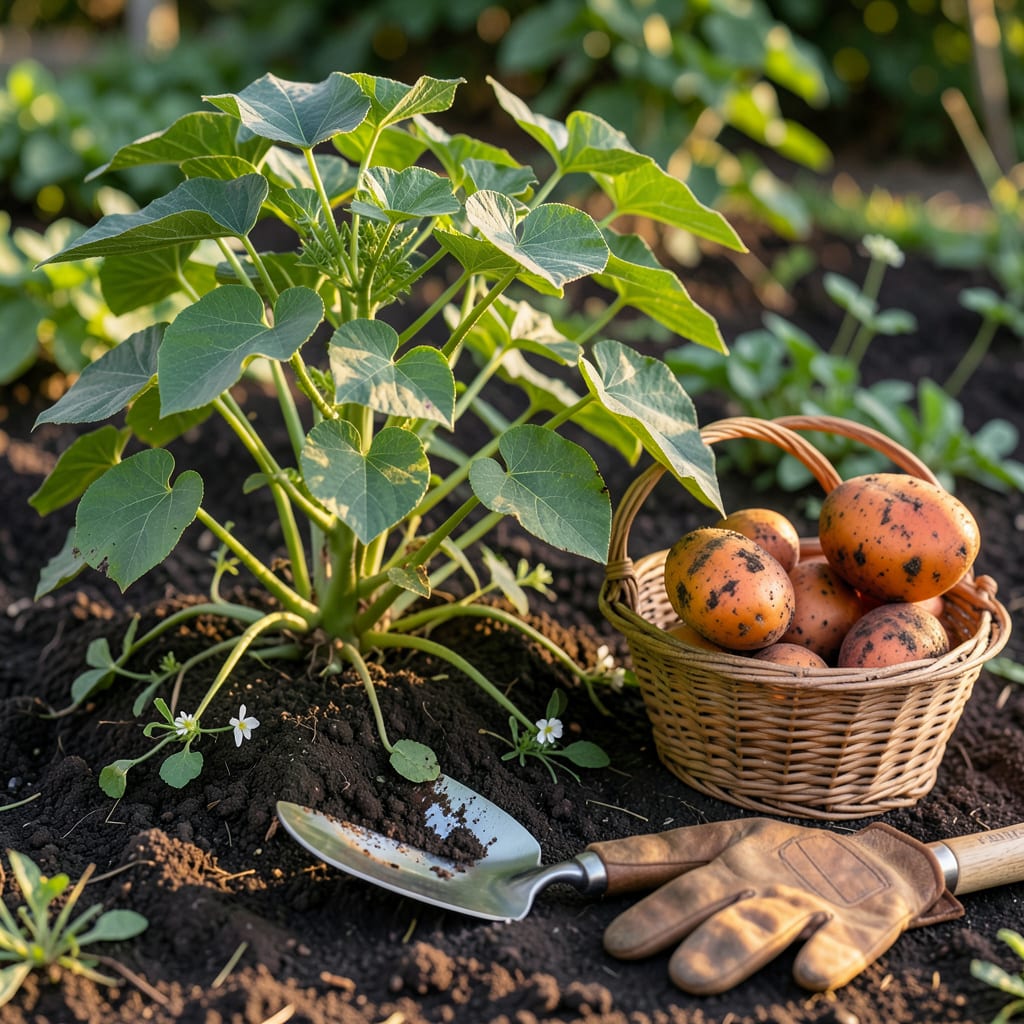
Timing your sweet potato harvest can make or break your crop. Pull too early and you’ll get small, starchy tubers; wait too long and frost might ruin everything.
For the 🍠 Sweet Potato in zone 6, September – October is your golden window. I’ll show you exactly how to tell when they’re ready to come out of the ground.


I always watch for visual cues that my sweet potatoes are ready. The first sign is when the leaves begin to yellow, which typically happens as the plant matures.
Another clear indicator is when the vines slow their growth or start to decline. This usually occurs around 90-120 days after planting, depending on the variety.
| Sign | What to Look For |
| Leaf Color | Yellowing leaves signal maturity |
| Vine Growth | Slowed or stopped vine growth |
| Tuber Size | 3-5 inches long is ideal |
| Skin Texture | Firm and tough skin resists scratching |
| Days to Maturity | 90-120 days from planting |
I check the tuber size by gently feeling around the base of the plant. When they reach 3-5 inches in length, they’re usually ready to harvest.
The skin texture is another giveaway. If it’s firm and tough, the sweet potatoes are mature. If it’s still soft, they need more time in the ground.
I also pay attention to the days to maturity for my specific variety. Most sweet potatoes take between 90 and 120 days to reach their full potential.
In my experience, Beauregard varieties are ready around 100 days, while Georgia Jet might be ready a bit earlier at 90 days.
Remember, these are just guidelines. Your local climate conditions and soil quality can affect the exact timing. When in doubt, I dig up one plant to check.
If you see frost warnings in the forecast, it’s time to harvest immediately. Sweet potatoes can’t tolerate frost, and cold damage will ruin your crop.
I’ve learned that harvesting too early results in small, starchy tubers, while waiting too long can lead to oversized, fibrous sweet potatoes that are less flavorful.
By keeping an eye on these visual and environmental signs, you’ll know exactly when to dig for the best flavor and yield 🌱
I’ve found that weather patterns play a huge role in when my sweet potatoes are ready. Warm, consistent temperatures between 75-85°F speed up maturity, while cooler spells can delay it.
Soil conditions matter just as much. Well-draining, loamy soil that stays warm helps tubers develop faster. Heavy clay or cold soil can slow growth significantly.
In my garden, I notice sweet potatoes mature faster in sandy soil because it warms up quicker in spring. If you have cool soil, consider using black plastic mulch to help warm it.
Drought conditions can stress the plants and lead to smaller tubers. I
Conversely, too much rain can cause cracking or rotting. I’ve learned to improve drainage with raised beds in wetter areas of my garden.
Watch the 10-day forecast as harvest time approaches. If temperatures are dropping below 50°F at night, it’s time to dig, regardless of other signs.
By understanding how these environmental factors interact, you can fine-tune your harvest timing for the best results ☀️
I’ve made my share of harvesting mistakes with sweet potatoes over the years. One of the biggest is digging too early, which gives you small, underdeveloped tubers.
Another common error is waiting too long. If you leave them in the ground past maturity, they can become oversized and fibrous, losing their sweet flavor.
⚠️ Warning:
Avoid these harvesting pitfalls to protect your crop. Frost damage ruins tubers instantly, and rough handling causes bruising that leads to rot during storage.
I once lost a whole crop by not checking the weather forecast. A sudden cold snap hit, and my sweet potatoes were exposed to freezing temperatures, which turned them mushy.
Always use a gentle touch when digging. I recommend using a garden fork and working carefully around the plant to avoid piercing the tubers.
After harvesting, many gardeners skip the curing process. This step is crucial as it helps the skin toughen and enhances the sweetness. I cure mine in a warm, humid place for about 10 days.
By avoiding these common mistakes, you’ll enjoy a better harvest with sweeter, longer-lasting sweet potatoes 🌱
Most varieties reach maturity in 90-120 days after planting. Early types like Georgia Jet may be ready in 90 days, while Beauregard typically needs about 100 days
Digging before maturity results in small, starchy tubers with underdeveloped sweetness. The skin will be soft and easily damaged, and the flavor won’t be as rich or sweet.
No, they cannot tolerate frost. Cold damage makes tubers mushy and inedible. Always harvest before the first frost to protect your crop
Wait until soil temperature reaches at least 60°F. In cooler climates, use black plastic mulch to help warm the soil faster in spring
