
Beautiful Plants For Your Interior
Beautiful Plants For Your Interior
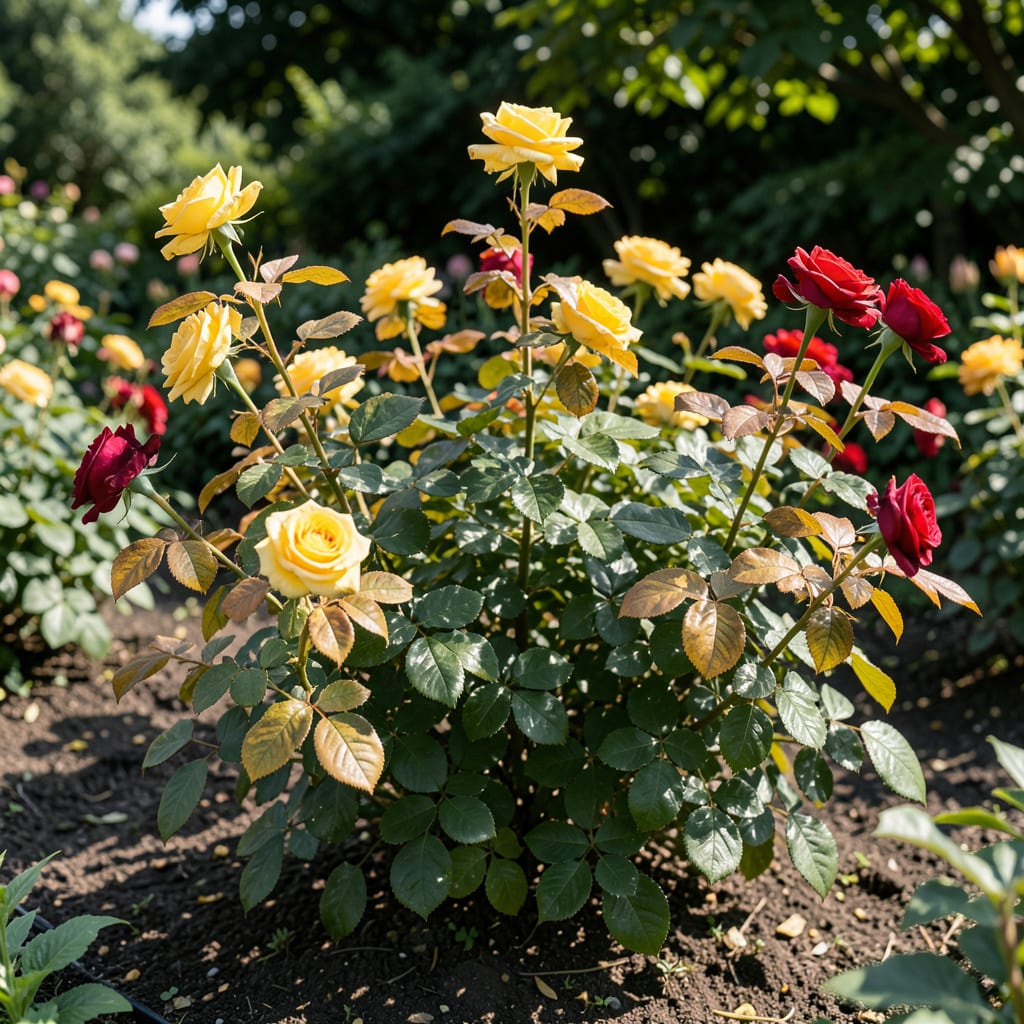
Yellow leaves on rose bushes always feel like a gut punch. I’ve stood in my garden more than once, staring at sad, fading foliage and wondering where I went wrong.
Turns out, it’s usually one of a few culprits: too much water, not enough nutrients, or a sneaky pest. The good news? Each has a simple fix once you know what you’re dealing with.
With a little detective work and the right adjustments, those bushes will bounce back faster than you’d think. I’ve saved every rose I’ve ever grown with these steps.
No fancy tools or degrees in botany required—just observation and a willingness to tweak your routine.
Yellowing leaves on rose bushes, known as chlorosis, are a visual distress signal from your plant. The causes range from cultural practices to environmental stressors. Here’s a breakdown of the most common culprits:
Roses are heavy feeders, and a lack of essential nutrients often shows up as yellow leaves. Nitrogen deficiency typically causes uniform yellowing across older leaves first, as the plant redirects nitrogen to new growth. Iron deficiency, common in alkaline soils (pH above 7.0), leads to yellowing between the veins of young leaves, while veins stay green. Magnesium deficiency also causes interveinal yellowing but appears on older leaves first. A soil test will pinpoint the exact shortage.
Inconsistent moisture levels stress roses. Overwatering suffocates roots, reducing their ability to absorb nutrients, while underwatering limits the uptake of water-soluble nutrients like nitrogen. Both can trigger yellowing, often starting at the edges or tips of leaves. Check soil moisture 2 inches deep—it should feel like a wrung-out sponge. Roses prefer deep, infrequent watering (1–2 inches per week) over daily light sprinkles.
Sap-sucking pests like aphids, spider mites, or thrips drain nutrients from leaves, causing yellowing or stippling. Fungal diseases such as black spot (Diplocarpon rosae) or powdery mildew (Podosphaera pannosa) disrupt photosynthesis, leading to yellow patches. Inspect leaf undersides for pests or dark spots, and remove infected foliage promptly to prevent spread.
Extreme temperatures, poor drainage, or sudden changes in light exposure can shock roses. Heat stress may cause leaf scorch (brown edges with yellow halos), while cold drafts or frost can lead to widespread yellowing. Roses planted in full shade often develop chlorosis due to insufficient light for chlorophyll production. Aim for at least 6 hours of sunlight daily and mulch to stabilize soil temperature.
Addressing yellow leaves on your rose bushes starts with identifying the root cause. Below are practical fixes mapped to common issues, along with prevention tips to keep your roses thriving.
If the issue is a lack of nutrients, test your soil to confirm deficiencies. For nitrogen deficiency, apply a balanced fertilizer (10-10-10) or organic options like compost. For iron or magnesium shortages, use chelated iron supplements or Epsom salt solutions (1 tablespoon per gallon of water).
Prevention tip: Feed roses every 4-6 weeks during growing season. 💡
Check soil moisture by inserting your finger 2 inches deep. If it’s soggy, reduce watering and improve drainage with mulch or sand. If dry, water deeply 2-3 times weekly, ensuring the root zone gets moisture.
Prevention tip: Use drip irrigation to avoid wetting foliage, which can cause fungal issues. 🌡️
For black spot or powdery mildew, remove infected leaves and apply fungicide (neem oil or copper-based). Improve airflow by pruning dense growth. For bacterial leaf scorch, prune affected branches and disinfect tools between cuts.
Prevention tip: Space plants properly and avoid overhead watering. ✨
Inspect leaves for aphids, spider mites, or thrips. Blast pests off with water or use insecticidal soap. For severe cases, apply horticultural oil or introduce beneficial insects like ladybugs.
Prevention tip: Regularly spray with a mild soap solution to deter pests. 🎯
With these targeted solutions, your rose bushes will regain their vibrant green leaves and flourish! 🌹
Roses thrive with 1-2 inches of water per week. Water deeply 2-3 times weekly rather than daily light sprinkles. Always check soil moisture 2 inches deep first.
A balanced 10-10-10 fertilizer works for general health. For iron deficiency, use chelated iron. For magnesium, try Epsom salt (1 tablespoon per gallon).
Yes, heat stress can scorch leaves, causing yellow halos with brown edges. Roses need 6 hours of sunlight daily but benefit from afternoon shade in extreme heat.
Blast pests off with water or use insecticidal soap. For severe cases, apply horticultural oil. Introduce beneficial insects like ladybugs for long-term control.
