
Beautiful Plants For Your Interior
Beautiful Plants For Your Interior
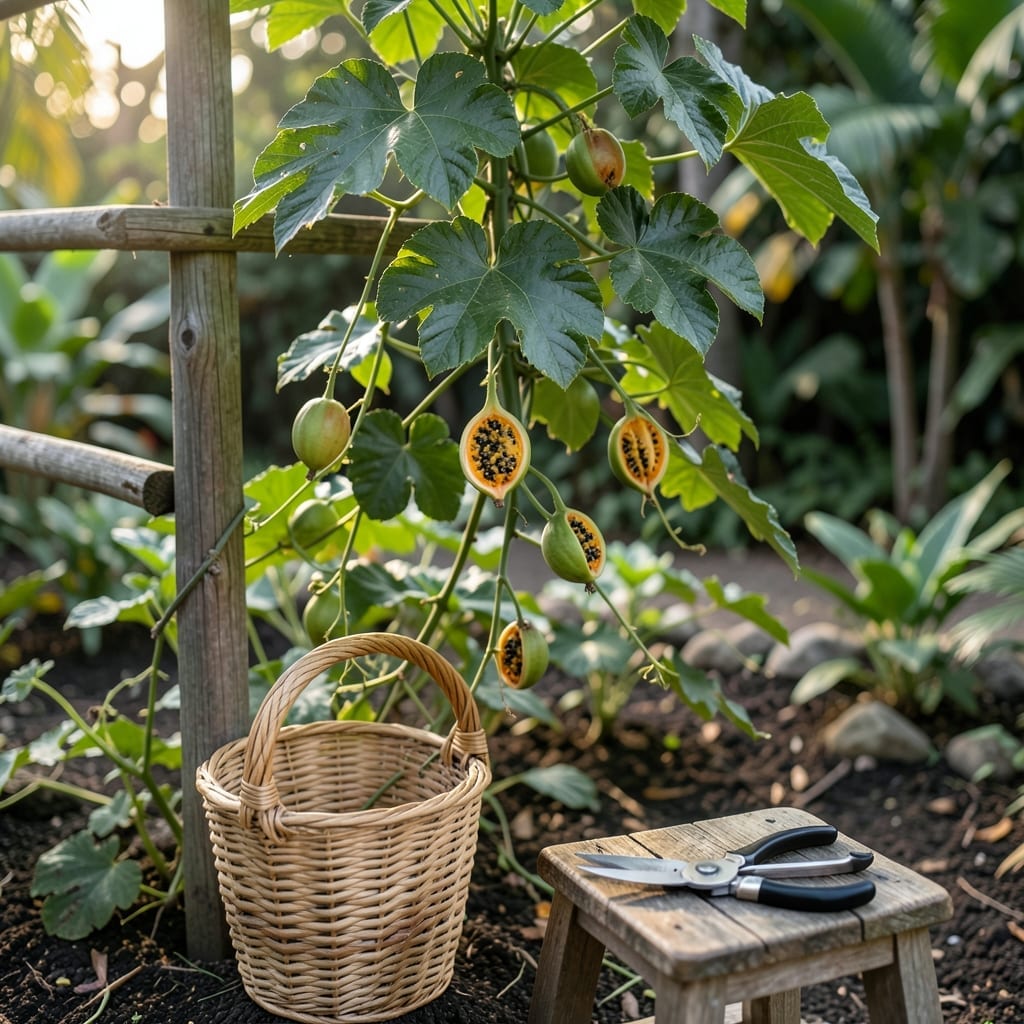
There’s nothing quite like the taste of a perfectly ripe 🧡 Passion Fruit, but timing your harvest can be tricky. One day too early, and you’ll get a mouthful of sour disappointment.
I’ve learned that color is your most important clue, but it’s not as simple as just waiting for it to turn. The transformation from green to purple or yellow tells a story.
You’ll want to watch for subtle changes that signal sweetness. The skin’s texture and aroma also play a role in confirming it’s ready.
Let me show you how to spot the perfect moment to pick your Passion Fruit for that burst of tropical flavor you’ve been waiting for.


I’ve found that the ripe passion fruit color is the most reliable indicator for harvest time. Most varieties transition from bright green to deep purple, maroon, or golden yellow as they mature. This change signals the fruit is nearing peak sweetness.
The skin texture also transforms, often developing slight wrinkles. For Purple Granadilla, the shift to a rich violet hue means it’s almost ready. I always check for these visual cues before picking.
| Varieties | Ripe Color | Texture Change |
|---|---|---|
| Purple Granadilla | Deep purple | Slightly wrinkled |
| Yellow Maracujá | Golden yellow | Smooth to dimpled |
| Banana Passionfruit | Pale yellow | Firm with soft spots |
I always remind gardeners that color alone isn’t enough. The skin should dimple slightly when fully ripe, especially for Yellow Maracujá. This wrinkling indicates the fruit is at its sweetest stage.
For Banana Passionfruit, the transition to pale yellow is subtle. I look for a soft give when gently squeezed. This variety often ripens off the vine, so I harvest when it’s mostly yellow and let it finish indoors.
The aroma is another key indicator. A ripe passion fruit emits a sweet tropical scent. I sniff the stem end—if it smells strongly fragrant, it’s ready to pick. This works for all varieties in my garden.
I’ve noticed that underripe fruits stay firm and green with no aroma. If the color hasn’t changed, I leave it on the vine. Picking too early results in tart, underdeveloped pulp that lacks sweetness.
For overripe passion fruits, the skin becomes very wrinkled and may split. While still edible, the pulp can be fermented or mushy. I aim to harvest just as the color deepens and wrinkles appear.
I recommend checking fruits daily during the ripening window. The transition from unripe to ripe can happen quickly, especially in warm climates. A morning check and evening check help me catch the perfect moment.
Remember, passion fruit vines thrive in USDA zones 9b-11. In my experience, fruits ripen faster in full sun with consistent watering. These conditions help develop the best color and flavor.
By combining color, texture, and aroma checks, I rarely miss the ideal harvest time. This method ensures every passion fruit I pick is bursting with tropical sweetness. 🌿
Many gardeners assume that color alone determines ripeness, but this can lead to early picking. A deep purple or golden yellow hue is important, but texture matters just as much. I’ve seen fruits with perfect color that were still hard and sour inside.
Another common error is ignoring the skin’s wrinkling. Slight shriveling indicates sweetness, but over-wrinkling means the fruit is past its prime. Balance is key when assessing both color and texture together.
⚠️ Avoid These Ripeness Pitfalls
Relying only on color can trick you—always check firmness and aroma too. Picking too early results in tart fruit, while waiting too long leads to fermented pulp.
Timing your harvest is just as critical as the visual cues. I recommend checking fruits daily once they near maturity. Passion fruits can go from underripe to overripe in just 2-3 days during warm weather.
Don’t forget that variety matters. Purple passion fruits darken to nearly black, while yellow varieties turn bright gold. Knowing your specific plant type helps set the right expectations for ripeness.
Lastly, always use your sense of smell. A ripe passion fruit emits a strong, sweet aroma that’s hard to miss. If it doesn’t smell fragrant, it’s likely not ready for picking, regardless of color.
With practice, you’ll develop an eye for the perfect harvest window. The combination of color change, slight wrinkling, and sweet scent never fails me in my garden. ☀️