
Beautiful Plants For Your Interior
Beautiful Plants For Your Interior
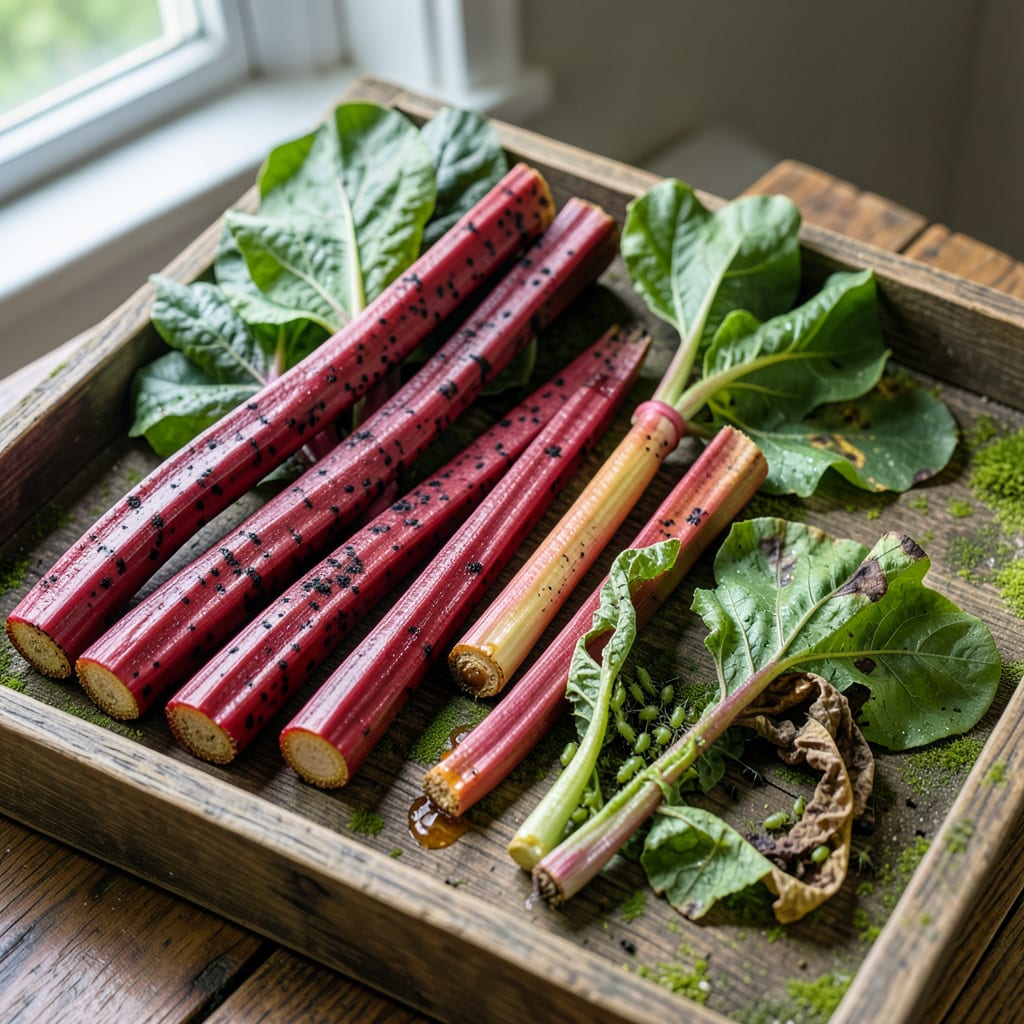
Your rhubarb patch tells a story, and I’ve learned to read the signs early. Spotted leaves, wilted stalks, or chewed edges aren’t just annoyances—they’re clues to what’s threatening your harvest.
Most issues start with poor airflow, wet foliage, or uninvited pests setting up shop. I’ve lost entire plants to crown rot and saw my stalks turn to mush overnight from bacterial leaf spot. Prevention beats cure every time.
With the right approach, you can salvage healthy stalks and protect next year’s crop. Organic sprays, companion planting, and simple hygiene practices keep problems from spreading.
Works for backyard patches, raised beds, or even container-grown rhubarb. Let’s decode the symptoms before it’s too late.
Understanding why rhubarb falls prey to diseases and pests starts with recognizing the underlying causes. These issues rarely stem from a single factor but rather a combination of environmental, biological, and cultural conditions. Below are the primary culprits behind rhubarb diseases and pests, explained with actionable insights.
Rhubarb thrives in cool, moist climates, but extreme conditions can weaken the plant, making it vulnerable. Drought stress reduces the plant’s ability to fend off pathogens, while waterlogged soil encourages root rot and fungal growth. Poor drainage or compacted soil exacerbates these issues, creating an ideal breeding ground for diseases like Phytophthora crown rot. Solution: Ensure consistent moisture with well-draining soil and mulch to retain water without suffocating roots.
Many rhubarb diseases, such as Ramularia leaf spot or Botrytis (gray mold), are caused by fungal spores that thrive in damp, humid conditions. Bacteria like Pseudomonas can also lead to leaf spots and stem decay. These pathogens spread through infected plant debris, contaminated tools, or splashing water. Solution: Remove and destroy infected foliage, rotate crops, and avoid overhead watering to minimize spore dispersal.
Pests such as rhubarb curculios, aphids, and slugs are drawn to stressed or weakened rhubarb plants. Curculios lay eggs in the stalks, leading to internal damage, while aphids spread viruses like rhubarb mosaic. Slugs and snails chew through leaves, creating entry points for secondary infections. Solution: Use row covers to deter pests, handpick invaders, and apply organic pesticides like neem oil when necessary.
Improper planting, lack of rotation, or neglecting sanitation can invite trouble. Planting rhubarb in the same spot year after year depletes soil nutrients and allows disease organisms to build up. Failing to clean up fallen leaves or debris provides hiding spots for pests and pathogens. Solution: Practice a 3–4 year rotation, remove plant debris after harvest, and fertilize with compost to maintain soil health.
Tackling rhubarb diseases and pests starts with quick action and smart prevention. Below are practical fixes for the most common problems, along with tips to keep your plants thriving.
If your rhubarb shows wilting leaves and black, mushy crowns, stop watering immediately and check for poor drainage. Dig up affected plants, trim off rotted sections with sterilized shears, and replant in well-draining soil. Add compost to boost soil health. Prevention tip: 💡 Plant rhubarb in raised beds or slopes to avoid waterlogging.
Spot clusters of green or black aphids on new shoots? Use a strong stream of water to dislodge them, or wipe leaves with a soapy water solution (1 tsp mild soap per liter of water). Introduce ladybugs or lacewings for natural control. Prevention tip: ✨ Encourage beneficial insects by planting companion flowers like marigolds nearby.
White, powdery spots on leaves call for action. Remove infected foliage and avoid overhead watering. Apply a baking soda spray (1 tbsp baking soda + 1 tsp dish soap + 1 gallon water) weekly. Prevention tip: 🌡️ Space plants 3–4 feet apart for better air circulation and full sun exposure.
These snout beetles lay eggs in stems, causing wilting. Inspect plants daily in spring, and drop beetles into soapy water. Remove and burn infested stalks. Prevention tip: 🎯 Rotate crops and clear plant debris in fall to disrupt their lifecycle.
Brown or yellow spots with dark edges? Prune affected leaves and apply copper fungicide as directed. Avoid working with wet plants to prevent spread. Prevention tip: 💡 Water at the base in the morning so foliage dries quickly.
Brown spots often indicate fungal infections like Ramularia leaf spot or bacterial issues. Remove affected leaves immediately and avoid overhead watering. Apply copper fungicide for severe cases.
Ensure well-draining soil and avoid waterlogging. Plant in raised beds if drainage is poor. Remove any black, mushy crowns immediately to stop the spread.
Blast them off with water or use a soapy water solution. Introduce ladybugs or lacewings for natural pest control. Plant marigolds nearby to deter them.
Yes! Remove infected leaves and improve airflow. A baking soda spray (1 tbsp per gallon) works well. Space plants 3–4 feet apart to prevent recurrence.
