
Beautiful Plants For Your Interior
Beautiful Plants For Your Interior
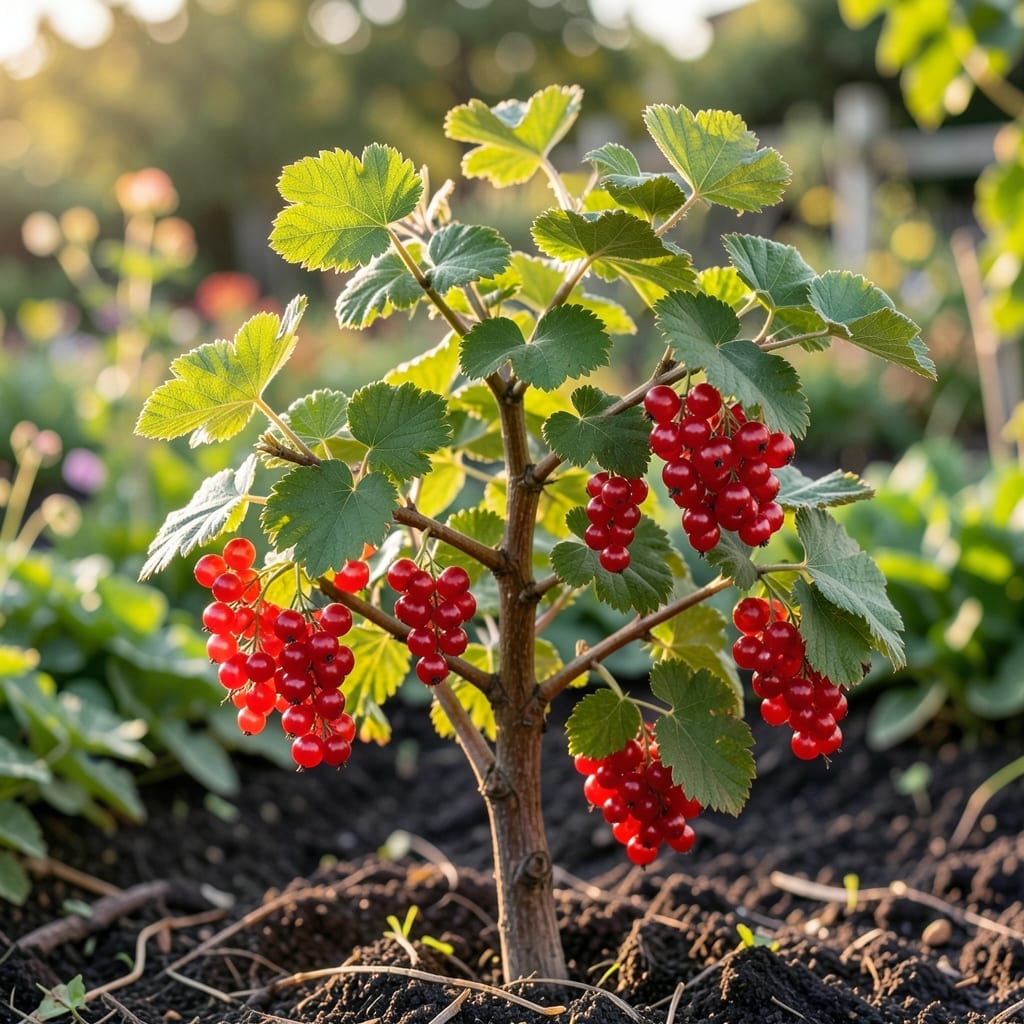
If you’re planning to add a Red Currant Bush to your garden, knowing its mature size is the key to success. These hardy shrubs can reach 3 to 5 feet tall and wide, making them perfect for small spaces or as a productive hedge.
But here’s the thing: their final dimensions depend on the variety and how you care for them. Some stay compact, while others spread out more if left unpruned.
I’ll walk you through what to expect from different cultivars and how growing conditions affect their growth. Whether you want a tidy shrub or a lush berry producer, you’ll learn how to manage it.
Let’s make sure your 🍇 Red Currant Bush fits perfectly in your landscape without any surprises.

When planning your garden, knowing the mature size of a red currant bush is essential for proper spacing and care. Most varieties reach 3 to 5 feet tall with a similar spread, but exact dimensions vary by cultivar.
Popular choices like ‘Red Lake’ and ‘Jonkheer van Tets’ typically grow to 4-5 feet tall and 3-4 feet wide. These shrubs have an upright, bushy habit that fills space beautifully in landscapes.
| Variety | Height | Spread | Notes |
|---|---|---|---|
| Red Lake | 4-5 ft | 3-4 ft | Heavy producer, disease-resistant |
| Jonkheer van Tets | 4-5 ft | 3-4 ft | Early fruiting, upright growth |
| Rovada | 3-4 ft | 3-4 ft | Compact, ideal for small gardens |
| Perfection | 3-5 ft | 3-4 ft | Cold-hardy, consistent yield |
The Rovada cultivar stays more compact at 3-4 feet tall and wide, making it perfect for smaller spaces or container gardening. Its manageable size doesn’t sacrifice fruit production.
For gardeners with limited space, dwarf varieties like ‘Cherry Red’ may only reach 2-3 feet in both height and spread. These are excellent for patios or as border plants.
Remember that growing conditions significantly impact final size. bushes in full sun with rich, well-draining soil will typically reach their maximum potential height and spread.
In partial shade, expect your red currant bushes to grow slightly smaller, often staying 1-2 feet shorter than their sun-grown counterparts. This makes them more manageable for some gardeners.
Proper spacing is crucial for healthy growth. I recommend planting standard varieties 4-5 feet apart to allow for good air circulation and easy harvesting.
For dwarf types, 3 feet apart is sufficient. This prevents overcrowding while still creating a lush, productive hedge effect when planted in rows.
Keep in mind that pruning can also control size. Regular annual pruning not only maintains your desired dimensions but also encourages better fruit production.
I’ve found that thinning out old wood each winter helps keep my bushes at a manageable 4 feet tall while promoting vigorous new growth for the next season.
I’ve found that red currant bushes don’t grow the same everywhere. Their mature size depends on several key factors, from soil quality to sunlight exposure. Understanding these can help you predict and manage growth effectively.
In my garden, well-draining soil and full sun produce the tallest, healthiest bushes. But even with ideal conditions, pruning practices and water availability play huge roles in final dimensions.
I notice that poor soil often stunts bushes to just 3 feet. Amending with compost before planting gives them a strong start. This small effort can add 1-2 feet to their height over time.
Another game-changer is sunlight exposure. My bushes in partial shade stay smaller, around 3-4 feet, while those in full sun reach the full 5 feet. This difference is striking in side-by-side comparisons.
Don’t underestimate pruning timing. I prune mine in late winter to remove old wood and shape the bush. This keeps them at 4 feet while promoting better berry production.
Finally, water stress can limit growth significantly. During dry spells, I water deeply twice weekly to maintain consistent moisture. This simple habit helps my bushes reach their full potential size. ✂️