
Beautiful Plants For Your Interior
Beautiful Plants For Your Interior
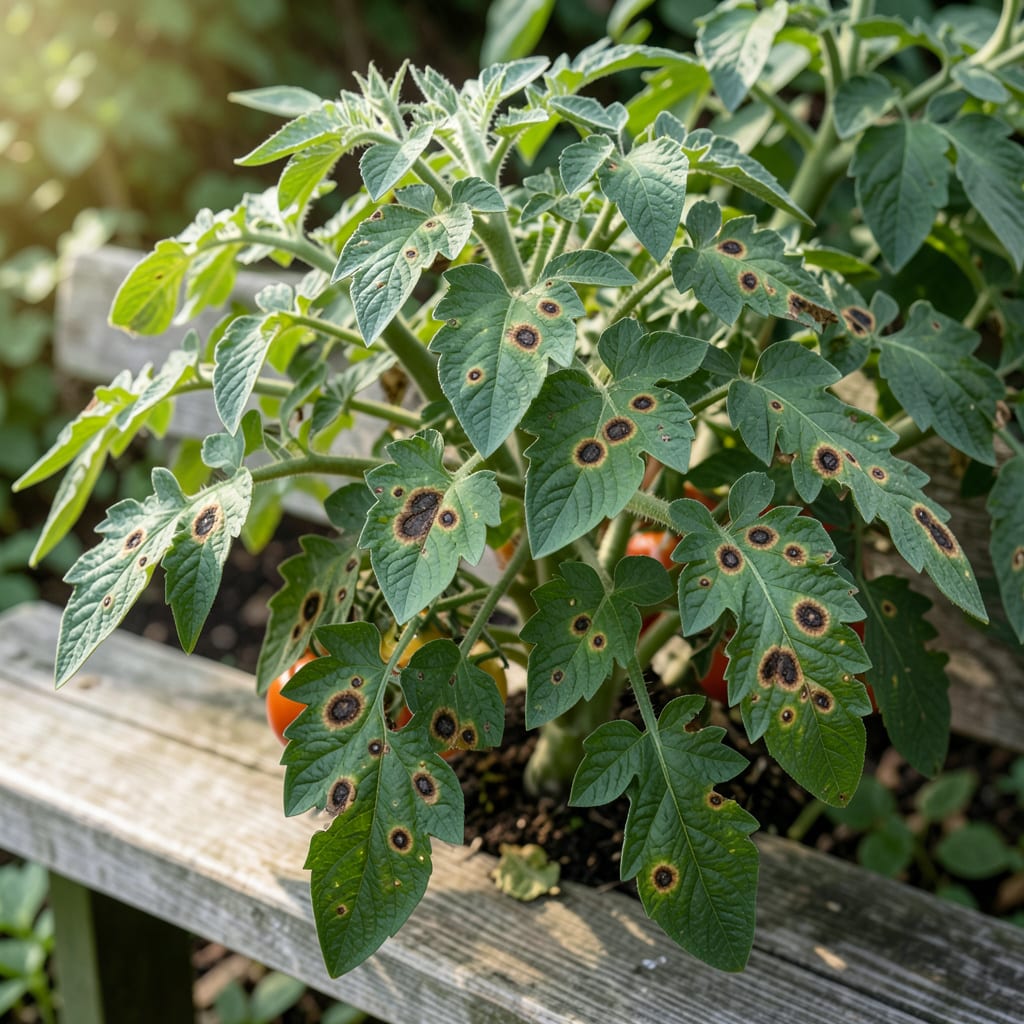
Those brown spots on your tomato leaves aren’t just ugly—they’re your plants waving a red flag. I’ve seen early yellowing, crispy edges, and spreading splotches ruin entire crops when ignored.
Most times it’s fungal—late blight or septoria—but it could be pests, water stress, or even sunscald. The key is catching it before it jumps from leaf to leaf, plant to plant.
Organic fixes like copper spray, neem oil, or baking soda solutions work if you act fast. Remove infected leaves first to stop the spread.
With the right diagnosis and quick action, your tomatoes can still produce a full harvest this season.
Brown spots on tomato leaves often signal underlying issues that can harm your plants. Here are the most common causes:
Fungi like Alternaria solani (early blight) and Septoria lycopersici thrive in warm, wet conditions. They produce spores that spread via water splashes, leading to concentric brown rings or irregular patches. Poor airflow and overhead watering accelerate their growth.
Bacteria such as Pseudomonas syringae cause small, water-soaked spots that turn brown and dry. These pathogens enter through wounds or stomata, often spread by contaminated tools or rain. High humidity and crowded plants worsen the problem.
Insects like aphids or whiteflies pierce leaf tissues, creating entry points for diseases. Their feeding can also cause direct brown spotting due to cell damage. Check the undersides of leaves for pests or sticky residue (honeydew).
Extreme heat, drought, or nutrient deficiencies (e.g., calcium or potassium) can manifest as brown leaf spots. Over-fertilization, especially with nitrogen, may also lead to leaf scorch. Inconsistent watering stresses plants, making them more susceptible to disease.
Herbicides, improperly diluted foliar sprays, or even hard water can cause localized brown spotting. Always test sprays on a small leaf area first and apply during cooler parts of the day to avoid damage.
Addressing brown spots on tomato leaves starts with identifying the root cause. Below are targeted, organic solutions for each common issue, along with prevention tips to keep your plants thriving.
Fix: Remove infected leaves immediately and discard them (do not compost). Spray the remaining leaves with a copper-based fungicide or a homemade mix of 1 tsp baking soda + 1 quart water + a few drops of dish soap. Apply every 7–10 days until the spots disappear.
Prevention: Space plants 2–3 feet apart for airflow. Water at the base in the morning to keep foliage dry. Rotate crops yearly to break fungal cycles.
Fix: Blast pests off with a strong stream of water, then apply neem oil or insecticidal soap to both sides of the leaves. Repeat every 5–7 days until pests are gone.
Prevention: Introduce beneficial insects like ladybugs or lacewings. Use reflective mulch to deter pests. Inspect leaves weekly for early signs.
Fix: For sunburn, provide shade cloth during peak afternoon hours. For under/overwatering, adjust your schedule: aim for 1–2 inches of water per week, deep at the roots. Mulch with straw to retain moisture.
Prevention: Plant in well-draining soil and use drip irrigation to avoid wetting leaves. Acclimate seedlings to sunlight gradually.
Fix: For calcium, add crushed eggshells to the soil or use a calcium-rich foliar spray. For magnesium, sprinkle Epsom salt (1 tbsp per gallon of water) at the base. Test soil pH and amend if it’s outside the 6.0–6.8 range.
Prevention: Enrich soil with compost before planting. Use a balanced organic fertilizer monthly.
💡 Pro Tip: Always sterilize pruning tools with rubbing alcohol between cuts to avoid spreading disease!
Fungal spots often have concentric rings or fuzzy edges, while bacterial spots are water-soaked with yellow halos. Check for dry, papery texture (fungal) vs. wet, oozing appearance (bacterial).
Yes, fungal and bacterial infections can spread quickly. Remove affected leaves immediately and avoid overhead watering to prevent splashing spores. Isolate severely infected plants if possible.
Yes, as long as the fruit itself shows no signs of disease. Wash tomatoes thoroughly before eating. Avoid consuming any fruit with visible spots or rot.
Organic sprays like neem oil or copper fungicide typically show improvement in 7-14 days. Consistency is key—reapply every 5-10 days until the issue resolves.
