
Beautiful Plants For Your Interior
Beautiful Plants For Your Interior
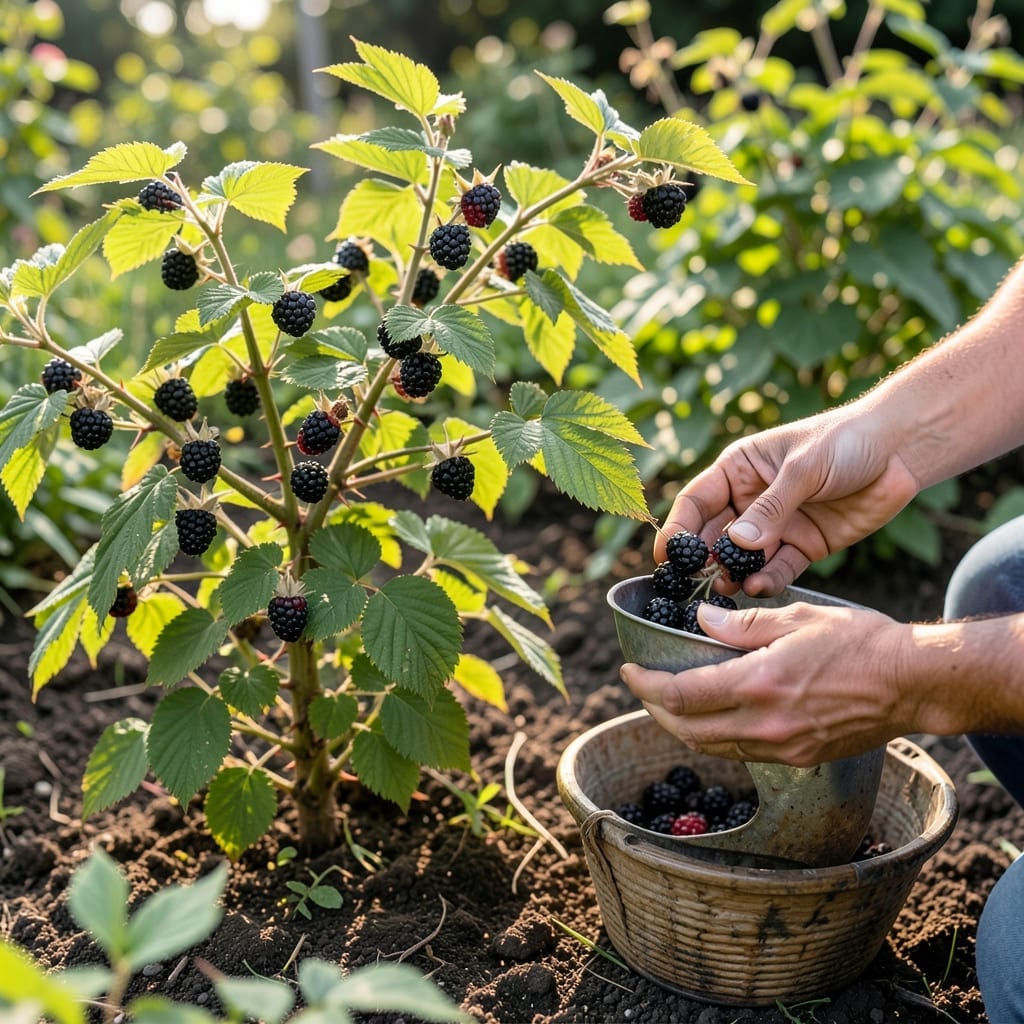
Black raspberries don’t wait for anyone. I learned this the hard way after missing peak ripeness by a single morning. The berries go from firm and tart to deep purple-black and sweet almost overnight.
Gentle handling is key—they bruise easily. Pick in the cool morning hours when they’re firmest, and use shallow containers to prevent crushing. Proper timing means fuller baskets and less waste.
📚 In This Guide
Here’s my field-tested method for harvesting at peak ripeness without damaging the canes or missing a single berry.
Black raspberries don’t ripen evenly like red varieties, so I check each cluster carefully. Look for berries that are deep black with a slight gloss—dull berries are overripe, and red or purple ones need more time. The core (receptacle) stays white when fully ripe, unlike blackberries where it turns dark.
Gently press a berry between your fingers. A ripe one yields slightly but doesn’t crush. If it stains your fingers purple, it’s ready. Underripe berries resist pressure and lack sweetness. I taste-test one or two from different parts of the plant to confirm the harvest window.
Black raspberries are more delicate than their red cousins. I cup the cluster in one hand and use the thumb and forefinger of my other hand to pinch the berry at its base. Pull with a slight twist—this separates the berry from the receptacle cleanly. Never yank; you’ll tear the fruit and leave the core attached.
Work slowly and methodically. If a berry resists, it’s not ready. Forcing it damages the cane and reduces next year’s yield. I place picked berries directly into a shallow container to prevent crushing from stacking. A wide, flat basket works best for this fragile fruit.
The best time to pick is early morning after the dew has dried but before the heat of the day sets in. Berries are firmer and less prone to bruising at this time. I avoid harvesting in the midday sun, as the fruit softens quickly and the canes become more brittle.
If rain is forecast, I pick the day before. Wet berries spoil faster and are more likely to develop mold. I also check the weather for the previous 24-48 hours—berries swell after a good rain, making them easier to remove from the receptacle.
Black raspberry canes are biennial: the primocanes (first-year growth) produce fruit the following season. I avoid stepping on or bending the canes while picking, as this can break next year’s fruiting wood. I also watch for thorns—black raspberries have finer, sharper thorns than blackberries, so long sleeves and gloves are essential.
If I notice diseased or damaged canes during harvest, I mark them for removal later. Pruning during harvest spreads disease and stresses the plant. Instead, I make a mental note or tie a ribbon around the cane to address it after picking is complete.
Black raspberries spoil faster than many other berries, so I process them within 24 hours of picking. For short-term storage, I spread them in a single layer on a tray lined with paper towels and refrigerate. This prevents moisture buildup and extends their freshness for 2-3 days.
For longer storage, I freeze them on a tray first to prevent clumping, then transfer to airtight containers. They’ll keep for 8-12 months this way. If I’m making jam or syrup, I start the process the same day—black raspberries lose their vibrant flavor quickly once picked.
Small details make the difference between a mediocre haul and a bountiful harvest of perfect berries.
Ripeness Test: In Step 1, the purple stain on your fingers is the surest sign of ripeness. I’ve found that berries without this stain often lack the deep, complex flavor we’re after. The glossy appearance is equally important—dull berries are past their prime and may ferment quickly.
Technique Refinement: For Step 2, the pinch-and-twist method works best when you position your fingers precisely at the berry’s base. I learned the hard way that gripping higher up often leaves the receptacle attached, which ruins the fruit’s appearance and texture. A shallow container is crucial here, as even a few stacked berries at the bottom will crush under their own weight.
Timing Wisdom: Step 3’s early morning window is non-negotiable for quality. Berries picked after 10 AM in summer heat often soften within hours, making them unusable for anything but immediate jams. I’ve also noticed that canes are most pliable in cooler morning temperatures, reducing the risk of snapping next year’s fruiting wood.
Storage Strategy: For Step 5, that 24-hour processing window is critical. Black raspberries deteriorate faster than most fruits due to their high sugar content and thin skins. The paper towel trick in short-term storage absorbs excess moisture, which is the primary cause of mold development during those 2-3 days in the fridge.
Black raspberries are typically ready in early to mid-summer, usually June or July. Pick them when they’re deep black, slightly soft, and easily detach from the plant. Avoid harvesting in damp conditions to prevent mold.
Wear long sleeves, gloves, and sturdy pants to protect against thorns. Use a small basket or container to gently collect berries without pressing too hard into the brambles.
No! Black raspberries are smaller, hollow inside when picked, and have a more intense, tart flavor. Blackberries are larger, solid when harvested, and slightly sweeter.
Sour or firm berries aren’t ripe yet—wait a few more days. Black raspberries don’t ripen after picking, so only harvest fully black, plump fruits for the best taste.