
Beautiful Plants For Your Interior
Beautiful Plants For Your Interior
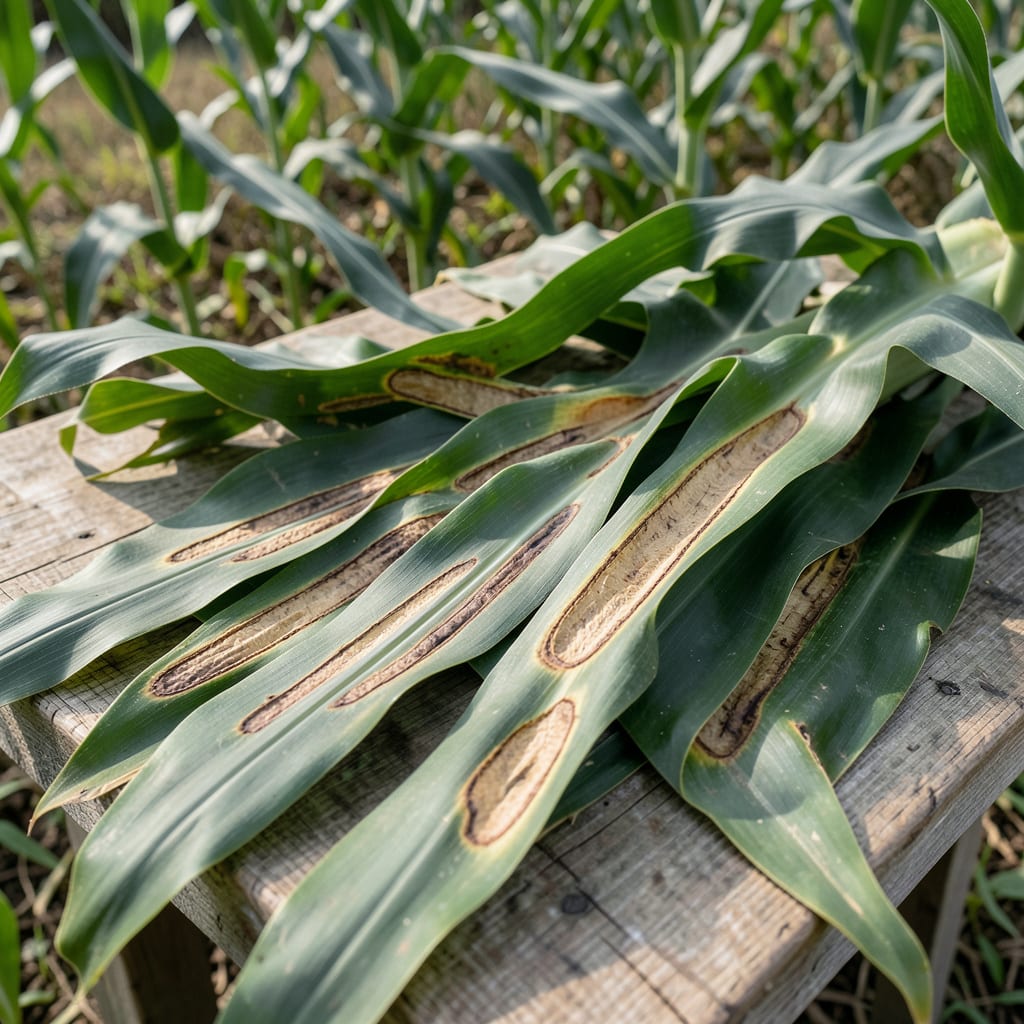
Gray-green lesions on your corn leaves mean trouble. I first spotted northern corn leaf blight in my patch three summers ago—long, cigar-shaped spots that spread fast in wet weather.
The culprit is a fungus that thrives in cool, damp conditions. It overwinters in crop debris, so rotation and cleanup are your first defense. I learned the hard way that dense plantings and overhead watering just invite it back.
Catching it early changes everything. Remove infected leaves immediately and switch to resistant varieties next season. Copper fungicides work too, but timing is everything—apply at first sign.
Works for backyard plots and larger plantings alike. Here’s how to spot it before it spreads.
Northern corn leaf blight is primarily caused by the fungal pathogen Exserohilum turcicum. This pathogen thrives under specific environmental conditions, making understanding its triggers key to prevention and management.
The fungus flourishes in warm, humid environments. Temperatures between 64–81°F (18–27°C) paired with prolonged leaf wetness (from rain, dew, or irrigation) create the perfect breeding ground. Areas with high rainfall or poor airflow are especially vulnerable, as moisture allows spores to germinate and infect corn leaves.
Not all corn is equally at risk. Genetically susceptible hybrids, particularly those lacking resistance genes (e.g., Ht genes), are more prone to infection. Farmers planting monocultures or non-resistant varieties year after year may see recurring outbreaks, as the pathogen adapts and spreads more easily.
E. turcicum overwinters in corn residue left on fields. When infected plant debris decomposes slowly, it releases spores that can infect new crops the following season. No-till or reduced-till farming without proper residue management increases the risk, as the fungus persists in the soil and stubble.
Spores travel efficiently via wind and splashing water, moving from plant to plant or even field to field. Crowded plantings with limited air circulation accelerate infection rates, as spores land on wet leaves and quickly take hold. Proper spacing and field hygiene can reduce this spread.
Northern corn leaf blight can be managed effectively with the right approach. Below are practical solutions tailored to common causes, along with prevention tips to keep your crops healthy.
If you spot the telltale long, grayish lesions on your corn leaves, act fast. Prune and destroy infected leaves to prevent the fungus from spreading. Burn or bury the removed foliage—do not compost it, as this can reintroduce the pathogen. Sanitize your tools with a 10% bleach solution after pruning to avoid contamination.
Prevention tip: Space plants properly 💡 to improve airflow and reduce humidity, which fungi love.
Excess moisture is a major trigger for this disease. If your field or garden has poor drainage, amend the soil with organic matter like compost to enhance water movement. For container-grown corn, ensure pots have drainage holes and use a well-draining potting mix.
Prevention tip: Avoid overhead watering 🌡️—use drip irrigation to keep leaves dry and less susceptible to fungal spores.
Some corn varieties are more vulnerable to northern corn leaf blight than others. Switch to resistant hybrids labeled with Ht (for Helminthosporium turcicum resistance) to minimize risk. Check seed catalogs or consult local agricultural extensions for recommendations suited to your region.
Prevention tip: Rotate crops ✨ annually to break the fungal lifecycle—avoid planting corn in the same spot year after year.
If the disease is widespread, use a registered fungicide containing active ingredients like azoxystrobin or propiconazole. Follow label instructions carefully, and apply during the early stages of infection for best results. Organic growers can opt for copper-based fungicides, though these are best used preventatively.
Prevention tip: Monitor leaves regularly 🎯, especially during warm, humid weather, to catch issues early.
Look for long, cigar-shaped lesions that are gray-green or tan. These typically appear first on lower leaves and can grow up to 6 inches long. They often have a slightly water-soaked appearance at the edges.
Under ideal conditions for the fungus (warm, humid weather), it can spread throughout a field in as little as 7-10 days. Wind and rain help move spores between plants.
Yes, the disease affects leaves, not the ears. However, severe infections can reduce yield and plant vigor. Always wash produce thoroughly before consumption.
Rotating with non-host crops like soybeans for at least 1 year breaks the fungal lifecycle. This is one of the most effective prevention methods.
