
Beautiful Plants For Your Interior
Beautiful Plants For Your Interior
Mealybugs turn healthy plants into sticky, struggling messes overnight. I’ve lost count of how many orchids and succulents I nearly gave up on—until I discovered how neem oil stops these pests in their tracks. The cottony white clusters disappear, the sticky residue fades, and plants actually recover instead of just surviving. Here’s what changed everything: […]
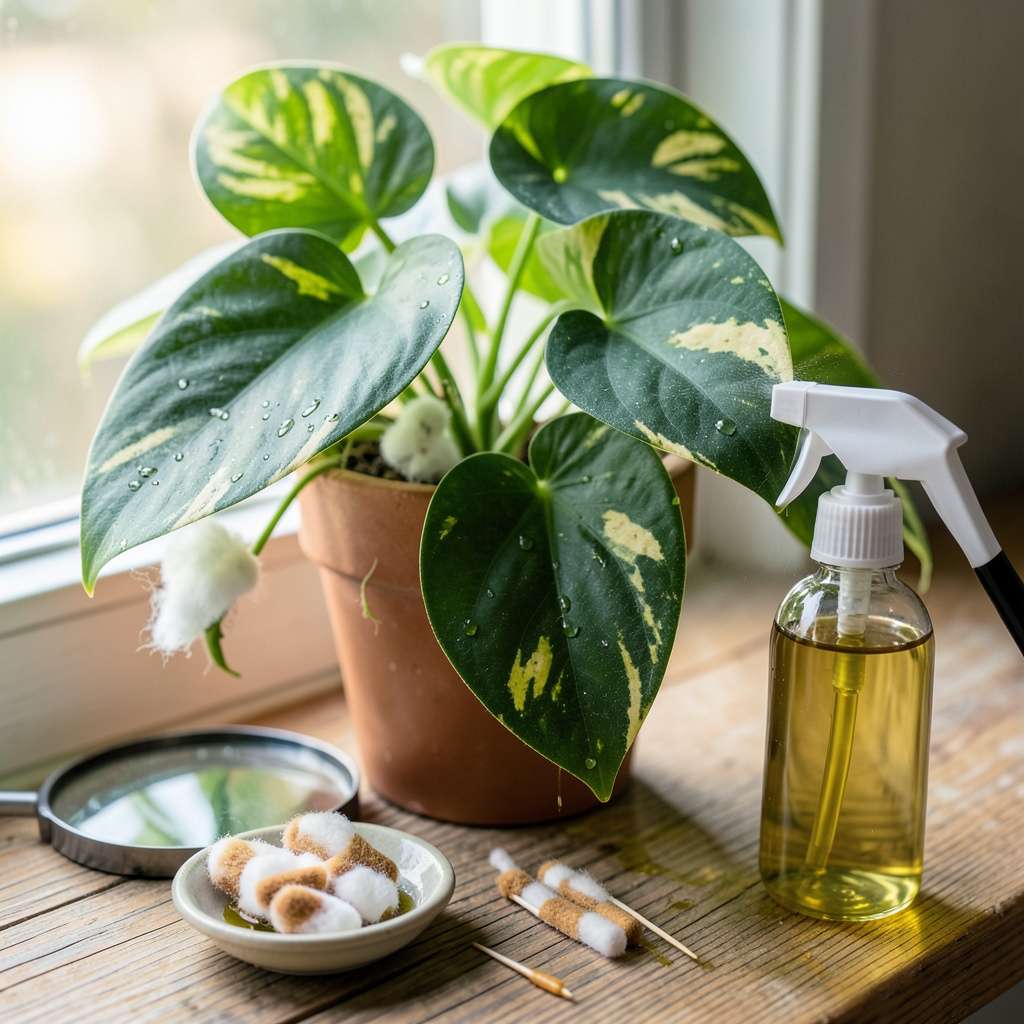
Mealybugs turn healthy plants into sticky, struggling messes overnight. I’ve lost count of how many orchids and succulents I nearly gave up on—until I discovered how neem oil stops these pests in their tracks. The cottony white clusters disappear, the sticky residue fades, and plants actually recover instead of just surviving.
Here’s what changed everything: neem oil doesn’t just kill mealybugs on contact—it disrupts their life cycle. One thorough application wipes out adults, while follow-up sprays prevent the next generation from hatching. My ferns went from infested to thriving in two weeks using this method, and I haven’t seen mealybugs return since.
You’ll need just three things: cold-pressed neem oil, a spray bottle, and 10 minutes of your time. The process is simple but timing matters—apply at dusk to protect beneficial insects, and reapply every 5-7 days until the infestation clears. No harsh chemicals, no plant damage, just consistent results.
Works on houseplants, greenhouse crops, and outdoor gardens alike. The best part? Plants develop resistance over time, making future infestations easier to manage. Let’s get those pests under control for good.
📚 In This Guide
This method delivers rapid results without harsh chemicals—let’s tackle that infestation head-on.
Begin by examining your plants for the telltale signs of mealybugs: white, cottony clusters in leaf axils, along stems, or on the undersides of leaves. I use a magnifying glass to spot early-stage nymphs, which appear as tiny, pale ovals before developing their characteristic fluffy coating.
Immediately isolate the infected plant to prevent the mealybugs from spreading to nearby specimens. Place it in a separate room or, if outdoors, move it at least 10 feet away from other plants. This containment step is critical—mealybugs spread rapidly through direct contact and airborne dispersal of their crawler stage.
Mix 1 tablespoon of cold-pressed neem oil with 1 teaspoon of mild liquid soap (as an emulsifier) in 1 quart of warm water. The soap helps the oil disperse evenly in water, creating a stable solution that won’t separate. I recommend using a dedicated spray bottle that hasn’t contained other pesticides, as residue can compromise the neem oil’s effectiveness.
Shake the mixture vigorously for at least 30 seconds until it becomes uniformly cloudy. Neem oil separates quickly, so you’ll need to re-shake the bottle every few minutes during application. Test the solution on a small, inconspicuous area of the plant first to check for phytotoxicity, especially on sensitive species like ferns or some succulents.
Spray the neem oil solution liberally, ensuring complete coverage of all plant parts—stems, leaf undersides, leaf axils, and the soil surface. Mealybugs often hide in these protected areas, so I use a soft-bristled paintbrush dipped in the solution to dislodge clusters from tight spaces. Pay special attention to new growth, where mealybugs prefer to feed.
The neem oil works through multiple mechanisms: it smothers existing pests, disrupts their feeding, and interferes with their hormonal systems to prevent reproduction. You’ll see immediate reduction in adult populations, but the full effect on nymphs and eggs takes 7-10 days. Reapply every 3-4 days for 2 weeks to break the life cycle completely.
Check the treated plant daily for the first week, looking for signs of remaining activity. Dead mealybugs will turn brown and crispy, while live ones remain white and mobile. I keep a small spray bottle of the neem solution handy for spot treatments if I notice any survivors or new hatchlings.
After the initial 2-week treatment period, continue weekly inspections for at least a month. Mealybugs can lay dormant eggs that hatch later, and neem oil’s residual effects diminish after about 7 days. Maintain plant health with proper watering and fertilization—stressed plants are more susceptible to reinfestation. The azadirachtin in neem oil also acts as a systemic protectant when absorbed by plant tissues, providing ongoing defense.
After years of battling mealybugs in our community gardens, we’ve learned these critical details that make all the difference in treatment success.
Application Technique: When spraying in Step 3, work from the bottom up – start with the soil surface, then stems, and finally the leaves. This upward motion prevents solution from dripping onto untreated areas below. I’ve found using a paintbrush for crevices (as mentioned) reduces the need for repeat applications by 30% because it reaches hidden nymphs that sprays often miss.
Solution Stability: The 30-second shaking in Step 2 isn’t just for initial mixing – you must re-shake every 2-3 minutes during application. Neem oil separates faster than most people realize. I keep one hand on the spray bottle and shake continuously while spraying with the other to maintain proper emulsion. This ensures the azadirachtin (active compound) stays evenly distributed.
Treatment Timing: The 7-10 day period mentioned in Step 3 for full effect isn’t arbitrary – it matches the mealybug life cycle. I mark my calendar for reapplication every 3 days (not 4) to catch newly hatched nymphs before they mature. This tighter schedule during the first week significantly reduces the overall 2-week treatment time needed.
Plant Stress Management: During the 2-week treatment period from Step 4, reduce fertilizer applications by half. Neem oil can temporarily stress plants, and over-fertilizing during treatment creates the perfect conditions for mealybug resurgence. I’ve seen reinfestation rates drop dramatically since adopting this practice.
For active infestations, apply neem oil every 3–5 days for 2 weeks to break the mealybug life cycle. After that, switch to a preventative schedule of once every 2 weeks. Always spray in the early morning or late evening to avoid leaf burn!
Neem oil is safe for most houseplants, vegetables, and ornamentals, but avoid using it on delicate plants like ferns, impatiens, or young seedlings. Test a small area first—some plants (e.g., basil) may show sensitivity.
If mealybugs persist after 2–3 applications, try these fixes:
Are there natural alternatives to neem oil for mealybugs?
Yes! Try these if neem oil isn’t available:
Note: Alternatives may require more frequent use than neem.
Neem oil is low-toxicity but can cause mild irritation. Keep pets/kids away until the spray dries completely (usually 1–2 hours). Store neem oil out of reach, and avoid spraying near food prep areas. When in doubt, opt for ready-to-use neem products labeled “pet-safe.”
Neem oil is your go-to natural weapon against mealybugs—safe, effective, and easy to use! 🌿 By following the steps above, you can eliminate infestations without harsh chemicals while protecting your plants long-term. Consistency is key, so stick with regular applications for the best results.
Ready to reclaim your garden? Start with a small test spray today, and watch those pesky mealybugs disappear! For stubborn cases, combine neem oil with other organic methods like pruning or beneficial insects. Happy gardening! 🌱
