
Beautiful Plants For Your Interior
Beautiful Plants For Your Interior
Bagworms can turn a healthy evergreen into a skeleton overnight. I’ve watched them strip junipers, arborvitae, and even roses when left unchecked. The good news? Neem oil stops them in their tracks—without harsh chemicals or complicated sprays. What makes neem oil so effective is its dual action: it disrupts their feeding cycle and prevents larvae […]
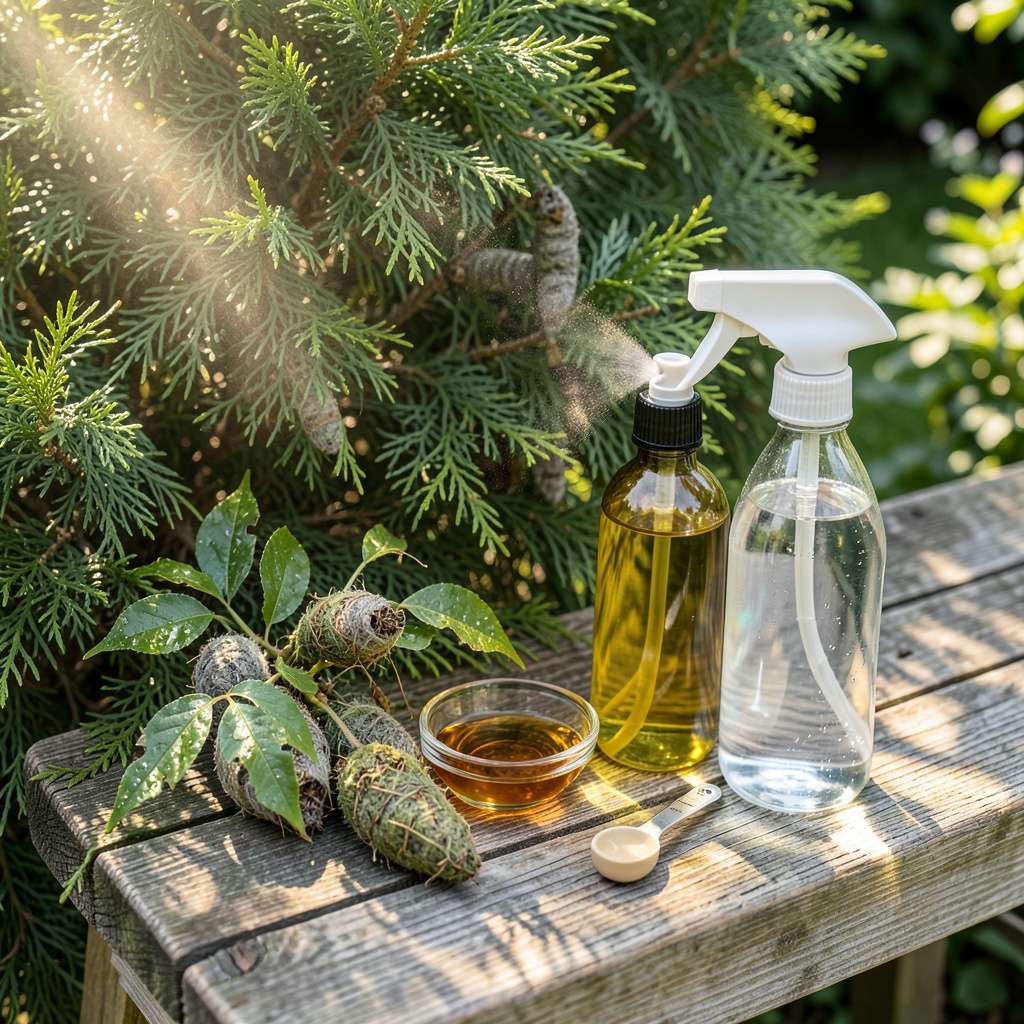
Bagworms can turn a healthy evergreen into a skeleton overnight. I’ve watched them strip junipers, arborvitae, and even roses when left unchecked. The good news? Neem oil stops them in their tracks—without harsh chemicals or complicated sprays.
What makes neem oil so effective is its dual action: it disrupts their feeding cycle and prevents larvae from maturing. I first tried it after losing a prized cedar to bagworms, and within two applications, the infestation was under control. No more brown, webby bags hanging from branches.
You’ll need just three things: cold-pressed neem oil, a sprayer, and the right timing (early morning or late evening works best). The process takes less than 30 minutes for a full treatment, and you’ll see results within days as the pests stop feeding.
This method works for small backyard trees, ornamental shrubs, and even container plants. The key is catching them early—before they spin those protective bags. Here’s exactly how to apply it for maximum impact.
📚 In This Guide
Nitrile or latex gloves (to protect skin from oil residue).
Sticky traps – To monitor bagworm activity post-treatment.
This method delivers rapid results while protecting your plants—no harsh chemicals needed.
Examine your trees or shrubs for the telltale spindle-shaped bags (1-2 inches long) hanging from branches. Fresh infestations show greenish-brown bags with silk and plant debris, while older ones appear gray and hardened. Focus on areas where foliage looks thin or discolored—bagworms defoliate from the inside out.
Check undersides of leaves and branch crooks where females lay eggs. I’ve found early morning inspections work best, as dew makes the silk bags more visible. If you spot tiny black caterpillars (1/8 inch) crawling near bags, you’ve caught them mid-hatch—this is the ideal treatment window.
Mix 2 tablespoons of cold-pressed neem oil with 1 teaspoon of mild liquid soap (as an emulsifier) per 1 gallon of warm water. The soap helps the oil disperse evenly; skip it, and you’ll get oily patches that burn foliage. Stir vigorously until the solution turns milky—this ensures the azadirachtin (neem’s active compound) suspends properly.
Use the mixture within 8 hours—neem oil degrades quickly in water. I strain mine through cheesecloth first to remove any sediment that could clog sprayers. Test on a small leaf area first; if no browning appears after 24 hours, proceed with full application.
Spray the solution directly onto bagworm cases until they’re visibly wet, then coat the surrounding foliage—top and bottom. Bagworms breathe through their bags, so saturation is critical. Use a fine mist setting to avoid runoff; droplets should cling like morning dew. Work in early evening to prevent rapid evaporation and protect beneficial insects like bees.
Pay special attention to branch junctions where eggs hide. I’ve found that reapplying every 7 days for 3 weeks breaks the life cycle by targeting both larvae and newly hatched caterpillars. You’ll know it’s working when bags stop moving (check with a gentle touch) and new leaf damage halts within 48 hours.
After 10-14 days, inspect treated areas for dried, brittle bags—a sign the caterpillars inside have perished. Use pruners to remove and destroy these (don’t compost them; eggs may survive). Live bags will still feel slightly pliable when squeezed. If you find any, reapply neem oil immediately.
Watch for new leaf growth—this confirms your plant is recovering. I’ve seen severe infestations rebound completely in 3-4 weeks with this method. For prevention, apply a light neem spray every 30 days during spring and summer; the residual oil disrupts future egg-laying.
After treating countless bagworm infestations, I’ve learned that success comes down to precision and persistence. Here’s what makes the difference between partial control and complete eradication.
Application Timing: The 8-hour window for using your neem oil mixture isn’t arbitrary—it’s when the azadirachtin remains most potent. I’ve found that mixing just before sunset (when you’ll apply it) gives you the full efficacy period overnight when bagworms are most active. If you mix in the morning, you’ll lose half the active ingredients before evening application. Always strain through cheesecloth as mentioned in Step 2—this prevents nozzle clogs that waste precious treatment time.
Targeting Technique: When applying in Step 3, don’t just spray the visible bags—focus on the branch junctions where eggs hide. I use a paintbrush dipped in the neem solution to coat these hidden areas after spraying. The fine mist setting is crucial; large droplets roll off the waxy bag surfaces. You want that milky solution to cling like morning dew, creating a suffocating film that disrupts their respiration.
Follow-Up Discipline: The 7-day reapplication schedule in Step 3 isn’t optional—it’s what breaks the life cycle. I mark my calendar for three treatments (Day 1, Day 8, Day 15) and stick to it regardless of weather. After 48 hours, check for movement by gently touching bags with a stick—live ones will twitch. This is your early warning system to identify treatment gaps before they become reinfestations.
Monitoring Strategy: During the 10-14 day monitoring period in Step 4, I take daily photos of treated areas. This helps track progress objectively—new leaf growth becomes obvious when comparing images. For severe infestations, I extend the prevention sprays to every 21 days instead of 30 during peak season (May through July). The extra application prevents the next generation from gaining a foothold.
Apply neem oil every 7–10 days for 4–6 weeks, especially during early spring or late summer when bagworms are actively feeding. Reapply after rain or heavy watering, as it washes away the oil. Consistency is key—young larvae are easier to eliminate than mature bagworms!
Neem oil is safe for most trees (like evergreens, fruit trees, and ornamentals), but avoid using it on stressed, drought-damaged, or newly transplanted plants. Always do a patch test on a small area first. Avoid spraying in extreme heat (above 90°F) to prevent leaf burn.
Spray early morning or late evening to avoid harming beneficial insects (like bees) and prevent leaf scorching from sun exposure. Target the undersides of leaves where bagworms hide. Cloudy days are ideal for maximum absorption!
Neem oil disrupts the life cycle but works best on young larvae. It won’t penetrate sealed bagworm cocoons or eggs effectively. For eggs, manually remove bags in late fall/winter and combine neem oil with other methods for full control.
If bagworms persist, try:
Rotate methods to prevent resistance.
Neem oil offers a safe, natural solution to tackle bagworm infestations without harsh chemicals. By disrupting their life cycle and deterring feeding, it protects your plants while keeping your garden eco-friendly. Consistency is key—regular applications and early intervention ensure the best results!
Ready to reclaim your garden? Start with a small test area, monitor progress, and adjust as needed. For stubborn infestations, combine neem oil with manual removal for a one-two punch. 🌱 Happy gardening!
