
Beautiful Plants For Your Interior
Beautiful Plants For Your Interior
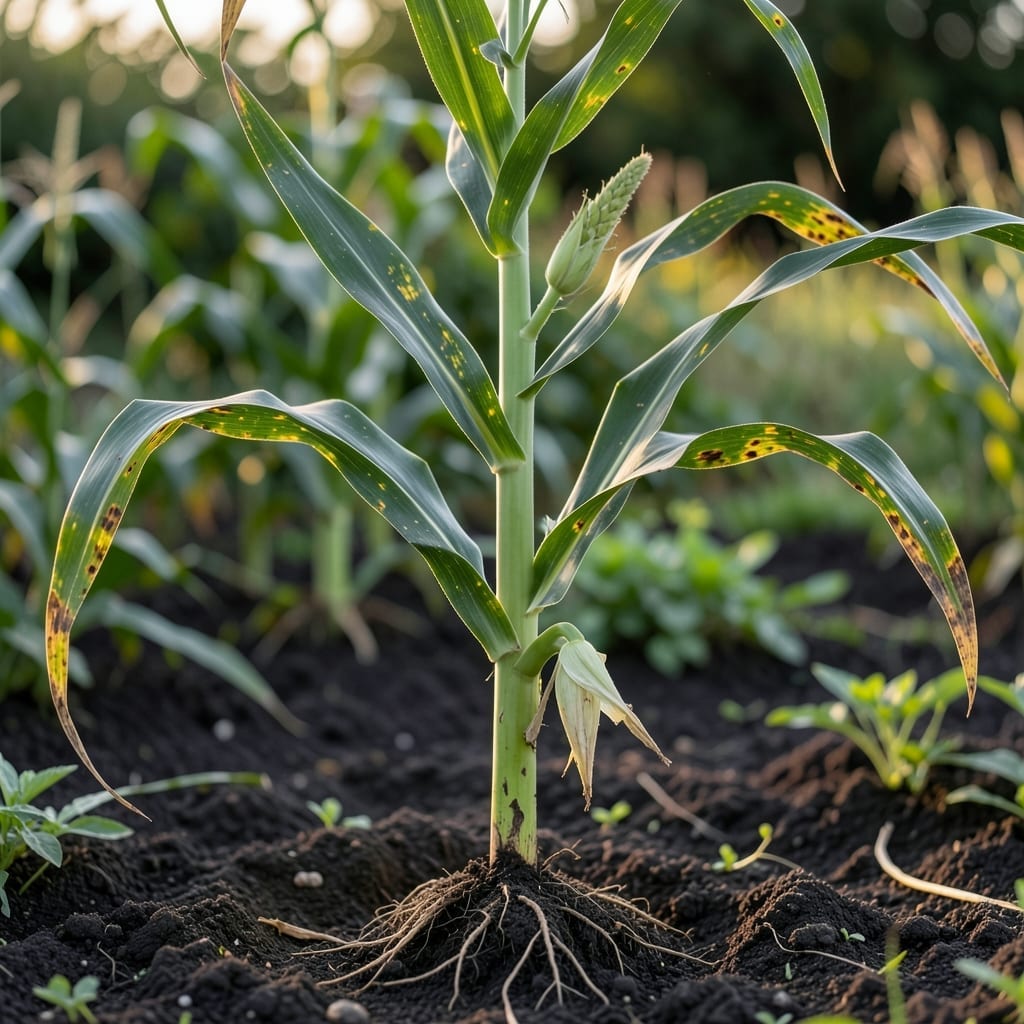
Yellow streaks between the veins of your corn leaves aren’t just unsightly—they’re a cry for help. I’ve seen entire patches of corn struggle with this issue, and the fix often starts with a simple soil test.
Magnesium deficiency sneaks up when soil pH drifts too low or heavy rains wash nutrients away. The plants look starved even when they’re fed, and yields drop fast. We learned this the hard way after losing a third of one season’s crop.
Correcting it isn’t complicated: Epsom salt or composted manure can work wonders, but timing matters. Apply too late, and the damage lingers. Get it right, and the green returns within 2 weeks.
Prevention is easier than cure—regular soil checks and balanced amendments keep this from happening again. Your corn will thank you with stronger stalks and fuller ears.
Magnesium deficiency in corn often stems from a mix of soil and environmental factors. Below are the primary causes, each explained with actionable insights.
Soils naturally low in magnesium—common in sandy or highly weathered soils—struggle to supply this essential nutrient. Magnesium is a central atom in chlorophyll, and without it, corn plants can’t produce enough energy through photosynthesis. Soil testing is the first step to confirm deficiency and guide correction.
Heavy rainfall or over-irrigation can leach magnesium from the root zone, especially in light, sandy soils with poor cation exchange capacity. This washes away the nutrient before plants can absorb it. Improving soil organic matter with compost or manure can help retain magnesium and reduce leaching losses.
Magnesium availability drops sharply in acidic soils (pH < 6.0) or highly alkaline conditions (pH > 7.5). At low pH, aluminum and manganese toxicity can further inhibit magnesium uptake. Lime application (for acidic soils) or sulfur amendments (for alkaline soils) can restore balance and improve magnesium accessibility.
High levels of potassium, calcium, or ammonium in the soil can outcompete magnesium for uptake by corn roots. This is common in fields heavily fertilized with potassium or animal manures. Balancing fertilizer applications and using magnesium-rich amendments (e.g., Epsom salt, dolomitic lime) can correct this imbalance.
Compaction, disease, or herbicide injury can damage corn roots, reducing their ability to absorb magnesium even when it’s present. Improving soil structure through tillage, cover cropping, or reduced traffic can enhance root health and nutrient uptake efficiency.
Addressing magnesium deficiency in corn starts with identifying the root cause and applying targeted fixes. Here’s a practical guide to solving and preventing the issue:
Magnesium becomes less available in acidic soils (pH below 6.0). Fix: Apply dolomitic lime to raise the pH and add magnesium simultaneously. Test soil before application and follow recommended rates based on your soil report. Prevention: Monitor soil pH annually and adjust as needed to maintain a range of 6.0–6.5.
Magnesium may be lacking due to depleted soil reserves. Fix: Use magnesium-rich fertilizers like magnesium sulfate (Epsom salt) or potassium-magnesium sulfate (K-Mag). Apply as a soil drench or foliar spray for quick uptake. Prevention: Rotate crops and incorporate organic matter (e.g., compost) to replenish nutrients naturally.
Excess potassium or calcium can block magnesium absorption. Fix: Reduce high-potassium fertilizers and balance with magnesium sources. A soil test will guide the right ratios. Prevention: Avoid over-fertilizing with potassium-heavy inputs and use balanced formulations.
Excessive rainfall can wash magnesium out of the root zone. Fix: Reapply magnesium via foliar sprays (e.g., 1–2% magnesium sulfate solution) for rapid correction. Prevention: Improve drainage and add organic mulch to retain nutrients.
💡 Pro Tip: For severe cases, combine soil and foliar applications for faster results. Always confirm deficiency with a soil or tissue test before treating!
Interveinal chlorosis (yellowing between veins) often signals magnesium deficiency. This typically appears on older leaves first as the plant redirects limited magnesium to new growth.
Foliar sprays of magnesium sulfate can show improvement in 3-5 days. Soil applications take 2-3 weeks to correct. Always test soil first for best results.
Yes, excessive watering leaches magnesium from soil, especially in sandy conditions. Improve drainage and use mulch to reduce nutrient loss.
Dolomitic lime raises pH while adding magnesium. Apply based on soil test recommendations for best results.