
Beautiful Plants For Your Interior
Beautiful Plants For Your Interior
Phalaenopsis orchids reward precise care with months of elegant blooms—but watering is where most growers go wrong. After years of trial and error (and a few tragic losses), we’ve perfected a method that keeps these plants thriving with minimal effort. The key lies in mimicking their natural environment, where consistent moisture meets excellent drainage. Unlike […]
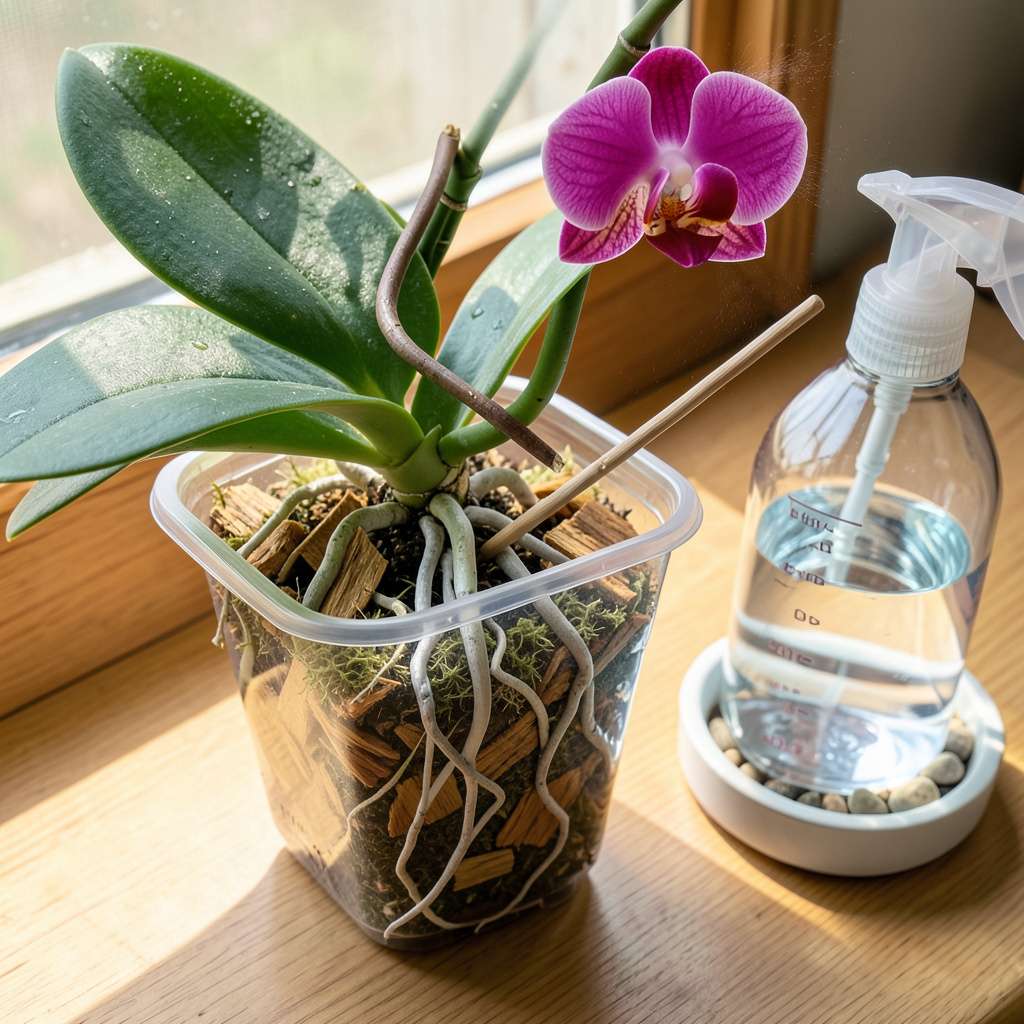
Phalaenopsis orchids reward precise care with months of elegant blooms—but watering is where most growers go wrong. After years of trial and error (and a few tragic losses), we’ve perfected a method that keeps these plants thriving with minimal effort. The key lies in mimicking their natural environment, where consistent moisture meets excellent drainage.
Unlike typical houseplants, phalaenopsis demand a different approach: water thoroughly, then allow roots to dry slightly between sessions. We’ve found that 7-10 days between waterings works for most indoor conditions, though humidity levels may adjust this. The right technique prevents root rot while encouraging those stunning flower spikes we all want.
You’ll notice healthier roots within weeks—firm, silver-green when dry, and vibrant green when properly hydrated. Blooms last longer, leaves stay supple, and the plant’s overall vigor improves dramatically. This method eliminates the guesswork that leads to yellowing leaves or dropped buds.
Whether you’re reviving a struggling plant or maintaining a thriving collection, this approach adapts to any indoor environment. The results speak for themselves: orchids that bloom reliably year after year, with care that fits easily into your routine.
📚 In This Guide
This method eliminates guesswork and keeps your orchids hydrated without the risk of root rot or dehydration.
Before adding water, examine the roots through the clear pot. Healthy, hydrated roots appear plump and bright green, while thirsty roots turn silvery-green or gray. Lift the pot—if it feels unusually light, the media is dry. Stick your finger 1 inch deep into the bark mix; if it feels dry to the touch, it’s time to water.
Never water on a fixed schedule. Phalaenopsis in bark-based media typically need water every 7-10 days, but humidity, temperature, and pot size affect this. A plant in sphagnum moss retains moisture longer and may only need water every 10-14 days. Watch the roots, not the calendar.
Fill a basin or sink with room-temperature water (never cold) to a depth that will submerge the pot ¾ of the way up. Place the orchid in the water and let it soak for 10-15 minutes. This allows the bark or moss to fully rehydrate and the roots to absorb moisture without sitting in stagnant water.
After soaking, lift the pot and let it drain completely for 5-10 minutes. Tilt the pot slightly to ensure no water pools in the crown (where leaves meet) or at the base. Standing water in these areas leads to bacterial rot. I place mine on a wire rack during draining to encourage airflow around the roots.
Phalaenopsis in low humidity (below 40%) may need water every 5-7 days, while those in high humidity (above 60%) can often go 12-14 days between waterings. If your home has dry heat in winter, mist the roots lightly between waterings or use a humidity tray with pebbles and water beneath the pot.
Check the leaf condition after watering. Ideally, leaves should feel firm and slightly leathery. Wrinkled or limp leaves indicate inconsistent watering—either too much or too little. Yellowing lower leaves are normal aging, but if upper leaves yellow, you’re likely overwatering or the media has broken down.
Bark media decomposes over 18-24 months, becoming waterlogged and suffocating roots. If water sits on the surface longer than 5 seconds before draining, or if the bark smells musty, it’s time to repot. Healthy media should drain freely and dry within 4-5 days in average home conditions.
Between waterings, ensure the orchid receives indirect light (east or north windows are ideal) and temperatures between 65-80°F. Avoid placing it near vents, drafts, or direct sunlight, which accelerate moisture loss. A consistent environment reduces stress and creates predictable watering patterns.
After years of trial and error (and losing a few orchids along the way), I’ve learned that success comes down to observing rather than following rigid rules. Here’s what makes the difference between struggling plants and thriving blooms.
The Root Check: In Step 1, don’t just glance at the roots—examine them under good light. I’ve found that roots showing the slightest silvery tint (even if mostly green) indicate the plant is ready for water. The finger test is equally crucial: bark should feel dry at that 1-inch depth, but not bone-dry. When in doubt, wait another day. Overwatering kills more orchids than underwatering does.
Soaking Technique: During the 10-15 minute soak in Step 2, use water that’s truly room temperature—lukewarm is ideal. Cold water shocks the roots, while hot water can damage them. I place my orchids in the sink with about 3 inches of water, ensuring the pot is submerged three-quarters up but never fully covered. The draining period afterward is just as important: I always use a wire rack to allow complete airflow to the roots.
Environmental Awareness: The 7-10 day guideline in Step 3 is just that—a guideline. I’ve noticed my orchids in the kitchen (with higher humidity from cooking) can go 12 days between waterings, while those in my drier office need attention every 5-6 days. Invest in a simple humidity monitor; it’s changed how I care for all my plants. Remember that temperatures above 80°F will increase water needs dramatically.
Media Maintenance: Don’t overlook the 18-24 month timeline for bark replacement mentioned in Step 4. I mark my calendar when I repot, and I’ve learned that waiting too long leads to compacted media that suffocates roots. If water pools on the surface for more than those critical 5 seconds, it’s definitely time for fresh media. Healthy bark should feel springy when dry, not dense and waterlogged.
Water every 7–10 days in most homes, but check the roots first! Stick your finger into the bark mix—if the top inch feels dry and roots are silvery-gray (not green), it’s time. Adjust based on humidity: more frequent in dry climates, less in humid ones.
While some swear by the ice cube method (1–3 cubes weekly), it’s risky. Cold water can shock roots, and uneven melting may cause rot. Opt for room-temperature water poured slowly over the bark instead for consistent moisture without stress.
Wrinkled leaves often signal underwatering or root rot. Check roots: mushy = overwatering; dry/crunchy = thirsty. If roots are healthy (plump, green), soak the pot for 10 minutes. Trim black/mushy roots and repot if rot is present.
Use room-temperature rainwater, distilled, or tap water left out for 24 hours (to let chlorine evaporate). Avoid softened water—salt buildup harms roots. If your tap water is hard, mix in 50% distilled water to prevent mineral deposits.
Misting isn’t necessary and can invite fungal issues if water pools in leaf crevices. Instead, boost humidity with a pebble tray or humidifier (40–70% ideal). If you mist, do it early in the day so leaves dry by evening.
Mastering how to water your Phalaenopsis orchids doesn’t have to be complicated! 🌸 With the right technique—soaking, draining, and observing—you’ll keep your plant happy, healthy, and blooming for months. Remember, consistency and patience are key—your orchid will thank you with stunning flowers!
Ready to take your care to the next level? Explore our full orchid care guide for tips on light, fertilizer, and repotting. Happy growing! 🌱
