
Beautiful Plants For Your Interior
Beautiful Plants For Your Interior
Glass vases showcase orchid roots like living sculptures—but they also create unique watering challenges. After losing three phalaenopsis to root rot in decorative containers, I developed a method that maintains healthy roots while keeping the aesthetic appeal. The key lies in understanding how glass containers alter moisture dynamics compared to traditional pots. The process requires […]
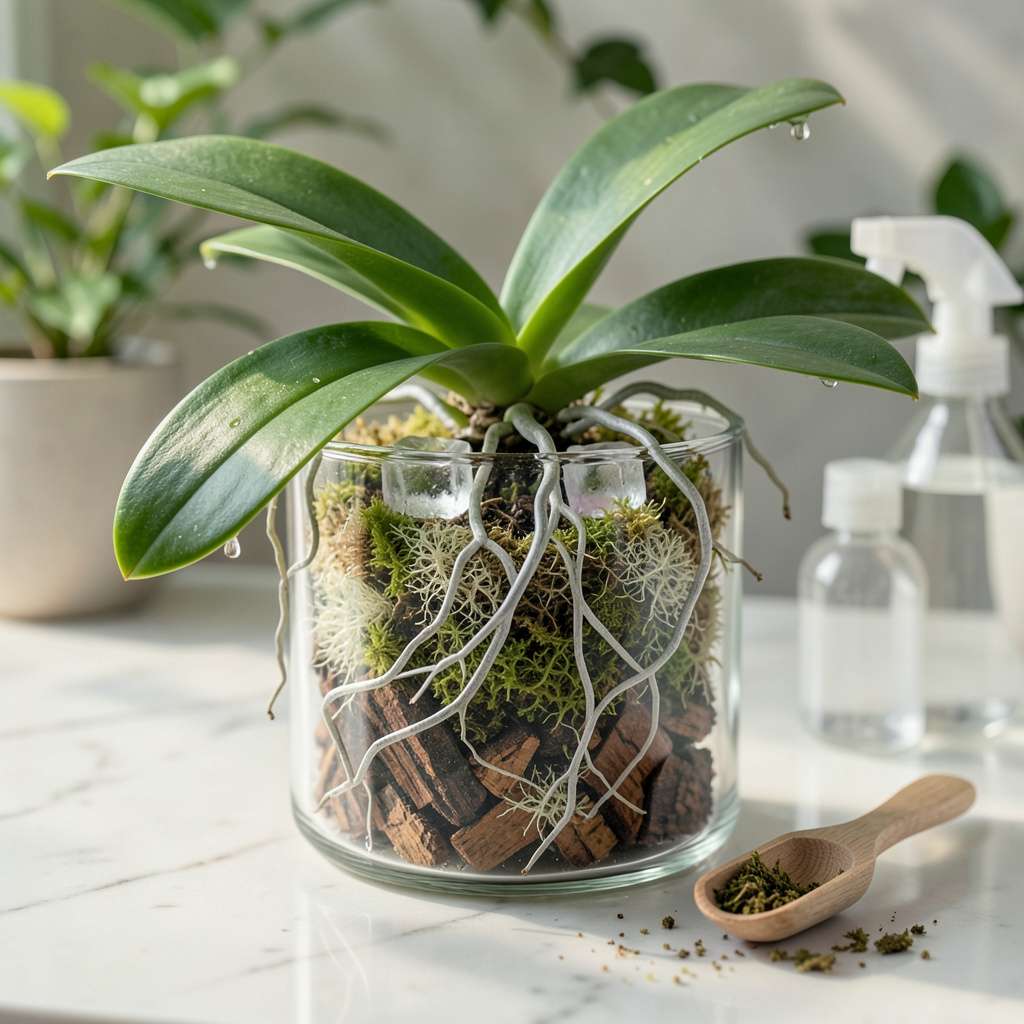
Glass vases showcase orchid roots like living sculptures—but they also create unique watering challenges. After losing three phalaenopsis to root rot in decorative containers, I developed a method that maintains healthy roots while keeping the aesthetic appeal. The key lies in understanding how glass containers alter moisture dynamics compared to traditional pots.
The process requires just three elements: the right water type, precise timing, and a technique that prevents water from pooling around roots. I’ve found room-temperature rainwater or distilled water works best, applied in measured amounts every 7-10 days depending on your environment. The roots should appear silvery-green when properly hydrated, not soggy or brown.
What you’ll achieve is a thriving orchid with firm, white-tipped roots that actively grow along the glass. The method eliminates guesswork about when to water and how much to use, while maintaining the elegant display that makes glass containers so appealing. Plants show new growth within 4-6 weeks when following this approach.
This technique adapts to any glass vessel—from simple vases to elaborate terrariums. The same principles apply whether you’re growing in a sunny windowsill or under artificial lights. Here’s how to implement it correctly from the first watering.
📚 In This Guide
This method ensures optimal moisture balance while preventing root rot—the most common issue with glass container culture.
Before watering, examine the roots through the glass vase. Healthy orchid roots appear silver-green when dry and bright green when hydrated. If roots show brown or mushy sections, withhold water immediately—this indicates early rot.
Check the condensation level inside the vase. Excessive moisture droplets suggest the medium remains too wet. I use the finger test as confirmation: insert a clean finger 1 inch into the medium. If it feels damp, delay watering for 2-3 days.
Place 3-4 ice cubes (standard size) directly on the growing medium, avoiding contact with leaves or crown. The slow melt rate prevents waterlogging while delivering precise moisture. This method works particularly well for Phalaenopsis orchids in glass vases.
Allow the ice to melt completely before adding more. I monitor the process closely—the first application typically takes 30-45 minutes to fully absorb. Never exceed 5 ice cubes per watering session, regardless of vase size.
After ice melts, tilt the vase at a 45-degree angle for 2-3 minutes to allow excess water to drain from the medium. Glass containers lack drainage holes, making this step critical to prevent root suffocation.
Inspect the base of the vase for standing water. If present, use a clean paper towel to absorb the excess. I recommend placing the vase on a dry, absorbent surface (like a wooden tray) for 1 hour post-watering to catch any residual moisture.
Water every 7-10 days under normal household conditions (65-75°F, 40-60% humidity). Adjust frequency based on environmental factors: reduce to every 12-14 days in high humidity or during dormancy periods.
Mark watering dates on a calendar. Orchids in glass vases often appear deceptively moist due to condensation, leading to overwatering. I’ve found that maintaining this schedule prevents the gray mold commonly associated with enclosed growing systems.
Watch for wrinkled leaves or pseudobulb shrinking—these indicate underwatering. Conversely, yellowing lower leaves or black spots on roots signal overwatering. Glass vases make these symptoms visible before they become critical.
Between waterings, mist the aerial roots lightly with room-temperature water every 3-4 days. This maintains humidity without saturating the medium. I use a fine-mist spray bottle held 8-10 inches from the plant to prevent water accumulation in leaf axils.
Mastering the delicate balance of moisture in glass containers requires attention to subtle details that prevent root rot while maintaining optimal hydration.
Root Health Assessment: The visual cues in Step 1 are critical—silver-green roots indicate perfect dryness, while any hint of brown signals immediate action is needed. I recommend using a small flashlight to better examine roots through the glass, especially in low-light conditions. The finger test should be performed at multiple points around the vase, as moisture levels can vary within the container. When roots appear bright green, they’ve absorbed sufficient moisture and don’t require additional watering.
Ice Cube Technique Refinement: During Step 2, standard ice cubes typically melt within the 30-45 minute window, but environmental factors can accelerate this process. For consistent results, I use filtered water ice cubes to avoid mineral buildup in the growing medium. The 5 ice cube maximum is non-negotiable—exceeding this threshold creates excessive moisture that glass containers cannot properly drain. Monitor the melt rate closely; if ice disappears in under 30 minutes, your ambient temperature may be too warm for this method.
Drainage Precision: The 45-degree angle specified in Step 3 must be maintained for the full 2-3 minutes to ensure complete water removal. I place a small wedge under the vase to maintain this angle without manual holding. After tilting, inspect the medium’s surface—it should appear uniformly moist but never saturated. The subsequent 1 hour on an absorbent surface is crucial for evaporating any residual moisture that could lead to fungal growth.
Environmental Adaptation: The 7-10 day watering schedule in Step 4 assumes average conditions, but glass vases require more frequent monitoring. In homes with central heating (which reduces humidity), you may need to water at the 7-day interval. Conversely, in naturally humid environments or during rainy seasons, extending to 12-14 days prevents waterlogged conditions. I maintain a small hygrometer near my orchids to track exact humidity levels rather than relying on general estimates.
Orchids in glass vases need watering every 7–10 days, but check the roots first! If they’re silvery-green, they’re thirsty; if bright green, wait. Overwatering is the #1 killer—let excess water drain after 15–20 minutes to prevent root rot.
Nope! Ice cubes can shock tropical orchids and damage roots. Glass vases trap cold, making it worse. Stick to room-temperature water poured gently along the vase walls—no ice, no extremes!
Brown roots = root rot from too much water or poor drainage. Remove the orchid, trim mushy roots with sterilized scissors, and repot in fresh bark. Ensure your vase has drainage (pebbles help!) and reduce watering frequency.
If glass feels risky, try clear plastic pots with drainage holes or slotted orchid baskets. They offer airflow + visibility for roots while preventing waterlogging. Pair with a decorative cachepot for style!
Yes! Glass vases lack drainage, so dilute fertilizer to half-strength and apply every 3–4 waterings. Flush with plain water monthly to avoid salt buildup. Use a balanced orchid fertilizer (20-20-20) for happy blooms!
Caring for orchids in glass vases doesn’t have to be tricky! With the right balance of water, airflow, and patience, your orchids can thrive with stunning roots and vibrant blooms. 🌸 Remember: less is more—stick to the soak-and-dry method, and watch your plants reward you with beauty.
Ready to take your orchid care to the next level? Experiment with different vase styles or explore semi-hydroponic setups for even easier maintenance. Happy growing! 🌱
