
Beautiful Plants For Your Interior
Beautiful Plants For Your Interior
Dendrobium orchids changed my mind about “fussy” plants. After years of watching leaves wrinkle and buds drop, I finally nailed the watering routine that keeps these beauties thriving. The secret isn’t complicated equipment or daily attention—it’s understanding their natural rhythm between wet and dry cycles. Most people kill dendrobiums with kindness, drowning roots in constant […]
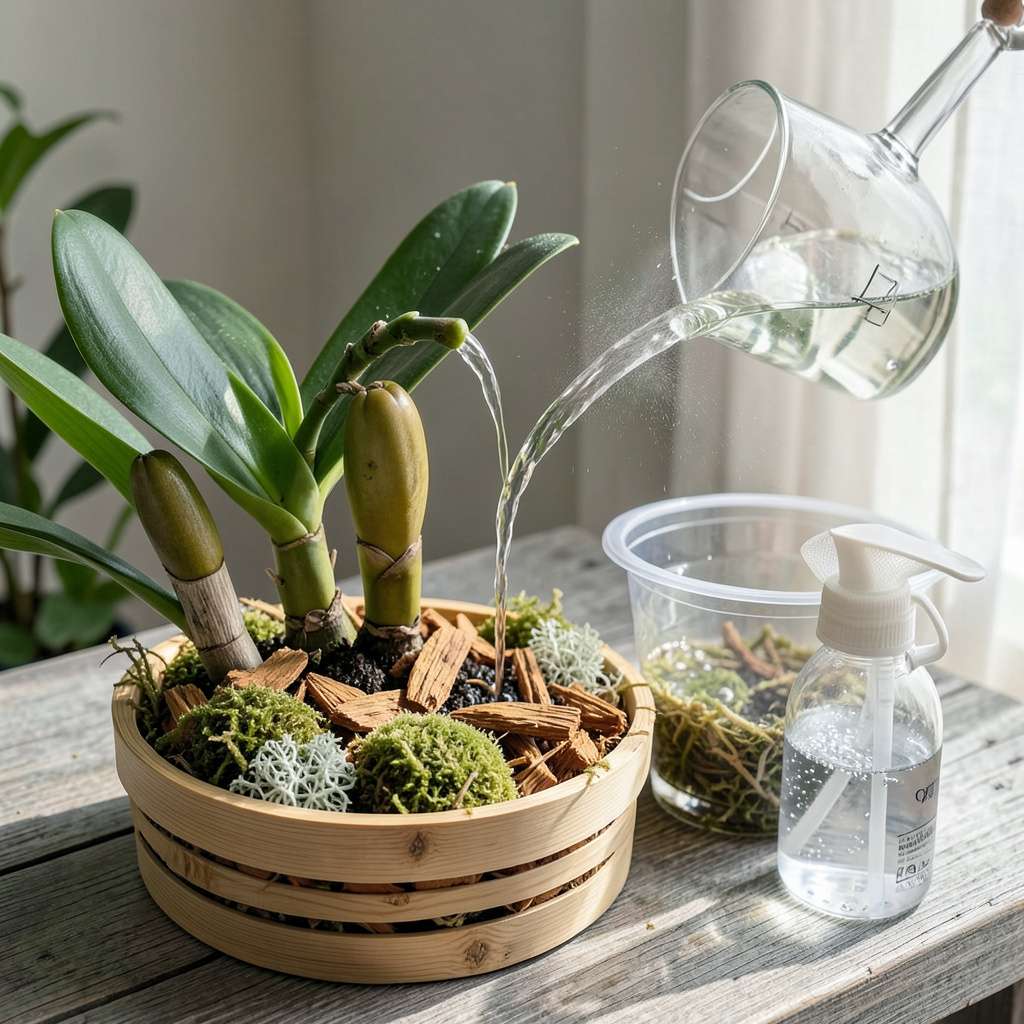
Dendrobium orchids changed my mind about “fussy” plants. After years of watching leaves wrinkle and buds drop, I finally nailed the watering routine that keeps these beauties thriving. The secret isn’t complicated equipment or daily attention—it’s understanding their natural rhythm between wet and dry cycles.
Most people kill dendrobiums with kindness, drowning roots in constant moisture. I learned the hard way that these orchids prefer a drink-and-dry approach: thorough watering followed by complete drying before the next session. The difference shows in plump pseudobulbs and flower spikes that last for months, not weeks.
You’ll see the payoff in 3-4 weeks—new growth emerges firmer, leaves stay supple, and those stunning blooms appear right on schedule. No more guessing when to water or panicking over yellowing leaves. The method adapts to any climate, from humid apartments to arid desert homes.
Between you and me, I still check soil moisture with my finger before every watering. It’s the one habit that saved my collection. Here’s exactly how to make it work for your plants, whether you’re growing one dendrobium or a dozen.
📚 In This Guide
Mastering the watering rhythm is what separates struggling orchids from spectacular bloomers—here’s exactly how I do it.
Dendrobiums have two distinct phases that demand opposite watering approaches. During active growth (spring through summer), you’ll see new pseudobulbs forming and leaves emerging. This is when they’re thirsty. In dormancy (fall through winter), growth stops and water needs plummet.
Check the base of your plant: active growth shows as green tips on canes or new shoots emerging. Dormancy reveals itself through yellowing lower leaves and no new growth. I mark my calendar when I first notice dormancy signs—it’s the signal to cut back dramatically on water.
When in active growth, water every 5-7 days using the soak-and-dry method. Place your orchid in the sink and run tepid water (about 70°F) through the pot for 30-45 seconds. The water should flow freely from the drainage holes, flushing out accumulated salts.
Let the plant drain completely for 10-15 minutes before returning it to its decorative pot. I always check that no water remains in the saucer—standing water invites root rot. The potting medium should feel moist but never soggy when you’re done. During hot spells, you might need to water every 4-5 days instead.
In dormancy, switch to watering every 2-3 weeks—just enough to prevent pseudobulbs from shriveling. The medium should dry out almost completely between waterings. I test by inserting a wooden skewer into the pot: if it comes out completely dry after 10 seconds, it’s time to water.
Use only ¼ cup of water per plant during dormancy, poured slowly around the base. Avoid wetting the canes or leaves. You’re aiming to maintain minimal moisture in the roots while allowing the plant to rest. This reduced watering is crucial for triggering next season’s blooms—too much water now means fewer flowers later.
Humidity and temperature directly affect your watering schedule. In low humidity (below 40%), you may need to water 25% more frequently. I use a humidity tray with pebbles and water beneath my orchids to maintain 50-70% humidity without increasing watering frequency.
Temperature fluctuations also matter: if your growing area drops below 60°F at night, reduce watering by 1-2 days between sessions. The cooler temperatures slow evaporation and the plant’s metabolic rate. I keep a small thermometer near my orchids to track these conditions accurately.
Your dendrobium will tell you when your watering is off. Yellowing lower leaves often indicate overwatering, while wrinkled pseudobulbs signal underwatering. Healthy roots should be silver-green when dry and green when properly hydrated—never brown or mushy.
After watering, healthy leaves feel firm and slightly cool to the touch. If they feel soft or show dark spots, you’re likely watering too frequently. I make adjustments in small increments—changing my schedule by just 1-2 days at a time until the plant responds positively.
Getting the watering right for dendrobium orchids is more art than science—here’s what I’ve learned from years of trial and error.
Water Temperature Precision: The 70°F water temperature in Step 2 isn’t arbitrary. I learned the hard way that cold water shocks orchid roots, while hot water can damage delicate root hairs. Use a kitchen thermometer if you’re unsure—it’s the difference between thriving plants and stressed ones. Let tap water sit out overnight if yours comes out too cold from the faucet.
Drainage Discipline: Those 10-15 minutes of drainage time after watering are non-negotiable. I ruined two orchids before realizing that even a teaspoon of standing water in the saucer can lead to root rot within days. Elevate your decorative pot on pebbles to ensure complete drainage, and never put the orchid back in its cache pot until you’re certain no water remains.
Dormancy Detection: The transition between active growth and dormancy can be subtle. I mark my calendar when I first notice yellowing on lower leaves, then immediately reduce watering to the 2-3 week schedule. This proactive approach prevents the overwatering that commonly occurs when growers wait too long to adjust their routine. The wooden skewer test mentioned in Step 3 is my secret weapon—it removes all guesswork.
Environmental Awareness: That 60°F nighttime temperature threshold in Step 4 caught me by surprise my first winter. I thought my heating system was consistent until I placed a thermometer near my orchids and discovered nighttime dips to 58°F. This small 2-degree difference meant I needed to extend my watering intervals by 2 days, which saved my plants from root rot during their vulnerable dormant phase.
Water every 5–7 days when your orchid is blooming, but always check the roots first! They should be silvery-green when dry and bright green when hydrated. Overwatering can cause bud drop, so let the top inch of bark mix dry out between waterings. Pro tip: Morning watering helps prevent fungal issues.
No—avoid ice cubes! Dendrobiums are tropical plants, and cold water shocks their roots, leading to stress or rot. Instead, use room-temperature water (65–80°F) and water thoroughly until it drains from the pot’s bottom. Ice can also create uneven moisture pockets.
Wrinkled leaves often signal underwatering or root damage. If the roots look mushy (overwatered) or shriveled (dehydrated), adjust your routine. Soak the pot in water for 10–15 minutes if roots are dry, or repot if rot is present. Check humidity levels too—aim for 40–70%.
Use rainwater, distilled water, or reverse osmosis water to avoid mineral buildup from tap water. If tap is your only option, let it sit out for 24 hours to allow chlorine to evaporate. Avoid softened water—high sodium harms roots. For extra care, flush pots with clean water monthly.
Watch for yellowing leaves, black/spongy roots, or a sour smell—classic overwatering signs. Lift the pot: If it feels heavy, skip watering. Ensure your pot has drainage holes and use a chunky bark mix to prevent soggy roots. Reduce watering in winter when growth slows.
Mastering how to water dendrobium orchids doesn’t have to be overwhelming! 🌸 Remember: soak thoroughly, let them dry slightly between waterings, and adjust for the season. With a little observation and consistency, you’ll be rewarded with vibrant, long-lasting blooms.
Now that you’ve got the basics, grab your watering can and give your orchids the TLC they deserve. For even more success, explore complementary care tips to keep them thriving year-round! 💧✨
