
Beautiful Plants For Your Interior
Beautiful Plants For Your Interior
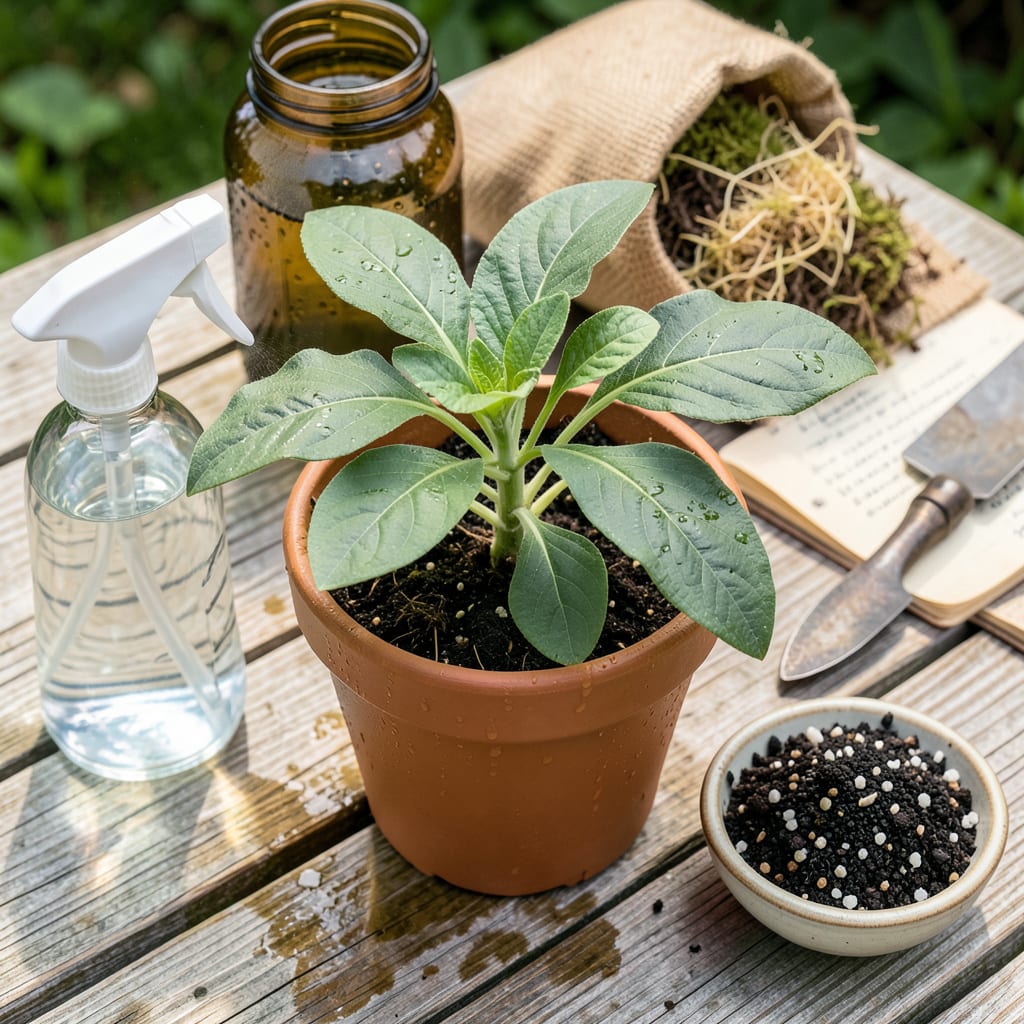
That moment when your carefully transplanted seedlings suddenly wilt or turn yellow hits hard. I’ve been there—watching healthy plants struggle after moving them, wondering if they’ll bounce back. The good news? Transplant shock is temporary with the right care, and most plants recover fully within 1-2 weeks.
What works isn’t complicated: proper watering, temporary shade, and a little root TLC. I’ve rescued dozens of shocked plants using simple techniques that anyone can do—no fancy equipment needed. The key is acting fast before stress becomes permanent damage. Here’s exactly how to nurse them back to health.
📚 In This Guide
Don’t panic when your plants wilt or droop after moving—they’re just adjusting, and here’s how to nurse them back.
First, examine your plant carefully to determine how severely it’s affected. Mild shock shows as slight wilting or leaf curling, while severe cases involve yellowing leaves, crispy edges, or complete drooping. Check the stem—if it’s still firm, the plant has a good chance of recovery.
Look at the root zone too. Gently tug at the base: resistance means roots are still anchored. If the plant slides out easily, root damage may be the primary issue. Note that some leaf drop is normal, but rapid defoliation signals deeper stress.
Move the plant to a location with bright but indirect light for at least 3-5 days. Direct sun on stressed plants accelerates moisture loss through damaged leaves. A north-facing wall, under a tree canopy, or on a covered porch works well.
Create a wind barrier if needed—burlap wrapped around stakes or a temporary cardboard shield reduces transpiration stress. Even gentle breezes can desiccate tender new transplants. Monitor soil moisture daily; wind protection often means less frequent watering is needed.
Water deeply but less frequently to encourage root recovery. Apply 1-2 inches of water at the base (not foliage) every 2-3 days, allowing the top inch of soil to dry between waterings. Overwatering suffocates damaged roots, while underwatering prevents recovery.
For container plants, submerge the pot in a bucket of water for 10-15 minutes until bubbles stop rising. This ensures thorough soil saturation without compacting the root ball. Add a layer of mulch to retain moisture and regulate soil temperature.
Avoid full-strength fertilizer, which can burn stressed roots. Instead, use a half-strength seaweed extract or fish emulsion solution 7-10 days after transplanting. These provide gentle nutrients while containing natural growth hormones that stimulate root development.
Foliar sprays work particularly well during recovery. Mix the solution at quarter strength and mist leaves in the early morning. The stomata absorb nutrients directly, bypassing damaged root systems. Repeat every 5-7 days until new growth appears.
Remove 30-50% of the foliage if the plant shows severe wilting. This reduces water demand while roots re-establish. Always use clean, sharp pruners and make cuts just above a leaf node or branching point to encourage proper regrowth.
Focus on removing damaged leaves first—those with brown edges, yellowing, or physical damage. Never remove more than one-third of the plant at once. The remaining leaves will photosynthesize to support recovery, so preserve the healthiest growth.
Check plants daily for 7-14 days, watching for new growth as the first recovery sign. Once you see fresh leaves or stem elongation, begin reintroducing sunlight gradually—1 extra hour of direct light per day prevents secondary shock.
Test soil moisture with your finger before watering. Healthy recovery shows in firm stems, perky leaves, and new growth within 2-3 weeks. If no improvement appears after 14 days, reassess for root rot or pest issues.
For future transplants, harden off plants by exposing them to outdoor conditions gradually. Start with 1-2 hours of shade, increasing by 1 hour daily over 7-10 days. This builds cuticle thickness and reduces moisture loss.
Transplant on overcast days or in late afternoon to minimize immediate sun exposure. Water thoroughly before moving, and keep the root ball intact. The extra preparation makes all the difference in recovery speed and plant vitality.
Here’s what I’ve learned from years of rescuing stressed plants—small adjustments make all the difference in recovery speed.
Assessment Accuracy: Don’t underestimate Step 1’s importance. I’ve seen gardeners misdiagnose shock as disease or pests. The key difference: shocked plants typically have firm stems despite wilting, while diseased plants often show soft, mushy stems. Always check root resistance by gently tugging—this tells you more than leaf appearance alone. The 30-50% foliage removal in Step 5 should only happen after this thorough assessment.
Shade Transition Technique: The 3-5 days of indirect light in Step 2 isn’t arbitrary. I use a simple trick: place plants under a white bedsheet draped over stakes if you lack natural shade. This diffuses 40-50% of sunlight while allowing airflow. When reintroducing direct light in Step 6, do it during morning hours first—the gentler light prevents secondary stress.
Watering Precision: Many overlook the “top inch dry” guideline in Step 3. Here’s how to test it properly: insert your finger knuckle-deep into soil. If your fingertip feels moisture but the pad stays dry, you’ve hit the sweet spot. For container plants, the 10-15 minute submersion should produce steady bubble streams—not violent bubbling (which indicates soil compaction) or no bubbles (meaning dry pockets remain).
Nutrient Timing: The 7-10 day wait in Step 4 exists for good reason. I’ve ruined plants by fertilizing too soon. During this period, roots are rebuilding their capacity to absorb nutrients. The quarter-strength foliar spray works because stomata (leaf pores) open most widely in early morning when humidity is higher and temperatures cooler, maximizing absorption of those growth hormones.
Most plants recover from transplant shock within 1–2 weeks, but sensitive species (like tomatoes or peppers) may take 3–4 weeks. Cool, cloudy weather speeds recovery, while heat or drought prolongs stress. Monitor leaves—new growth signals recovery!
It’s rarely too late! Act fast by pruning damaged foliage, watering deeply (but avoiding soggy soil), and providing shade. Severe cases (wilting stems, black roots) may not recover, but mild stress often reverses with proper care.
Transplant in the early morning or late afternoon to avoid midday heat stress. Overcast days are ideal! Water plants thoroughly 1–2 hours before moving to hydrate roots and reduce trauma.
Yes! Try these:
This is normal! Plants often “crash” 2–3 days post-transplant as roots adjust. If leaves yellow or droop beyond a week, check for overwatering, pests, or root damage. Trim dead foliage to redirect energy to healthy growth.
