
Beautiful Plants For Your Interior
Beautiful Plants For Your Interior
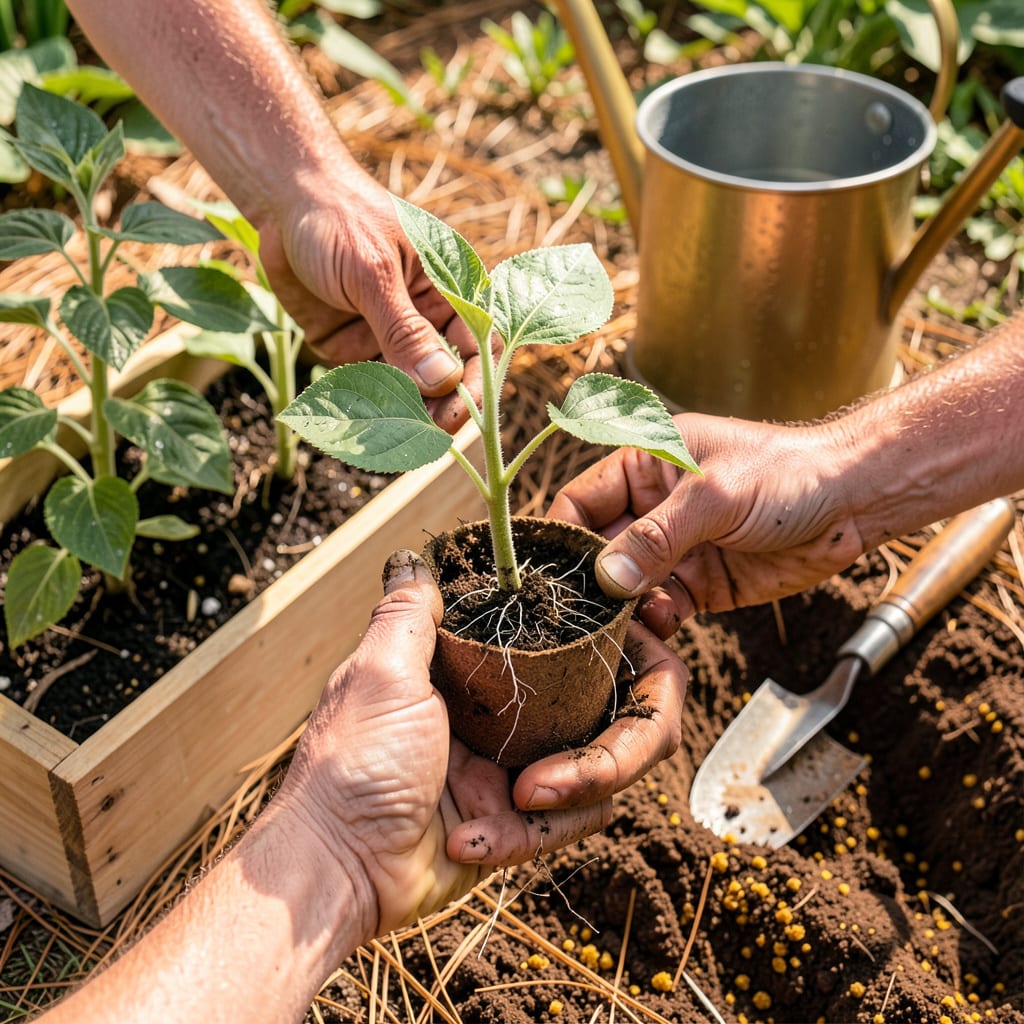
Moving sunflowers from pot to garden feels like giving them a second chance at life. I’ve learned the hard way that timing is everything—transplant too early and they wilt, too late and the roots resent the disturbance. The sweet spot is when seedlings have 2-4 true leaves and the soil stays warm, usually about 2-3 weeks after germination.
Here’s the thing—sunflowers hate root disturbance more than most plants. But do it right, and they’ll reward you with sturdier stems and bigger blooms than direct-sown seeds. The trick is treating those roots like fine china: keep the soil intact, plant at the same depth, and water immediately. You’ll see them perk up within 24 hours if you nail the process.
📚 In This Guide
Moving sunflowers at the right time ensures they thrive instead of wilting—here’s how to do it without stress.
Transplant sunflowers when they have 2-4 true leaves (not just the initial cotyledons) and before they exceed 12 inches tall. This stage typically occurs 3-4 weeks after germination, when roots are established but not yet pot-bound. I check the undersides of leaves—healthy transplants show vibrant green with no yellowing.
Never move sunflowers during the heat of day. Schedule this for late afternoon or an overcast morning when temperatures stay below 75°F. The cooler conditions reduce transplant shock dramatically. If you must transplant in summer, wait until after sunset and provide temporary shade for 24-48 hours post-move.
Dig holes 12-18 inches apart for dwarf varieties or 24-36 inches apart for giant sunflowers, each 2 inches deeper than the current root ball. I amend the soil with 1-2 inches of compost mixed into the bottom of each hole—this creates a nutrient-rich pocket for roots to explore immediately.
Water the planting holes thoroughly before transferring plants. The soil should feel moist to 3 inches deep when you insert your finger. This pre-moistening prevents dry pockets around roots that can cause wilting. For clay soil, I add a handful of coarse sand to improve drainage at the base of each hole.
Gently squeeze the container sides to loosen the root ball, then invert the pot into your hand while supporting the soil with your fingers. Sunflower roots are surprisingly fragile—never pull by the stem. If roots are circling, make three vertical cuts down the root ball with clean scissors to encourage outward growth.
Place the plant in the hole at the same depth it grew in the container. I use a ruler to verify the soil line matches exactly. Backfill with native soil, pressing lightly to eliminate air pockets. Create a 2-inch-high soil berm around each plant to form a water basin—this directs moisture straight to the roots during the critical first week.
Water deeply immediately after transplanting until you see moisture emerge at the soil surface. I use 1 gallon of water per plant for the initial soaking, applied slowly at the base to prevent runoff. For the first 5-7 days, maintain consistently moist (not soggy) soil—check by inserting your finger 1 inch deep daily.
Install supports for varieties over 4 feet tall at transplant time. I use ½-inch bamboo stakes placed 6 inches from the stem with soft twine ties. Sunflowers develop heavy heads quickly, and stakes prevent wind damage to shallow roots. Remove any yellowing lower leaves that touch the soil to prevent fungal issues during establishment.
Expect some wilting the first 24-48 hours—this is normal as roots adjust. However, if leaves remain wilted after 3 days or develop brown edges, the plant needs intervention. I immediately provide shade cloth and trim off 30% of the foliage to reduce water demand while roots recover.
Resist fertilizing for 10-14 days post-transplant. Freshly disturbed roots can’t absorb nutrients effectively, and fertilizer burn will compound stress. Instead, I apply a 1-inch layer of straw mulch to conserve moisture and regulate soil temperature. New growth appearing within a week signals successful establishment.
Transplanting sunflowers successfully comes down to understanding their delicate root systems and environmental needs. Here’s what I’ve learned through years of trial and error.
Timing is Everything: The 3-4 week window mentioned in Step 1 isn’t arbitrary—it’s when sunflower roots develop enough to handle the move but before they become too established in their containers. I’ve found that waiting until plants have exactly 3 true leaves (not counting the initial cotyledons) gives the perfect balance of root development and minimal shock. Never rush this stage, as premature transplanting leads to stunted growth.
Temperature Management: The 75°F threshold in Step 1 is critical for reducing transplant shock. I use a soil thermometer to verify both air and soil temperatures before moving plants. In hot climates, I’ve had success transplanting at dawn when temperatures are lowest, then providing shade cloth for the full 48 hours post-move. Remember that soil temperature matters just as much as air temperature—cool roots recover faster.
Root Handling Technique: When making those three vertical cuts in Step 3, use sterilized scissors and cut from the bottom up. This prevents tearing the delicate root hairs that absorb water. I’ve noticed that making slightly angled cuts (rather than perfectly vertical) encourages even better outward root growth. Support the entire root ball with both hands when transferring—sunflower roots are more fragile than they appear.
Watering Strategy: The 1 gallon per plant recommendation in Step 4 isn’t just about quantity—it’s about technique. I water in three stages: first to settle the soil, then after 10 minutes to ensure deep penetration, and finally a light misting of the leaves to reduce transpiration stress. During the 5-7 day critical period, I water at dawn rather than evening to allow foliage to dry before nightfall, preventing fungal issues.
Sunflowers transplant best in early spring (after the last frost) or early summer while they’re still young (under 3 feet tall). Avoid transplanting during extreme heat or flowering—roots are sensitive! For fall transplants, act 6+ weeks before the first frost to let roots establish.
Aim for seedlings with 2–4 true leaves (about 6–12 inches tall). Smaller seedlings adapt faster, but avoid transplanting too early—fragile stems may snap. If seedlings are leggy, bury part of the stem to encourage stability (they’ll root along the buried section!).
What if my sunflower wilts after transplanting? Help!
Wilting is normal for 24–48 hours (transplant shock). Water deeply at the base (avoid leaves) and provide temporary shade (like a cardboard box) for 2–3 days. If wilting persists, check for overwatering or root damage. Trim dead leaves to redirect energy.
Harden off potted sunflowers first by placing them outdoors for 3–5 days (gradually increasing sun exposure). Gently loosen roots if root-bound, then plant at the same depth as the pot. Water immediately to reduce stress.
Direct-sowing is ideal (sunflowers dislike root disturbance), but transplanting works if you start seeds indoors 3–4 weeks early in biodegradable pots. Varieties like ‘Moulin Rouge’ or ‘Teddy Bear’ transplant easier than giant types. Skip transplanting for perennial sunflowers—they hate it!
