
Beautiful Plants For Your Interior
Beautiful Plants For Your Interior
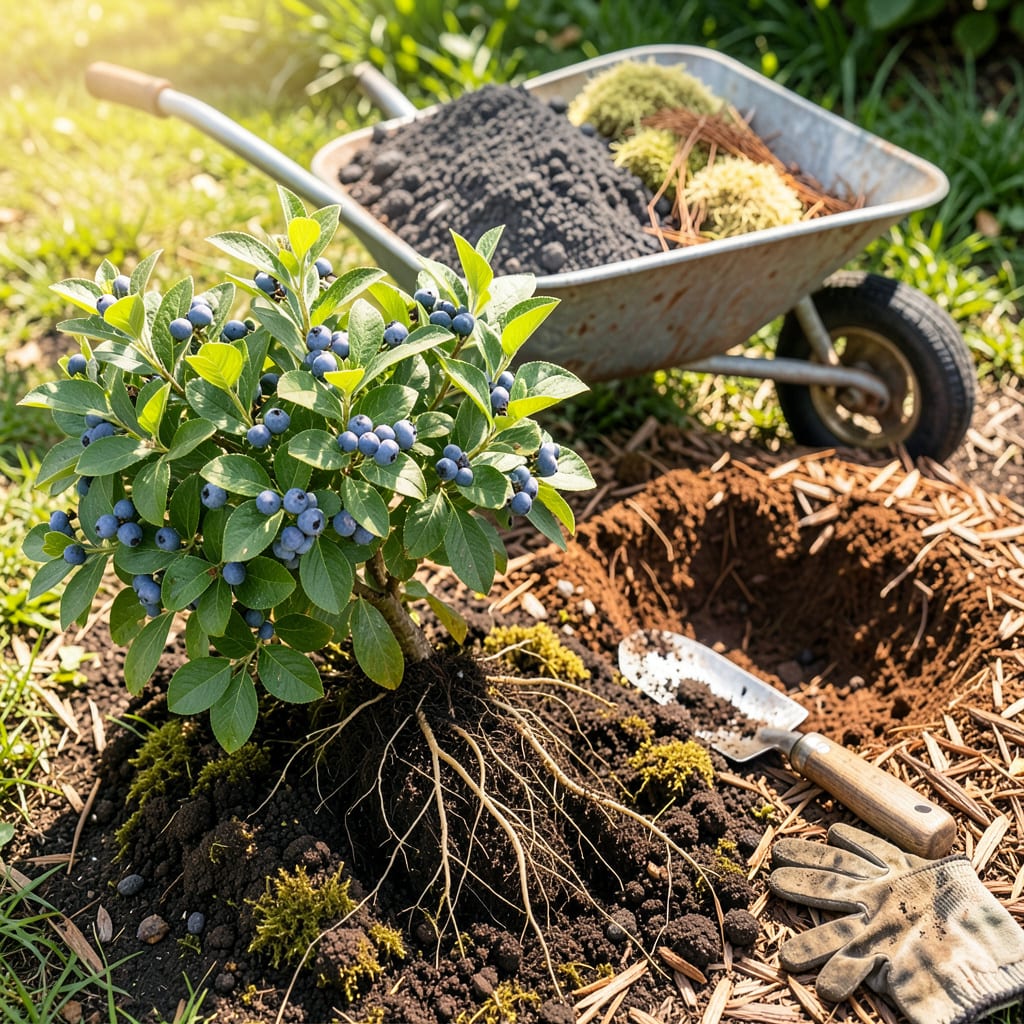
Moving a blueberry bush feels like giving it a fresh start—when done right, it rewards you with years of bigger harvests. I’ve transplanted dozens over the years, and the ones that thrive always follow this rule: timing and soil prep matter more than the digging itself. Early spring or late fall, when the plant is dormant, is your golden window. Skip this, and you’re fighting an uphill battle against transplant shock.
The difference between a bush that sulks for a season and one that takes off? Acidic soil (pH 4.5–5.5) and a root ball that stays intact. I’ve lost plants by rushing the dig—now I know to water deeply the day before, mark the sunniest side of the bush, and handle those roots like they’re made of lace. Do this once correctly, and you’ll get double the berries by year three.
📚 In This Guide
Moving an established blueberry bush doesn’t have to be stressful—follow these steps for a smooth transition.
Transplant in early spring before new growth starts or in late fall after leaves drop. These seasons give roots time to establish without the stress of summer heat or winter cold. I always mark the new location first, ensuring it gets full sun (at least 6 hours daily) and has well-draining, acidic soil (pH 4.5-5.5).
Dig the new hole twice as wide as the root ball and just as deep. This loose soil helps roots spread easily. Mix in compost or peat moss to improve acidity and drainage. If your soil is heavy clay, add pine bark fines to lighten it. Test the hole by filling it with water—if it drains within an hour, you’re good to go.
Water the blueberry bush deeply 24 hours before transplanting—this keeps the root ball intact. Use a sharp spade to dig a wide circle around the plant, starting about 12 inches from the base for a mature bush. Go deep to preserve as many roots as possible, aiming for a root ball 18-24 inches in diameter.
Once the roots are free, lift the plant by the root ball, not the stems. I slide a tarp under the root ball to drag it to the new hole without breaking roots. Keep the roots moist by wrapping them in damp burlap if you’re not planting immediately. Never let the roots dry out—this is the most critical part of the process.
Place the bush in the new hole at the same depth it was growing before. The soil line should stay level with the original planting depth—burying the stem too deep can suffocate the plant. Fill the hole halfway with soil, then water deeply to eliminate air pockets. Let the water soak in before filling the rest of the hole.
After planting, create a watering basin around the base by mounding soil in a 3-inch ring. This helps direct water to the roots. Water immediately with 2-3 gallons of water, then add a 3-inch layer of mulch (pine needles or wood chips) to retain moisture and suppress weeds. Keep the mulch 2 inches away from the stem to prevent rot.
Trim back one-third of the bush’s top growth right after transplanting. This reduces water loss and helps the plant focus on root recovery. Use clean pruners to remove any damaged or crossing branches. I also remove any flowers or fruit—this might seem harsh, but it prevents the plant from wasting energy on production while it’s adjusting.
Watch for signs of transplant shock, like wilting or yellowing leaves. Water every 2-3 days for the first two weeks, then taper to once a week unless rainfall is insufficient. Avoid fertilizing for 4-6 weeks—let the roots settle first. If leaves start to crisp at the edges, increase water slightly, but don’t oversaturate the soil.
These simple but crucial details will help your blueberry bush thrive in its new home.
Timing is Everything: The 24-hour watering window before transplanting isn’t just helpful—it’s essential. Deep watering ensures the root ball stays intact when you dig, which dramatically reduces transplant shock. I learned this the hard way after losing a bush that wasn’t properly hydrated before moving. Don’t skip this step, even if the soil looks moist.
Root Ball Protection: When digging that 18-24 inch diameter root ball in Step 2, work slowly and methodically. I use a clean tarp to drag the bush to its new location—this prevents root damage that can set back growth for months. If you need to transport the bush, wrap the roots in damp burlap immediately. Roots exposed to air for even 15 minutes can start to dry out and die.
Watering Wisdom: The 2-3 gallons of water right after planting in Step 3 isn’t arbitrary—it’s exactly what’s needed to settle the soil and eliminate air pockets around the roots. I create that 3-inch watering basin every time because it ensures water goes directly to the roots where it’s needed most. Without it, water tends to run off instead of soaking in.
Pruning Strategy: Cutting back one-third of the top growth immediately after transplanting feels counterintuitive, but it’s the key to survival. This reduces water demand while roots re-establish. I always remove flowers and fruit too—it’s tough to sacrifice potential berries, but the long-term health of the plant is worth it. Trust me, you’ll get more fruit next season if you do this now.
The ideal time is early spring (before new growth starts) or late fall (after leaves drop). Avoid transplanting during summer heat or winter freezes—stress levels spike, and roots struggle to establish. In warmer climates (Zones 7+), late fall often works best.
Dig a hole twice as wide as the root ball and just as deep. Blueberries hate soggy roots, so avoid planting deeper than the original depth. Loosen the soil at the sides to encourage outward root growth. Pro tip: Mix in pine bark fines or peat moss for acidity!
It’s risky! Summer heat stresses plants, and roots may not recover. If absolutely necessary, transplant on a cloudy day, prune ⅓ of the foliage to reduce water loss, and mulch heavily. Water daily for 2–3 weeks to improve survival odds.
Yes! Blueberries thrive in acidic soil (pH 4.5–5.5). Test your soil first. Amend with sulfur, peat moss, or pine needles if needed. Avoid lime or compost with high pH. For containers, use a blueberry-specific potting mix.
Common culprits: root damage, underwatering, or transplant shock. Check soil moisture (keep it consistently damp but not soggy). Prune dead branches and shield from direct sun for a week. If leaves crisp, it may need more acidity—try a chelated iron spray.
