
Beautiful Plants For Your Interior
Beautiful Plants For Your Interior
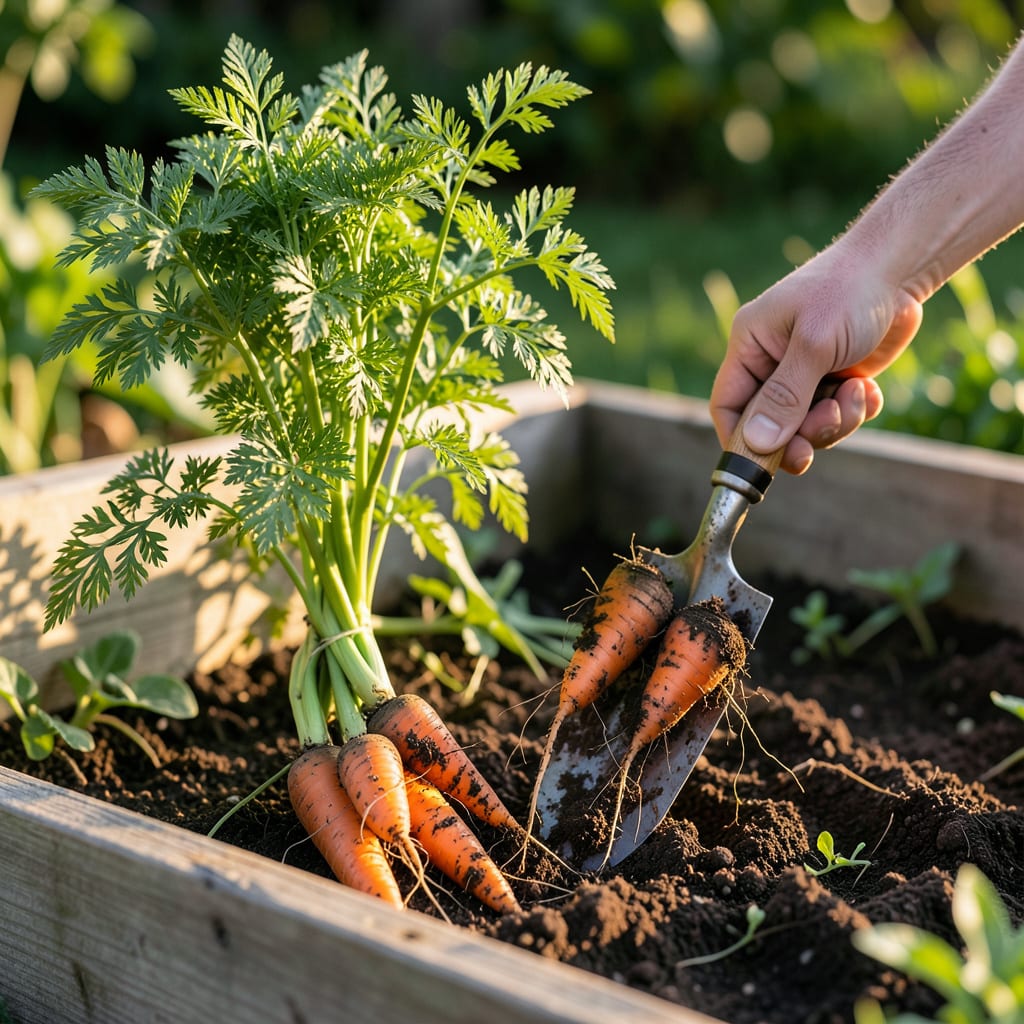
I remember the first time I pulled a Carrot 🥕 from my garden and wondered if it was truly ready. Getting the timing right means the difference between a sweet, crisp bite and a tough disappointment.
There are clear signs to watch for – from size to color – that tell you it’s harvest time. Let me show you exactly what to look for so you never second-guess again.


I always check for shoulder diameter first when determining if my carrots are ready. The top of the root, just below the foliage, should be about 0.75 to 1 inch wide for most varieties.
Another clear indicator is root color. Mature carrots develop a deep, vibrant orange hue that’s consistent throughout the visible portion. Pale or uneven coloring means they need more time. 🌱
The foliage also gives clues. When the green tops start to yellow slightly, it often indicates the carrots have reached maturity. However, don’t wait until the foliage is completely yellow.
I find that days to maturity is a helpful guideline. Most carrot varieties take between 50 to 80 days to mature. Check your seed packet for the specific range for your variety.
To check without pulling, I gently brush away soil from the top of the carrot. This lets me see the shoulder diameter and color without disturbing the root. Be careful not to expose too much of the root to sunlight.
Carrots are ready when they’re loose in the soil. If they come out easily with a gentle tug, they’re likely ready. If they’re firmly stuck, give them more time to grow. 🌿
Remember that baby carrots can be harvested earlier, around 30 days, when they’re about the size of your finger. These will be more tender but less sweet than fully mature carrots.
For the sweetest flavor, I recommend harvesting in the cool morning hours. The carrots will be crisp and full of moisture. Avoid harvesting during the hottest part of the day.
If you’re growing different varieties, note that Nantes carrots mature faster than Danvers or Chantenay types. Always refer to the specific maturity time for your chosen variety.
I’ve learned that harvesting at the right growth stage makes all the difference in flavor. Baby carrots, pulled at about 30 days, are tender but milder in sweetness compared to mature ones.
For full flavor, I wait until carrots reach their mature size, typically between 50 to 80 days. At this stage, they develop their signature sweetness and crisp texture. 🌱
I love growing Nantes carrots because they mature faster, usually around 60 days. Their cylindrical shape makes them perfect for container gardening too.
For Danvers or Chantenay varieties, I give them the full 70 to 80 days. These types develop a tapering shape and deeper flavor that’s worth the wait.
To extend my harvest season, I practice succession planting. By sowing new seeds every 2 to 3 weeks, I ensure a steady supply of fresh carrots throughout the growing season.
Harvesting in the cool morning hours preserves their crispness. I avoid the midday heat when the soil is dry and the carrots might be stressed. 🌿
I’ve seen many gardeners make the mistake of harvesting too early. Pulling carrots before they reach 0.75 inch diameter often results in small, underdeveloped roots that lack sweetness.
Another common error is waiting too long. Overmature carrots can become woody and fibrous. They may also split if left in the ground past their prime. 🌱
⚠️ Harvesting Warning
Avoid pulling carrots when soil is bone dry or waterlogged. The best time is when soil is slightly moist for easiest removal.
Many gardeners yank too hard when harvesting, which can break the roots. Instead, I loosen the soil around the carrot first with a fork, then gently pull by the foliage.
Don’t be fooled by foliage size alone. Some carrot varieties have large tops but small roots. Always check the shoulder diameter and color for true readiness. 🌿
Harvesting during the hottest part of the day can stress the plants. I always wait for cool morning or evening hours when the soil is easier to work with.
The shoulder should be 0.75 to 1 inch wide. This is the most reliable indicator for most varieties.
Yes, you can pull baby carrots at about 30 days when they’re finger-sized. They’ll be tender but less sweet than mature ones.
Harvest in cool morning hours when soil is moist. This preserves crispness and makes removal easier.
Gently brush soil away from the top to check shoulder diameter and color. Avoid exposing too much root to sunlight.
