
Beautiful Plants For Your Interior
Beautiful Plants For Your Interior
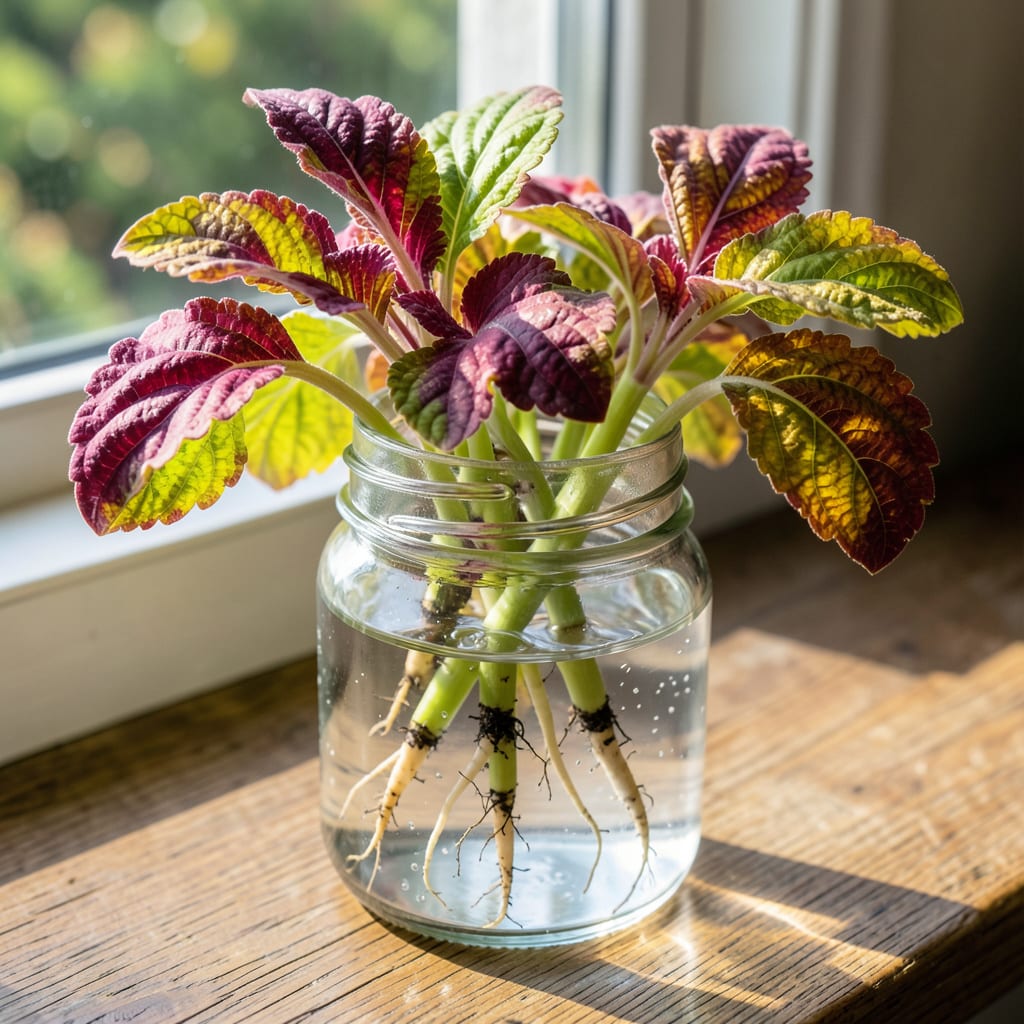
I killed my first three coleus cuttings before realizing the secret. Water propagation works every time with just a jar, sunlight, and a little patience.
Within 2 weeks, you’ll see white roots spreading through the water, ready for potting. The plants thrive in bright, indirect light and bounce back from even my black-thumb mistakes.
📚 In This Guide
Here’s the method I rely on to propagate coleus with near-perfect success every time.
Choose 4-6 inch stem sections from healthy, non-flowering coleus plants. Look for vigorous growth with vibrant coloration—this ensures your cuttings have the energy to root. I always select stems just below a leaf node, where the concentration of growth hormones is highest.
Using sharp, clean pruners, make a 45-degree angle cut just below a node. Remove the bottom 2-3 sets of leaves, leaving only the top growth. This reduces moisture loss and prevents the lower leaves from rotting in water. The node where you removed leaves is where roots will emerge.
Fill a clean glass or jar with room temperature water—cold water can shock the cuttings. Submerge only the bottom 1-2 nodes of each stem, ensuring no remaining leaves touch the water. I use filtered or dechlorinated water to avoid chemical interference with root development.
Place the container in a location with bright, indirect light (a north or east-facing window works perfectly). Direct sun will overheat the water and cook your cuttings. You should see tiny root initials forming at the nodes within 5-7 days.
Change the water every 2-3 days to prevent bacterial growth, which appears as cloudy water or slimy stems. If you notice this, rinse the cuttings and start with fresh water immediately. Roots should reach 1-2 inches long before transplanting—this usually takes 2-3 weeks total.
I watch for white, fibrous roots rather than dark or mushy ones. The latter indicates rot, often caused by too much stem submerged or poor water quality. If a cutting develops rot, remove it immediately to protect the others in the same container.
Once roots are 1-2 inches long, transplant into 2-3 inch pots filled with well-draining potting mix. Make a hole with your finger, insert the cutting gently, and firm the soil around it. Water lightly to settle the mix around the new roots.
Keep the newly potted cuttings in bright, indirect light for 3-5 days before gradually introducing more direct sun. This transition period prevents shock. I maintain consistent moisture (not soggy) for the first week, then treat them like established plants.
After 1-2 weeks in their new pots, pinch back the top 1-2 inches of growth to encourage branching. This creates fuller plants and prevents leggy growth. The cuttings you remove can themselves be rooted, creating a continuous propagation cycle.
At this stage, your coleus will benefit from a balanced liquid fertilizer at half strength, applied every 2-4 weeks. This gives them the nutrients to support their rapid new growth. Watch for vibrant color and compact form as signs of healthy establishment.
Small details make the difference between thriving cuttings and disappointment.
The Cutting Selection: In Step 1, focus on stems with the most vibrant coloration—these contain the highest concentration of growth hormones. Avoid any flowering stems, as their energy is directed toward blooms rather than root development. I learned this the hard way after several failed attempts with less vigorous cuttings.
Water Quality Matters: For Step 2, always use room temperature water, as cold water can shock the cuttings and delay root formation. Filtered or dechlorinated water is ideal, but if you only have tap water, let it sit out for 24 hours to allow chlorine to dissipate before using it.
Light Conditions: That bright, indirect light mentioned in Step 2 is non-negotiable. A north or east-facing window is perfect, but if you only have a south or west window, place the cuttings at least 3-4 feet away from the glass to avoid overheating the water, which can cook the stems.
Monitoring for Success: In Step 3, change the water every 2-3 days without fail. If you notice cloudy water or slimy stems, act immediately—rinse the cuttings and refresh the water. I once lost an entire batch by waiting just one extra day, thinking it could hold on a little longer.
Yes! While water propagation is popular, coleus can root directly in moist, well-draining soil. Keep the soil consistently damp and provide indirect light for best results.
In water, roots typically appear in 1-2 weeks. Soil propagation may take slightly longer, around 2-3 weeks, depending on temperature and humidity.
Wilting often means stress from insufficient water or light. Ensure cuttings stay hydrated (in water or moist soil) and receive bright, indirect light to recover.
Yes, but growth may slow due to cooler temperatures. Use a warm spot (70–75°F) and grow lights if natural light is limited to encourage rooting.
No, coleus roots easily without it! However, using a rooting hormone can speed up the process, especially for slower-growing varieties or less-than-ideal conditions.
