
Beautiful Plants For Your Interior
Beautiful Plants For Your Interior
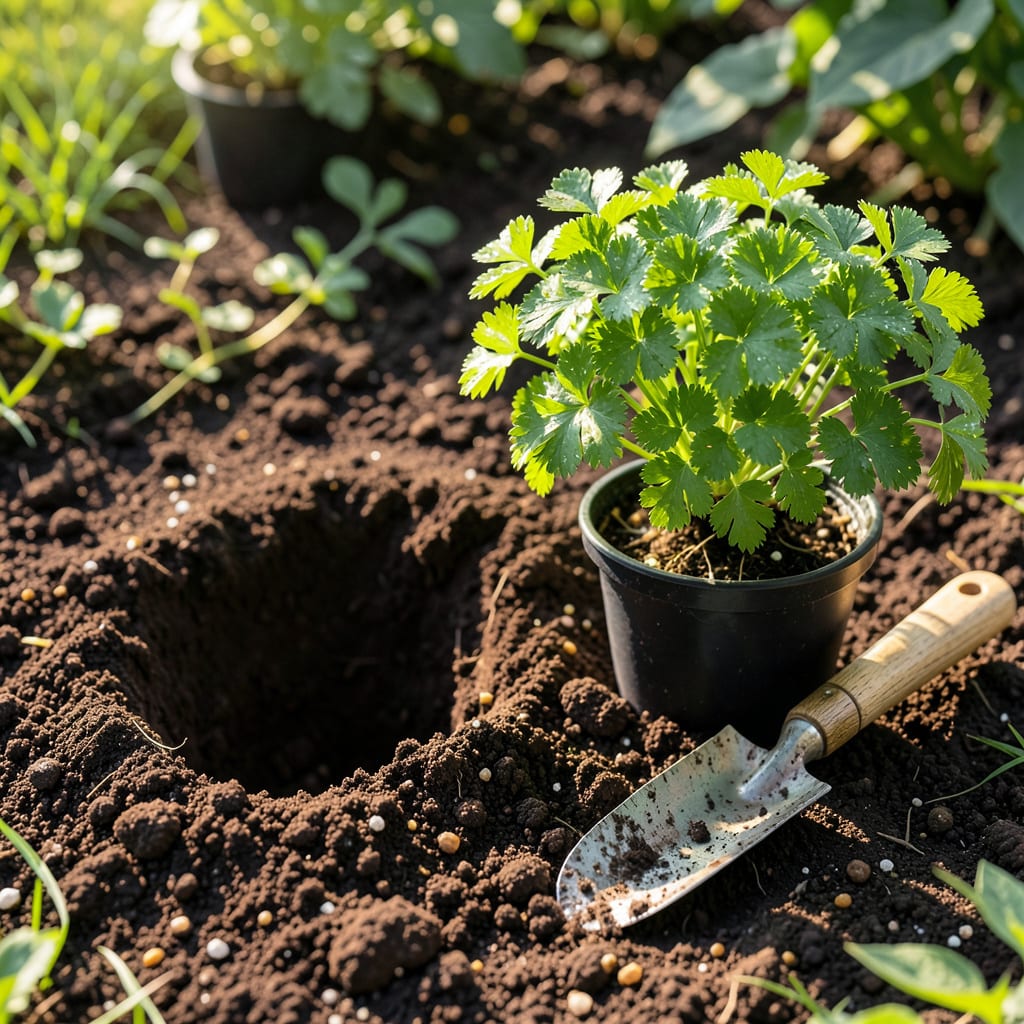
Parsley hates being moved, but do it right and you’ll get healthier plants with a longer harvest window. I’ve killed my share by rushing the process—now I know the exact steps to keep roots intact and stress minimal.
Start with well-draining soil, give each plant 8-10 inches of space, and water deeply after transplanting. The key is timing: move them on a cool, cloudy day to reduce shock and help them settle faster.
📚 In This Guide
Here’s the method I use to keep parsley thriving after the move, with minimal stress to the plant.
Choose a spot with full sun to partial shade—parsley handles morning sun and afternoon shade beautifully. The soil should be loose, well-draining, and enriched with compost. I always dig the hole twice as wide as the root ball but only as deep as the current container.
Water the new hole thoroughly before transferring the plant. You want the soil to be moist but not waterlogged. This prevents the roots from drying out during the transition. Check that the area doesn’t have standing water after 10 minutes—if it does, pick a different spot.
Water the parsley in its current pot 1 hour before replanting. This keeps the root ball intact and reduces transplant shock. Turn the pot sideways and tap the edges gently to loosen the roots. If it’s stubborn, run a knife around the inside edge of the pot.
Cradle the base of the plant with one hand while tipping the pot with the other. The root ball should slide out cleanly. If roots are circling the bottom, tease them apart lightly with your fingers—this encourages outward growth in the new location.
Place the parsley in the hole so the top of the root ball sits ½ inch above the surrounding soil. This accounts for settling. Backfill with soil, pressing lightly to eliminate air pockets. I use my fingers to firm the soil around the base, but don’t compact it too tightly.
Water immediately with 1-2 cups of water to help the soil settle around the roots. You’ll see the level drop slightly—add more soil if needed. The goal is to keep the plant at the same depth it was in its original container.
Keep the soil consistently moist for the first 7-10 days—this is critical for root establishment. Check daily by sticking your finger 1 inch into the soil. If it feels dry, water deeply at the base, avoiding the leaves to prevent disease.
Avoid fertilizing for at least 2 weeks. Freshly replanted parsley needs time to adjust, and fertilizer can burn tender roots. Once you see new growth, you’ll know it’s established. Mulch with an inch of straw to retain moisture and suppress weeds.
Small details make a big difference when replanting parsley and helping it recover quickly.
Soil Prep Insight: In Step 1, when you water the new hole, that 10-minute wait isn’t just for show. If water pools after this time, you’ve found a spot that’ll suffocate your parsley’s roots—keep looking for better drainage.
Root Handling Tip: That 1 hour of pre-watering in Step 2 is your secret weapon. It keeps the root ball from crumbling when you remove the plant, and I’ve found parsley bounces back twice as fast when I don’t skip this.
Depth Matters: The ½ inch above soil level in Step 3 might seem fussy, but it prevents the stem from rotting as the plant settles. After watering with those 1-2 cups, check that the original soil line on the stem stays visible.
Aftercare Essential: During those first 7-10 days, resist the urge to fertilize. I learned the hard way that even organic fertilizer can shock parsley roots during this critical establishment period.
Yes! Grocery store parsley with healthy roots can often be replanted. Trim the stems, soak the roots in water for a few hours, then transfer to a pot with well-draining soil. Keep it moist and in indirect light for best results.
Early spring or fall is ideal, as parsley prefers cooler temperatures (60-70°F). Avoid extreme heat or frost. If replanting indoors, timing is less critical—just ensure consistent light and moisture.
Don’t panic! Wilting can mean transplant shock. Keep the soil moist (not soggy) and provide shade for a few days. Trim any damaged leaves to help the plant recover.
Temporarily, yes! Place the roots in a glass of water and change it every 2-3 days. However, for long-term growth, transfer to soil within 2-3 weeks for stronger, healthier plants.
