
Beautiful Plants For Your Interior
Beautiful Plants For Your Interior
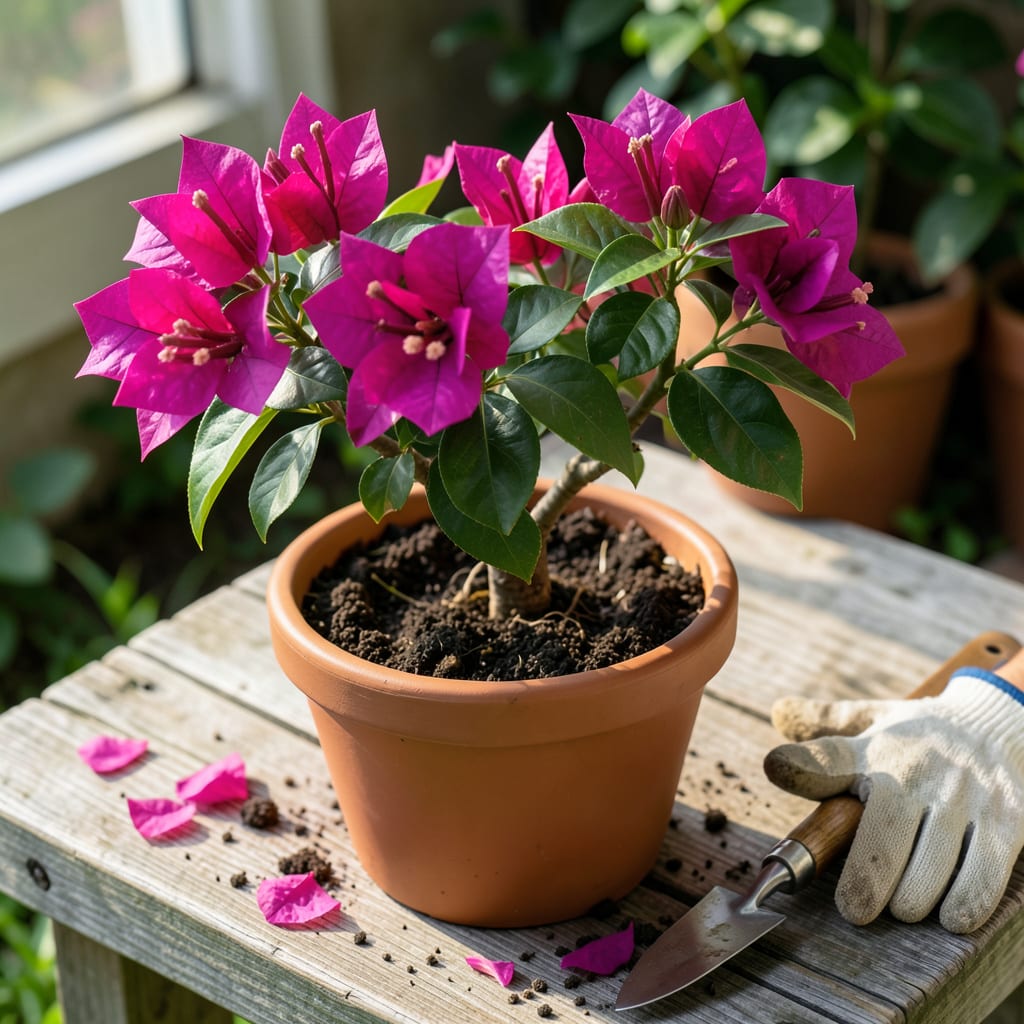
Bougainvillea hates being moved, but I’ve done it successfully with a few key steps. Timing matters—early spring before new growth starts is ideal.
Root shock is real, so I prep the new hole with well-draining soil and water it first. The plant recovers faster, and you’ll see new blooms within 4-6 weeks if done right.
📚 In This Guide
Here’s the method I use to move these vibrant plants without shocking their sensitive root systems.
Bougainvillea handles transplanting best in early spring or early fall when temperatures stay between 60-80°F. Avoid moving it during active blooming or extreme heat, which stresses the plant. I always pick a new spot with full sun exposure and well-draining soil—these plants despise wet feet.
Dig the new hole twice as wide and just as deep as the current root ball. This gives roots room to spread without settling too low. Test the drainage by filling the hole with water—if it doesn’t drain within 30 minutes, choose a different location or amend the soil with sand.
Water the bougainvillea deeply 24 hours before transplanting to soften the soil and reduce root damage. Use a sharp spade to cut a wide circle around the plant, starting 12-18 inches from the base for mature specimens. The goal is to keep as much of the root system intact as possible.
Gently rock the spade under the root ball to loosen it. If the plant resists, widen your circle rather than forcing it—broken roots mean a longer recovery. Once free, lift the plant by the root ball, not the stems, and wrap the roots in damp burlap to prevent drying while you move it.
Place the bougainvillea in the new hole so it sits at the same depth as it was originally. The base of the trunk should be level with the surrounding soil. Backfill with native soil, firming it gently around the roots to eliminate air pockets. Avoid pressing too hard, as compacted soil can suffocate new growth.
Create a shallow water basin around the plant by mounding soil in a 3-inch-high ring about 12 inches from the base. This helps direct water to the roots during the first few weeks. Water immediately after planting until the soil is thoroughly moist but not soggy.
Keep the soil consistently moist but not waterlogged for the first 2-3 weeks. After that, taper off to encourage deep root growth. Bougainvillea is drought-tolerant once established, but it needs steady moisture to recover from the shock of moving.
Avoid fertilizing for at least 4-6 weeks—new roots are tender and can burn easily. Instead, focus on protecting the plant from wind and extreme temperatures. If leaves wilt or turn yellow, don’t panic; this is normal as the plant adjusts. Just keep the soil evenly damp and wait for new growth to appear.
Here are the details that make the difference between a struggling plant and a thriving one.
Timing Secret: That 24-hour pre-watering in Step 2 is non-negotiable. Deep watering softens the soil so your spade can glide through roots cleanly, reducing shock. I’ve skipped this once—regretted it immediately when half the root ball stayed behind.
Drainage Test: The 30-minute drainage check in Step 1 isn’t just busywork. If water pools longer, amend the soil with sand or pick a new spot. Bougainvillea roots rot fast in soggy conditions, and recovery becomes nearly impossible.
Depth Matters: In Step 3, planting at the same depth as the original spot prevents two common problems: too deep causes stem rot, too shallow exposes roots to drying out. Use the trunk’s soil line as your guide—it’s nature’s measuring tape.
Recovery Window: Those first 2-3 weeks of consistent moisture in Step 4 are critical. I set phone reminders to check soil daily—dry spells now mean a longer adjustment period later. The water ring you create helps direct every drop right to the roots.
The ideal time is in late winter or early spring, just before new growth starts. This gives roots time to establish before summer heat. Avoid replanting during extreme temperatures or heavy blooming periods.
Look for roots circling the container, slow growth, or water draining too quickly. If the plant is top-heavy or roots are crowded, it’s time to replant into a larger pot or new location.
It’s risky due to heat stress, but possible if you water deeply afterward and provide shade. Early morning or late evening transplanting helps reduce shock. Avoid midday heat at all costs.
Use well-draining soil, like a cactus or succulent mix, with added perlite or sand. Bougainvilleas hate soggy roots, so ensure the new location or pot has good drainage.
Transplant shock is common. Keep the soil consistently moist (not soggy) for the first 2-3 weeks, and avoid fertilizing until new growth appears. Trim back excessive foliage to reduce stress.
