
Beautiful Plants For Your Interior
Beautiful Plants For Your Interior
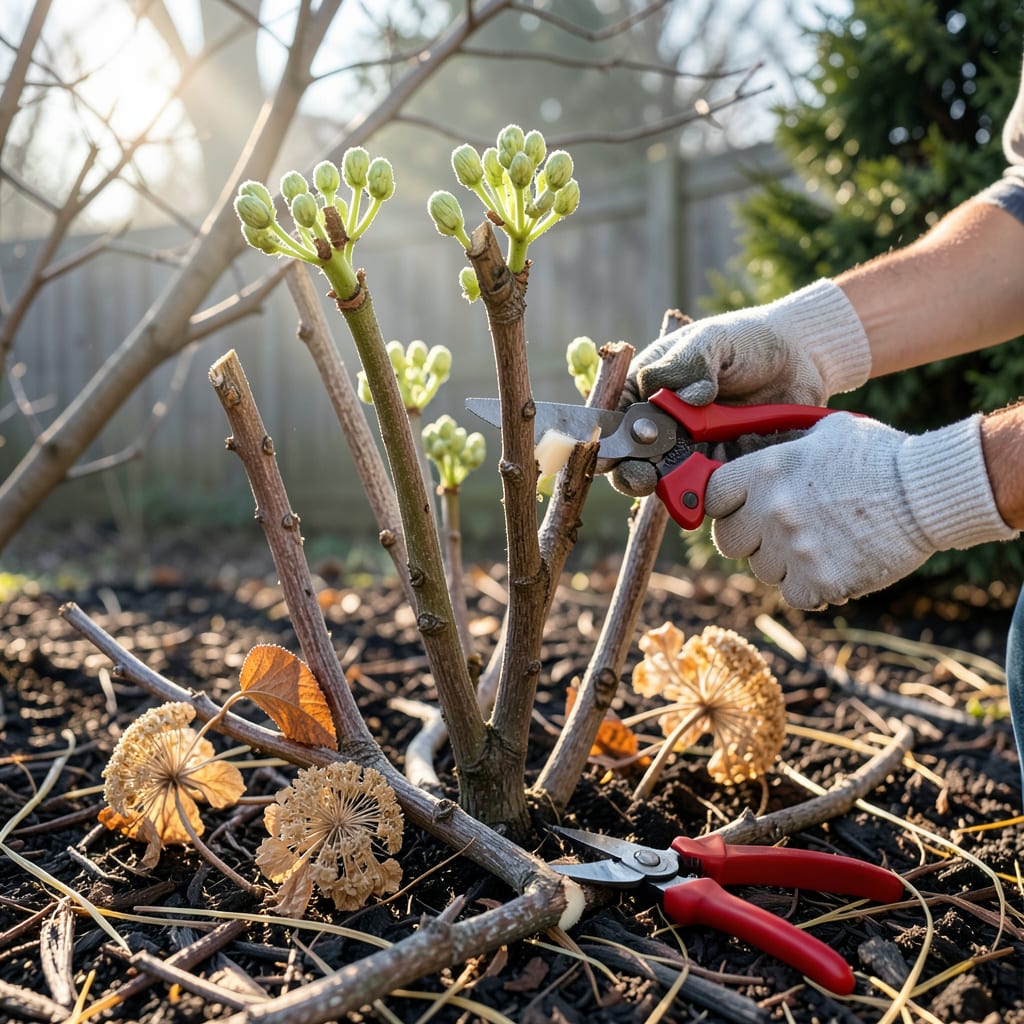
I used to think pruning Annabelle hydrangeas was optional—until I saw what happened after my first proper pruning session. The difference was shocking: twice as many blooms, stronger stems, and a bush that actually fit its space instead of flopping everywhere. This isn’t about hacking back growth randomly; it’s about making strategic cuts that tell your plant exactly where to focus its energy.
The timing matters just as much as the technique. Do it too late, and you’ll sacrifice next year’s flowers. Do it too early, and winter damage can set you back. I’ve landed on the sweet spot—late winter, just as the buds start to swell—and the results speak for themselves. You’ll need just two things: sharp pruners and the confidence to cut back hard where it counts.
📚 In This Guide
Timing and technique make all the difference—here’s exactly when and how to cut for spectacular summer blooms.
Annabelle hydrangeas bloom on new wood, so late winter or early spring is ideal—just as the buds begin to swell but before leaves emerge. I watch for that first hint of green on the stems, usually between February and March depending on your climate zone.
Avoid pruning in fall, no matter how tempting. Those old stems protect the plant through winter, and cutting them removes potential bloom sites. If you must tidy up, only remove dead or damaged wood in autumn—save the real pruning for spring.
Start by cutting out any dead, diseased, or broken stems at their base. These won’t produce flowers and can harbor pests. I use sharp bypass pruners and make clean cuts at a 45-degree angle just above a healthy bud or stem junction.
Next, thin out the weakest stems—those thinner than a pencil or growing inward. This opens up the center for better air circulation, which prevents powdery mildew. You’ll see the plant’s structure improve immediately, with more room for strong new growth.
Now cut back the remaining healthy stems to about 12-18 inches above ground level. This might feel drastic, but Annabelles respond by producing larger, sturdier blooms. I aim for a rounded shape, making each cut just above a pair of healthy buds.
Don’t worry about being perfectly symmetrical—natural variation actually creates a more interesting shape. You’ll notice new growth appearing within 2-3 weeks after pruning, confirming you’ve done it at the right time.
Remove all cut stems from the base of the plant to prevent disease. I like to spread a 1-2 inch layer of mulch around the base (but not touching the stems) to retain moisture and suppress weeds as the new growth emerges.
Water deeply after pruning to help the plant recover. You’ll see the first signs of new growth—small green bumps on the stems—within about 10-14 days, which means your timing was perfect and bigger blooms are on their way.
As the plant grows, keep an eye out for any stems that aren’t producing leaves or flowers by mid-summer. These might need removal. I also pinch back the tips of particularly vigorous stems in early June to encourage bushier growth and more bloom sites.
By mid-summer, you’ll be rewarded with those signature huge white blooms—often 8-12 inches across—that make Annabelle hydrangeas so spectacular. The pruning you did in spring directly determines both the size and quantity of these flowers.
Pruning hydrangeas can feel intimidating at first, but these practical insights will help you avoid common pitfalls and set your plant up for its best blooms yet.
Timing Precision: The February to March window mentioned in Step 1 is critical because pruning too early risks cold damage to new growth, while pruning too late removes potential flower buds. I’ve found that watching for that first hint of green swelling on the stems—rather than going by calendar dates—gives the most reliable results. In warmer zones (7-9), this might happen as early as late January, while colder zones (3-5) may not see this until early April.
Cutting Technique: When making those 45-degree angle cuts in Step 2, position your pruners so the higher side of the cut faces outward. This allows water to run off away from the bud rather than pooling against it, which prevents rot. I also recommend wiping your pruner blades with rubbing alcohol between cuts if you’re removing diseased wood to avoid spreading pathogens to healthy stems.
Height Strategy: The 12-18 inch height range in Step 3 isn’t arbitrary—it’s the sweet spot for Annabelles. Cutting shorter than 12 inches can delay blooming because the plant puts energy into regrowing stems rather than flowers. Going taller than 18 inches often results in weaker stems that flop under the weight of those massive 8-12 inch blooms. For consistently sturdy plants, I aim for the middle of this range, about 15 inches, which gives me both strong stems and abundant flowers.
Seasonal Monitoring: That early June pinch-back mentioned in Step 5 makes a surprising difference in bloom quantity. I use my thumbnail and forefinger to remove just the top 1-2 inches of the most vigorous stems—this isn’t heavy pruning, just a light trim. The plant responds by branching out, creating more sites for those spectacular white blooms to form. Mark your calendar for this task, as it’s easy to forget once summer gardening gets busy.
The ideal time is late winter to early spring (February–March) while the plant is still dormant. Avoid pruning in fall—new growth could be damaged by frost. If you miss the window, light trimming after blooming (summer) works too, but avoid heavy cuts then.
No—these shrubs are tough! Even if you cut them to the ground (hard pruning), they’ll regrow. Stick to removing ⅓ of the oldest stems annually for best results. Over-pruning may reduce blooms temporarily but won’t kill a healthy plant.
Annabelles bloom on new wood (current season’s growth), so aggressive pruning is safe. Other varieties (like bigleaf hydrangeas) bloom on old wood—prune those right after flowering or you’ll lose next year’s blooms!
Common culprits: Pruning too late (after buds form), over-fertilizing (promotes leaves over flowers), or extreme weather damage. If stems are alive (scratch test: green = healthy), give it a season—blooms should return with proper timing next year.
For quick shaping, yes—but hand pruners are better! Shears can leave jagged cuts, inviting disease. Use shears only for light trimming; for rejuvenation, cut individual stems at the base with clean, sharp pruners.
