
Beautiful Plants For Your Interior
Beautiful Plants For Your Interior
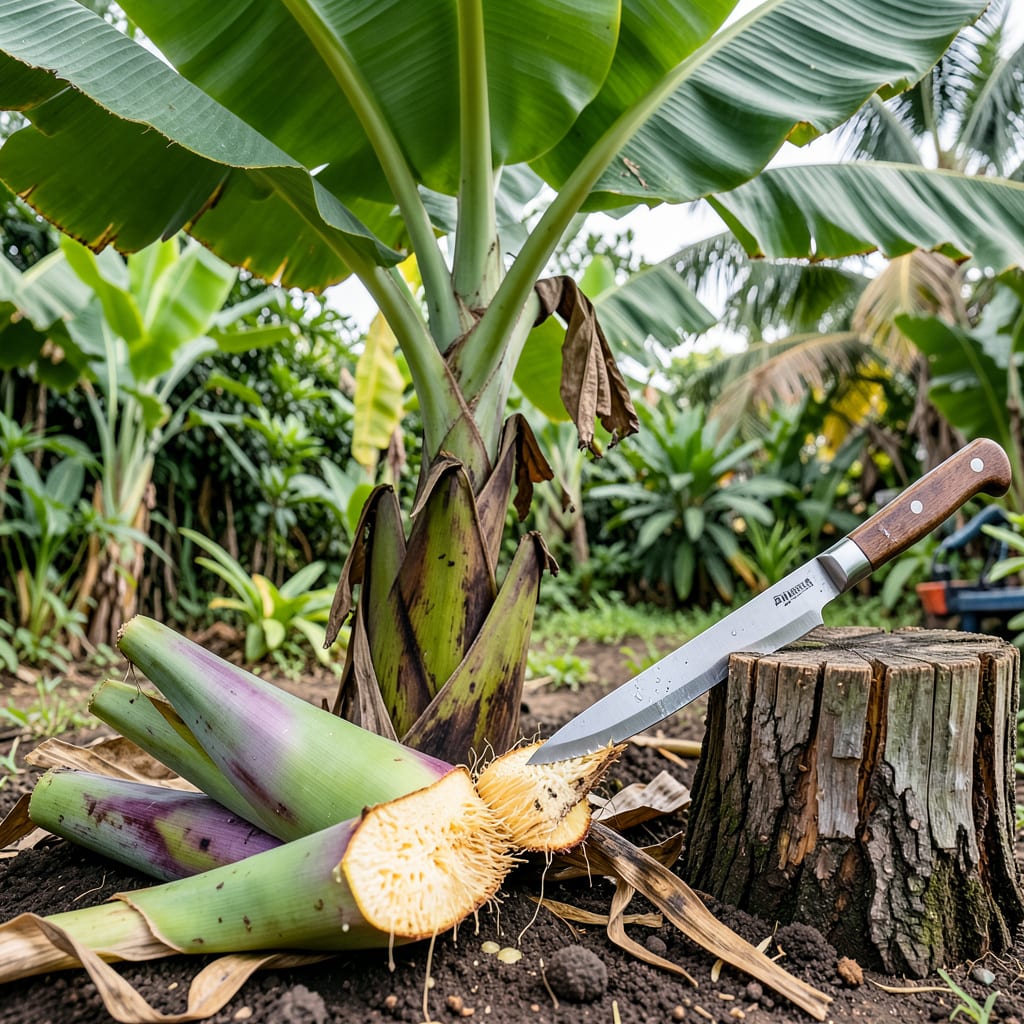
That first time I pruned my banana tree, I nearly chickened out. The leaves were massive, the trunk (well, pseudostem) towered over me, and I worried I’d ruin everything. Turns out, pruning is what transformed my struggling plant into a fruit-producing powerhouse within months. This isn’t about hacking away blindly—it’s strategic cuts that redirect energy where it matters most.
You’ll remove dead leaves that drain resources, thin out crowded growth to prevent disease, and encourage new shoots that actually bear fruit. The right timing and technique mean your tree stays compact, healthy, and productive. I’ve done this with dwarf varieties in containers and full-sized plants in ground—same principles apply. Let’s get that tree in shape.
📚 In This Guide
Pruning at the right time with proper technique keeps your banana tree productive and disease-free for years.
Banana trees produce fruit on mature pseudostems that have already flowered. After harvesting bananas from a stem, that pseudostem will never produce again and should be removed. I look for stems that are brown, dried out, or have already borne fruit—these are ready for pruning.
The best time to prune is in late winter or early spring before new growth begins. Avoid pruning during freezing temperatures or when the plant is actively flowering. You’ll see the most obvious candidates: dead or damaged leaves, and any suckers (pups) growing at the base that you don’t want to keep.
Using a sharp, sterile pruning saw or machete, cut the selected pseudostem at ground level. Make a clean, angled cut about 1-2 inches above soil level to prevent water pooling on the stump. The remaining stub will eventually decompose naturally.
Don’t try to pull or twist the stem—it’s fibrous and connected to an extensive root system. Forcing it can damage surrounding roots. I’ve found that cutting in sections works best for very large stems: remove the top portion first, then work downward to avoid injury from falling debris.
Banana trees produce numerous suckers at the base, but too many compete for nutrients. Keep only 3-4 healthy pups of varying sizes—this ensures continuous production. Remove smaller, weaker suckers by cutting them at ground level with your pruning tool.
For pups you want to keep, select those with sword-shaped leaves that are at least 3-4 feet tall. These are established enough to potentially replace the mother plant. Never remove all pups—this would eliminate your future banana production entirely.
After pruning, immediately remove all cut material from the area. Banana debris can harbor pests and diseases that might reinfect your plant. I use a tarp to collect the cuttings, which makes cleanup much easier.
Sanitize your tools with rubbing alcohol or a 10% bleach solution between cuts to prevent disease transmission. This is especially important if you’re working with multiple banana plants. The final step is to water the remaining plant deeply—this helps reduce stress from the pruning process.
Within 2-3 weeks, you should see new growth emerging from the remaining pups. The largest kept pup will become your new main stem. Watch for any signs of stress like yellowing leaves, which might indicate over-pruning or insufficient water.
I check my banana plants weekly after pruning. The first new leaf unfurling is always exciting—it confirms the plant is redirecting its energy properly. Remember that banana trees grow quickly, so you may need to repeat this process annually for optimal fruit production.
Pruning banana trees properly makes all the difference between a struggling plant and one that thrives for years.
Timing Precision: The late winter to early spring window mentioned in Step 1 isn’t arbitrary—this timing allows the plant to focus energy on new growth just as warmer weather arrives. I’ve found that pruning even two weeks before this window can leave the plant vulnerable to late frosts, while waiting until summer means competing with active flowering. Watch your local weather patterns and aim for that sweet spot when nighttime temperatures stay consistently above 50°F.
Pup Selection Strategy: When choosing which 3-4 pups to keep in Step 3, prioritize those with the thickest stems rather than just the tallest. I learned this after losing two potential mother plants that looked impressive but had weak central stems. The sword-shaped leaves should feel firm and upright—any that droop or show yellowing aren’t worth keeping, regardless of height. Remember that the 3-4 feet guideline is a minimum; larger, more established pups will fruit sooner.
Cutting Technique: The 1-2 inches above soil level specification in Step 2 prevents two critical problems: water pooling that leads to rot, and stubs that become tripping hazards. I make my cuts at a 45-degree angle to shed water even more effectively. For particularly large pseudostems, I’ve had success using a reciprocating saw with a pruning blade—it’s faster and leaves cleaner edges than a manual saw for stems over 6 inches in diameter.
Post-Pruning Care: The deep watering mentioned in Step 4 should penetrate at least 12 inches into the soil to reach the entire root system. I use a soil probe or long screwdriver to check moisture depth—if it comes out clean after insertion, you haven’t watered deeply enough. Consider adding a 2-3 inch layer of mulch around (but not touching) the remaining stems to conserve moisture during this critical recovery period.
Prune in late winter or early spring before new growth starts—this minimizes stress. Avoid pruning during flowering or fruiting, as it can reduce yield. In tropical climates, light pruning can be done year-round, but avoid heavy cuts in extreme heat or rainy seasons.
Yes! Banana trees are hardy, but never remove the main pseudostem (the thick central stalk). Focus on dead leaves, suckers (pups), or damaged fronds. Leave 6–10 healthy leaves to support photosynthesis. Over-pruning can weaken the plant, so trim gradually.
Pruning targets leaves, flowers, or dead growth, while sucker removal manages new shoots (pups) at the base. Keep 1–2 strong suckers to replace the mother plant after fruiting. Remove weak or excess suckers to direct energy to fruit production.
Trim only the damaged portions of leaves with clean shears, leaving a small green border. Avoid cutting the entire leaf unless it’s fully dead. Brown tips often signal underwatering or nutrient deficiency—check soil moisture and fertilize with potassium-rich food.
Chop leaves into smaller pieces to speed up decomposition. They’re rich in potassium and organic matter—great for compost piles or mulch around the base (but avoid piling against the stem to prevent rot). Recycle nutrients back into your garden!
