
Beautiful Plants For Your Interior
Beautiful Plants For Your Interior
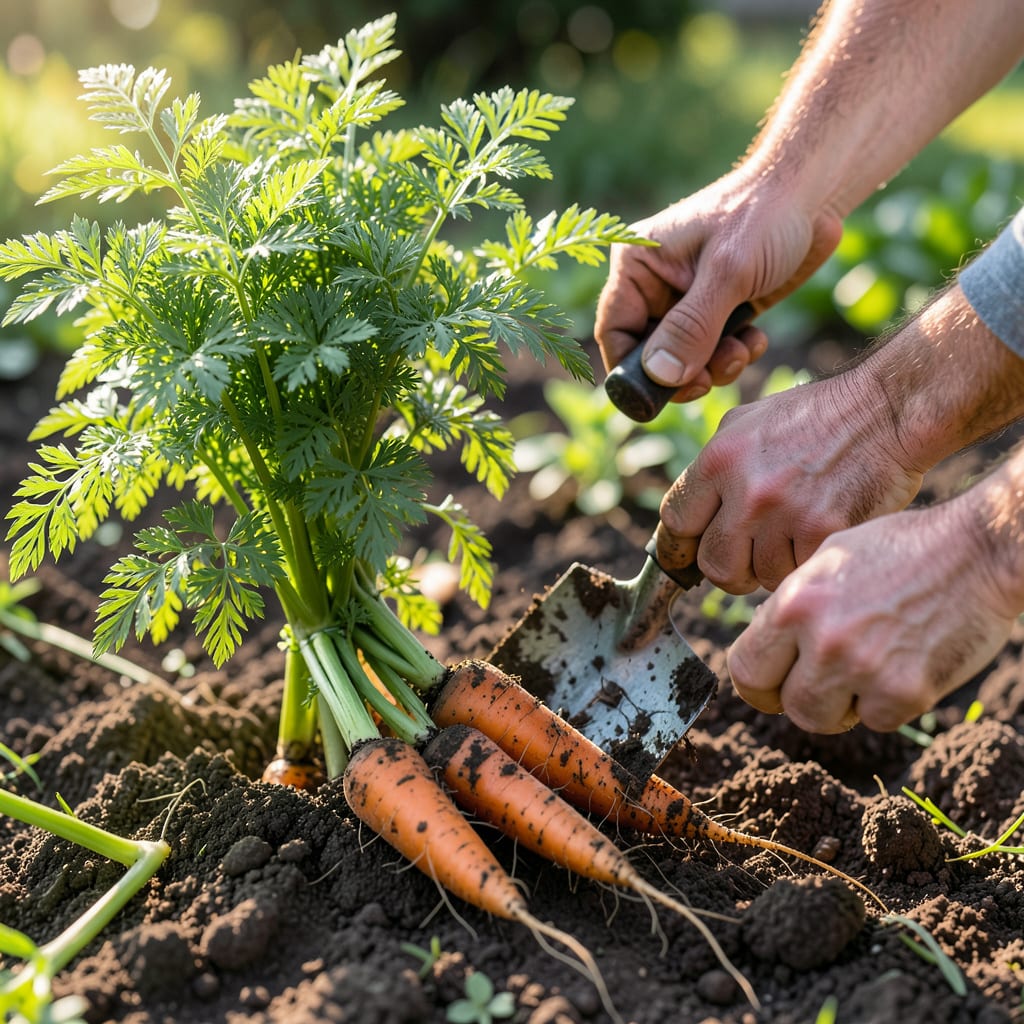
Nothing beats pulling fresh 🥕 Carrot from your garden, but timing is everything. Harvest too early, and they’ll be small and bitter.
Wait too long, and they turn woody. I’ll show you the easiest way to check for perfect readiness without disturbing the whole crop.


The most reliable way to know your carrots are ready is by checking their shoulder diameter. Most varieties reach 3/4 to 1 inch at the soil line when mature. I always measure just above the soil for accuracy.
Another clear sign is days to maturity. Short varieties like Paris Market take 50-60 days, while longer types like Danvers need 70-80 days. Check your seed packet for specifics.
🌱 Carrot Harvest Readiness Guide
| Variety | Days to Maturity | Mature Diameter |
|---|---|---|
| Paris Market | 50-60 | 1-1.5 inches |
| Nantes | 60-70 | 0.75-1 inch |
| Danvers | 70-80 | 1-1.25 inches |
I also look for vibrant color at the soil line. A deep orange or purple hue means the carrot is developing well. Pale or white tops indicate it needs more time in the ground.
The foliage gives clues too. Healthy green tops about 6-8 inches tall suggest good root development. If the greens are yellowing or wilting, the carrots may be overdue for harvest.
For baby carrots, I start checking at 30-40 days. These will be smaller, about 1/2 inch thick, but packed with sweet flavor. They’re perfect for early harvesting if you can’t wait.
I’ve found that gentle soil brushing helps reveal the shoulder without damaging the plant. Use your fingers to clear soil from the top 1-2 inches of the carrot to inspect its size and color.
Remember that soil temperature affects growth. Carrots mature faster in warm soil (60-65°F) but may develop better flavor in cooler conditions. In spring, I often wait an extra week for sweeter roots.
If you’re growing rainbow carrots, the color cues differ. Purple varieties show their hue early, while white types need a size check. I always mark my rows to track different varieties’ progress.
Finally, trust your seed packet’s guidelines, but don’t hesitate to pull a test carrot. If it looks and tastes good, the rest are likely ready too. I usually harvest in stages to enjoy fresh carrots over several weeks.
☀️I use non-destructive methods to test my carrots’ readiness without disturbing the entire row. The first step is gentle soil brushing to expose the top 1-2 inches of the carrot.
This lets me check the shoulder diameter and color development without pulling. For a more hands-on approach, I feel the crown through the soil to estimate size.
🌱 Gentle Carrot Readiness Checks
For a more accurate test, I selectively sample from the edges of the row. Pulling just 1-2 carrots from different spots gives me a good sense of the whole crop’s progress.
I always check the color at the soil line first. A deep orange or other variety-specific hue means it’s developing well. Pale or white tops mean it needs more time.
The foliage health is another indicator. Healthy green tops about 6-8 inches tall suggest good root development. If the greens are yellowing, the carrots may be ready or overdue.
I find that morning checks work best when the soil is moist and easier to brush away. This method prevents damage to the delicate carrot tops and neighboring plants.
🌿One of the biggest mistakes I see is harvesting after heavy rain. Wet soil makes carrots absorb excess water, leading to cracked roots and bland flavor. Always wait for the soil to dry slightly before pulling.
Another common error is ignoring temperature effects on flavor. Carrots develop sweeter taste in cooler weather. In my experience, those harvested after a light frost are the most flavorful.
⚠️ Avoid These Harvest Timing Mistakes
Many gardeners also misjudge size for baby vs. mature carrots. Baby varieties like Little Finger are ready at 3-4 inches, while standard types need 6-8 inches of growth. Always check your seed packet.
I’ve learned that seasonal adjustments are crucial. Spring carrots may take longer to mature in cool soil, while fall crops can be harvested earlier if temperatures drop quickly. Adapt your timing accordingly.
Finally, don’t forget that overcrowded plants compete for nutrients, leading to stunted growth. Thin seedlings to 2-3 inches apart for best results. This gives each carrot room to reach its full potential.
🌱Most varieties are ready when shoulders reach 3/4 to 1 inch in diameter at the soil line. Check your seed packet, as some types like Paris Market may be slightly larger or smaller.
Avoid harvesting in wet soil, as it causes carrots to absorb excess water and crack. Wait for the soil to dry slightly for the best texture and flavor.
These are perfect for baby carrots! Many varieties like Little Finger mature at just 3-4 inches. If they taste good, they’re ready to enjoy.
Yes! Healthy green tops about 6-8 inches tall suggest good root development. Yellowing or wilting greens may mean it’s time to harvest or overdue.
