
Beautiful Plants For Your Interior
Beautiful Plants For Your Interior
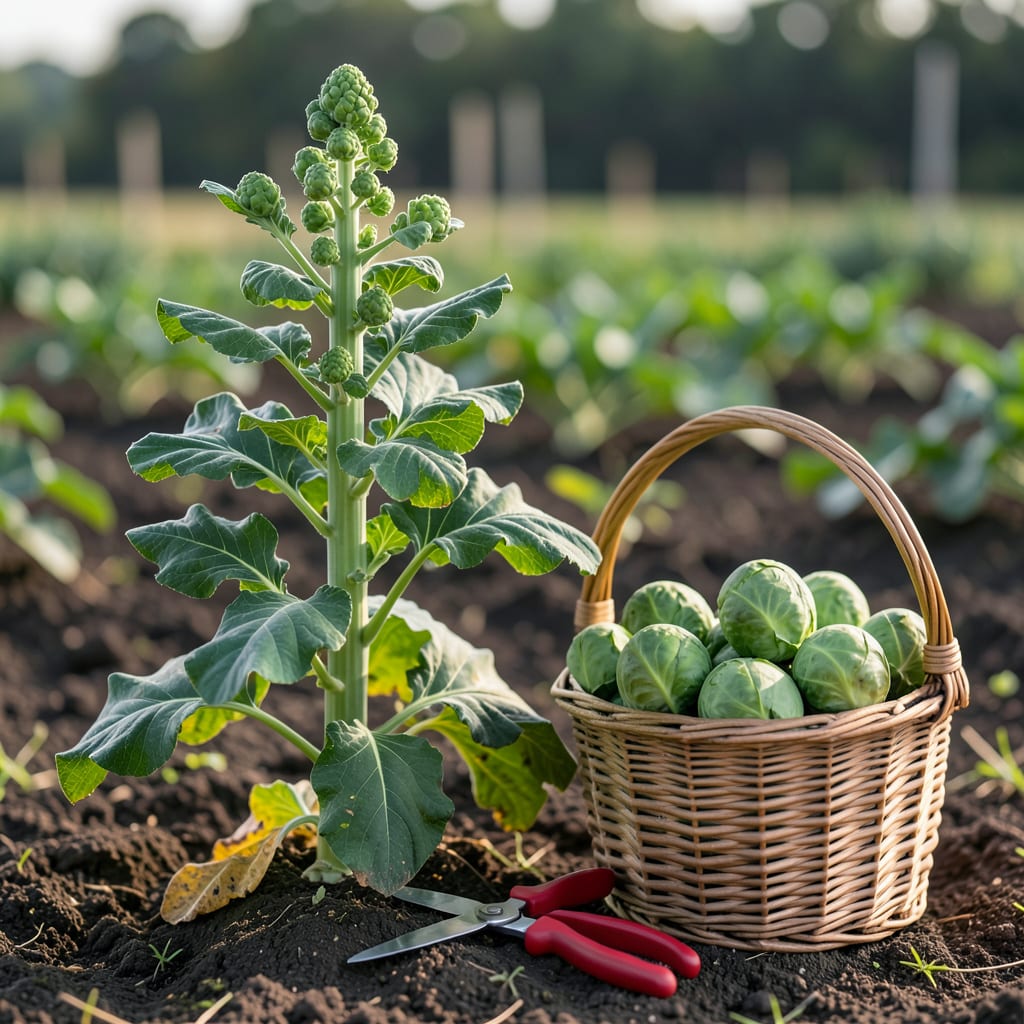
Nothing beats the satisfaction of picking Brussels Sprouts 🥬 at their peak. But how do you know when they’re truly ready? Timing is everything for that perfect flavor and texture.
I’ll show you the exact visual cues to look for, from size to color, so you can harvest your crop with confidence. Let’s get started.


Knowing when to pick Brussels sprouts starts with examining their size and texture. Mature sprouts typically reach 1-2 inches in diameter. They should feel firm and compact when gently squeezed.
Check the color and leaves too. Ready sprouts are bright green and the lower leaves may start yellowing. This indicates the plant is redirecting energy to the sprouts, signaling they’re nearly ready.
| header-cell”>What to Look For | |
| Size | 1-2 inches in diameter |
| Firmness | Hard and compact texture |
| Color | Bright green hue |
| Lower Leaves | Yellowing or dropping |
Start harvesting from the bottom of the stalk first. The lower sprouts mature before the upper ones, so check these first. If they meet the size and firmness criteria, they’re ready to go.
A light frost can improve flavor. Brussels sprouts are cold-hardy, and a touch of frost often makes them sweeter. If your area has had a light frost, it’s a great time to check your crop.
Avoid picking sprouts that are too small or loose. These won’t have developed their full flavor or texture. If they feel soft or squishy, they’re not ready yet.
Also, watch for over-mature sprouts. If they start to open or turn yellow, they’ve passed their peak. Harvest them promptly to avoid a bitter taste.
The harvest window can last several weeks. Since sprouts mature at different rates, you’ll likely be picking them gradually. This staggered harvest ensures you enjoy fresh sprouts for an extended period.
Finally, use a sharp knife to cut the sprouts off the stalk. Leave a small piece of the stem attached to keep the sprout intact. This method also encourages the plant to continue producing.
By focusing on these visual and tactile cues, you’ll consistently harvest Brussels sprouts at their peak. Happy gardening!
🌱Timing your Brussels sprouts harvest isn’t just about size. Weather plays a huge role in flavor development. A light frost is like nature’s sweetener, enhancing the sprouts’ natural sugars.
In cooler climates, early varieties may mature in 80-90 days, while late varieties can take up to 120 days. Warmer regions might see faster growth, but flavor can suffer without that frost touch.
Frost improves flavor by reducing bitterness and increasing sweetness.
Early varieties mature faster but may need frost protection in cold areas.
Late varieties thrive in cooler temps, often tasting sweeter after frost.
If you’re in USDA Zone 6 or similar, aim to harvest after the first light frost. This usually happens in October, aligning with the 90-120 day maturity window from a spring planting.
For warmer zones, like Zone 8 or 9, you might not get a frost. In this case, watch for yellowing lower leaves and firm sprouts as your primary cues.
Regional humidity and rainfall also impact harvest time. Consistent moisture leads to uniform growth, while drought can stall development. Keep soil evenly moist but not waterlogged.
By understanding your local climate and these seasonal patterns, you’ll know exactly when to start checking your Brussels sprouts for harvest readiness. 🌿
Timing your Brussels sprouts harvest incorrectly can lead to bitter or tough results. Picking too early is a common mistake, as immature sprouts haven’t developed their sweetness yet.
Another error is waiting too long. Over-mature sprouts can become woody and lose their tender texture. They may also start to open, which reduces their flavor and shelf life.
Picking too early results in small, bitter sprouts that lack sweetness.
Waiting too long makes sprouts woody, tough, and less flavorful.
Harvesting all at once wastes the staggered maturity of the plant.
Harvesting all sprouts at once is another misstep. Brussels sprouts mature from the bottom up, so picking them all simultaneously means missing out on the staggered harvest that these plants naturally provide.
Using dull tools can damage both the sprouts and the plant. Always use a sharp knife to make clean cuts, which helps the plant continue producing new sprouts and reduces the risk of disease.
Finally, ignore the myth that frost ruins sprouts. In fact, a light frost can enhance their flavor by converting starches to sugars. Just ensure the sprouts are firm and green before harvesting. 🌱
Harvest when they reach 1-2 inches in diameter. Smaller ones lack flavor, while oversized sprouts may turn woody or bitter.
Yes, yellowing lower leaves signal the plant is redirecting energy to the sprouts. This is a key visual cue they’re nearing peak maturity.
A light frost actually improves flavor by converting starches to sugars. Just ensure sprouts are firm and bright green before picking.
They mature from the bottom up. Picking all at once wastes the staggered harvest. Start at the base and work upward over weeks.
