
Beautiful Plants For Your Interior
Beautiful Plants For Your Interior
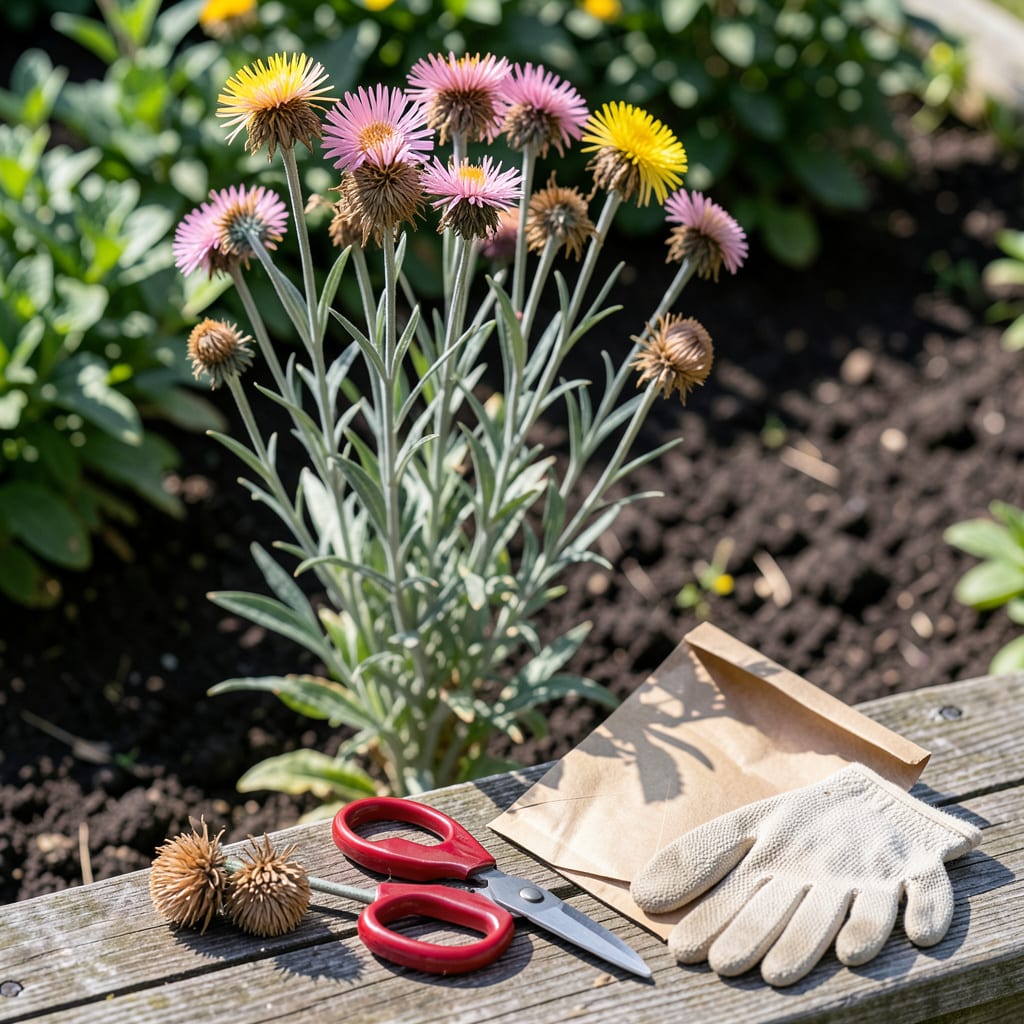
I love how the 🌼 Strawflower keeps giving long after its blooms fade. Those papery flowers hold the promise of next season’s garden right in their dried centers.
With just a little know-how, you can collect and store these seeds for easier propagation next spring. Let me walk you through the simple process.


I love how strawflowers make seed saving almost effortless. Their papery blooms dry perfectly on the stem, making them ideal for beginner gardeners wanting to propagate next year’s flowers. The key is knowing when they’re ready.
You’ll want to wait until the flower heads are completely dry and the petals feel brittle. This usually happens in late summer or early fall, about 90-150 days after planting. The seeds will literally rattle inside when shaken.
The best time to harvest is on a dry, sunny day when there’s no moisture on the plants. I always check that the center of the flower is completely dry – this is where most seeds develop. If it’s still soft, wait another week.
For drying, I recommend using paper towels or newspaper rather than plastic. The seeds need good air circulation to prevent mold. It typically takes 1-2 weeks for the heads to dry completely indoors.
When extracting seeds, be gentle. The tiny black seeds are very light and can easily blow away. I like to do this over a white plate or sheet of paper to catch any that escape. One strawflower head can produce dozens of seeds.
Proper storage is crucial for seed viability. I use paper envelopes labeled with the variety and date. Then I store them in an airtight container with a silica gel packet to absorb any moisture. This keeps them viable for 2-3 years. ☀️
Remember that strawflower seeds don’t need any special treatment. Unlike some flowers, they don’t require cold stratification or scarification. Just sow them directly in well-draining soil after your last frost date.
I’ve found that seeds harvested from healthier plants tend to have better germination rates. So if you have particularly vibrant strawflowers, prioritize collecting seeds from those. It’s nature’s way of ensuring the best traits carry on.
With these simple steps, you’ll have plenty of strawflower seeds ready for next season. The process is so satisfying that I end up collecting more than I need – but that just means I can share with fellow gardening enthusiasts! 🌼
I always say that proper storage is just as important as harvesting when it comes to strawflower seeds. Even perfectly collected seeds can lose viability if not stored correctly. The goal is to keep them dry and cool until planting time.
The ideal storage temperature is between 40-50°F. I use a basement shelf or the vegetable drawer of my fridge. Just ensure the seeds are in airtight containers to prevent moisture absorption.
🌱 Pro Storage Tip: Always use paper envelopes inside glass jars with silica gel packets for maximum seed longevity. Label with the variety and date to track freshness.
For humidity control, I recommend adding a silica gel packet to each container. This absorbs any excess moisture that could cause mold or premature sprouting. Check the packets every 6 months and replace if needed.
Strawflower seeds typically remain viable for 2-3 years when stored properly. To test freshness, I place 10 seeds on a damp paper towel in a sealed bag. If 70% germinate within a week, they’re good to go.
Avoid storing seeds in plastic bags alone, as they can trap moisture. Also, keep them away from direct sunlight and heat sources, which can reduce viability. A dark closet or cabinet works well.
I’ve found that seeds harvested from fully mature strawflowers tend to store better. So if you’re unsure about readiness, it’s better to wait an extra week than to harvest too early. Patience pays off with higher germination rates later on. 🌼
I’ve learned the hard way that timing is everything with strawflower seeds. Harvesting too early is the most common mistake I see. If the seed heads are still green or the petals are moist, the seeds won’t be mature enough to store well.
Another frequent error is improper drying. I once tried to speed up the process with a hairdryer and ruined an entire batch. Always let them air dry naturally in a well-ventilated area. Patience is key with these delicate seeds.
I also see gardeners make the mistake of storing seeds in plastic bags. This traps moisture and can lead to mold growth. Always use paper envelopes or breathable containers for long-term storage.
Poor labeling is another issue that catches many off guard. Without proper variety and date labels, you’ll forget what you’ve saved. I use a permanent marker on each envelope to avoid this confusion.
Finally, don’t skip the viability test before planting. I always test a few seeds on a damp paper towel to ensure they’re still good. This saves time and disappointment when planting season arrives. 🌼
Wait until the flower heads are completely dry and papery, usually in late summer or early fall. The seeds will rattle when shaken, and stems turn yellow and brittle.
Check for brown, crisp seed heads with dry petals. If the center feels soft or petals are still colorful, they’re not ready. Mature seeds easily dislodge when rubbed.
No, plastic traps moisture and causes mold. Use paper envelopes inside airtight containers with silica gel for best results.
Properly stored seeds last 2-3 years. Keep them in a cool, dark place with low humidity. Test freshness by germinating a few on a damp paper towel.
