
Beautiful Plants For Your Interior
Beautiful Plants For Your Interior
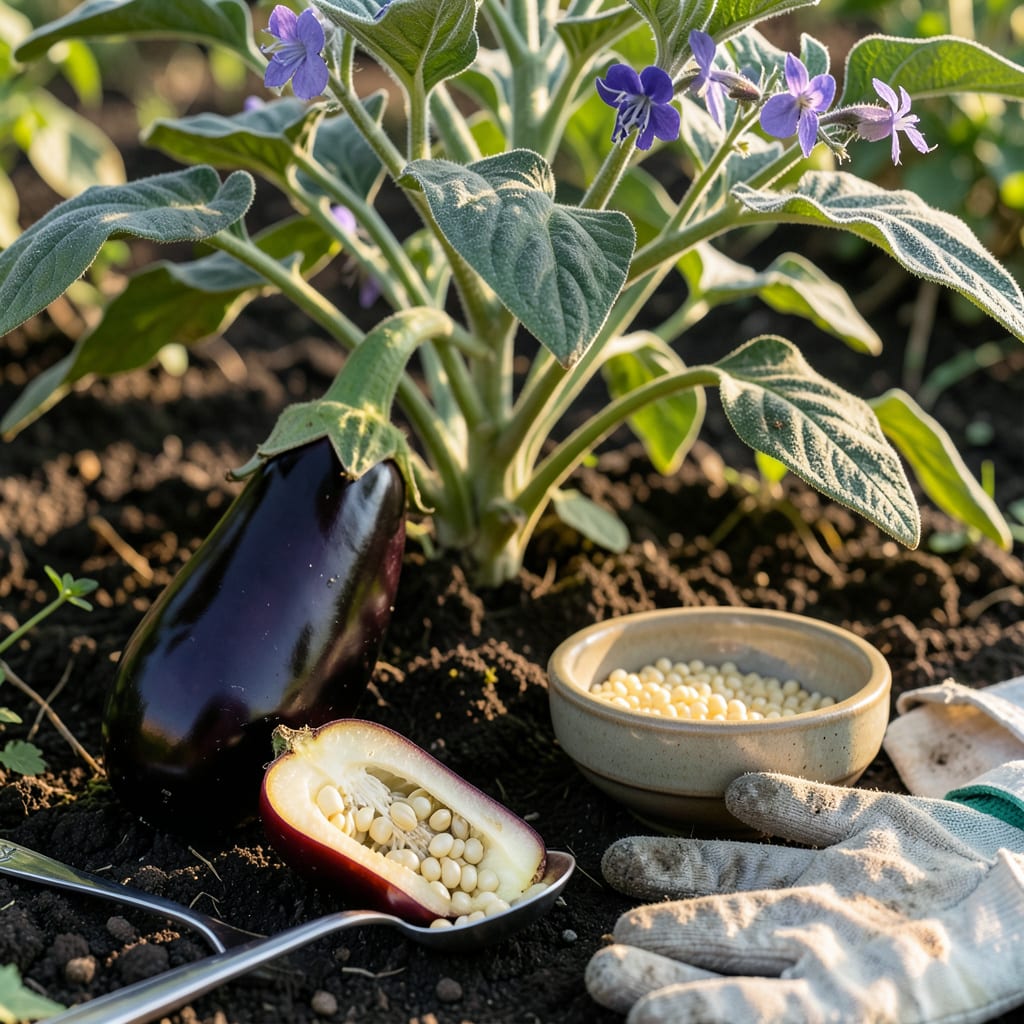
Want to grow next year’s 🍆 Eggplant crop from seeds you’ve saved yourself? It’s easier than you think, and the rewards go beyond just saving money.
I’ll show you the simple process to harvest viable seeds from your best plants. With these seeds, you can preserve your favorite varieties and ensure a strong start for next season’s garden.


Harvesting eggplant seeds starts with selecting the ripeness signs I mentioned earlier. The fruit must be fully mature—look for a dull skin tone and soft flesh when pressed gently.
I always wait until the seeds inside turn dark brown, as this confirms they’re ready for collection. Never use green or glossy eggplants, since their seeds won’t germinate properly.
I begin by slicing the eggplant lengthwise to expose the seed clusters. Using a spoon, I scoop out the pulp and seeds into a clean bowl. This pulp contains the gelatinous coating that protects seeds naturally.
The next step is fermentation, which I find essential for seed viability. I cover the bowl with water and a cloth, then let it sit for 2-3 days. Stir it daily to prevent mold growth.
After fermentation, the good seeds sink while the pulp and bad seeds float. I carefully pour off the floating debris and rinse the remaining seeds in a fine mesh strainer.
I spread the clean seeds on paper towels in a single layer. Placing them in a well-ventilated area away from direct sunlight ensures even drying. This process takes about 1-2 weeks.
Once completely dry, I test by snapping a seed—if it breaks cleanly, it’s ready. I store them in airtight containers with a silica gel packet to prevent moisture. Label with the date and variety for future reference.
For best results, keep your saved seeds in a cool, dark place like a basement or pantry. Properly stored, eggplant seeds can last 4-5 years with good viability. 🌱
Not all eggplant varieties are created equal for seed saving. I always recommend heirloom types because they produce true-to-type seeds year after year.
Hybrid eggplants often result in unpredictable offspring, so I avoid them for seed collection. The best heirloom varieties include Black Beauty, Rosa Bianca, and Listada de Gandia.
| Variety | Seed Reliability | Growth Traits |
|---|---|---|
| Black Beauty | High | Classic flavor, 3-4 ft tall |
| Rosa Bianca | High | Sweet, tender, 2-3 ft tall |
| Listada de Gandia | High | Striped, mild, 3-4 ft tall |
| Hybrid Varieties | Low | Unpredictable traits |
I focus on open-pollinated varieties because they maintain consistent characteristics from parent to offspring. This means the flavor, size, and growth habits stay true each season.
Heirloom eggplants also tend to have better disease resistance, which is a bonus for organic gardeners. I’ve found Rosa Bianca particularly easy to grow and reliable for seeds.
For container gardening, I suggest Fairy Tale or Patio Baby heirlooms. These compact varieties produce abundant seeds even in small spaces.
Remember, cross-pollination can affect seed purity. I plant different eggplant varieties at least 50 feet apart to prevent this issue. 🌱
Even experienced gardeners can make critical errors when saving eggplant seeds. I’ve learned the hard way that timing is everything—harvesting too early or too late can ruin your seed viability.
Premature harvesting is the most common mistake. If the eggplant skin is still shiny and firm, the seeds inside won’t be mature enough to germinate next season.
⚠️ Warning: Never harvest eggplant seeds from green or glossy fruits. The seeds must be dark brown and the flesh slightly soft to ensure viability. Skipping fermentation can also lead to moldy or non-germinating seeds.
Another mistake I see often is skipping fermentation. This step removes the gel coating that can inhibit germination and prevent mold during storage. Without it, your seeds may not sprout or could rot in storage.
Improper drying is equally problematic. If seeds aren’t completely dry before storage, they’ll develop mold or lose viability quickly. I always test by snapping a seed—if it bends, it needs more drying time.
Finally, poor storage can ruin all your hard work. Always use airtight containers and add a silica gel packet to absorb moisture. Store in a cool, dark place to maintain seed quality for years to come. 🌱
Wait until the fruit turns dull and the seeds inside are dark brown. The flesh should feel slightly soft when pressed, and the stem turns woody.
Fermenting for 2-3 days removes the gel coating that can prevent germination. It also kills potential pathogens and improves storage life.
Only if they’re heirloom varieties. Hybrid eggplants from stores often produce unreliable or sterile seeds. Always check the label.
Place fully dried seeds in airtight containers with a silica gel packet. Store in a cool, dark place like a pantry or basement.
