
Beautiful Plants For Your Interior
Beautiful Plants For Your Interior
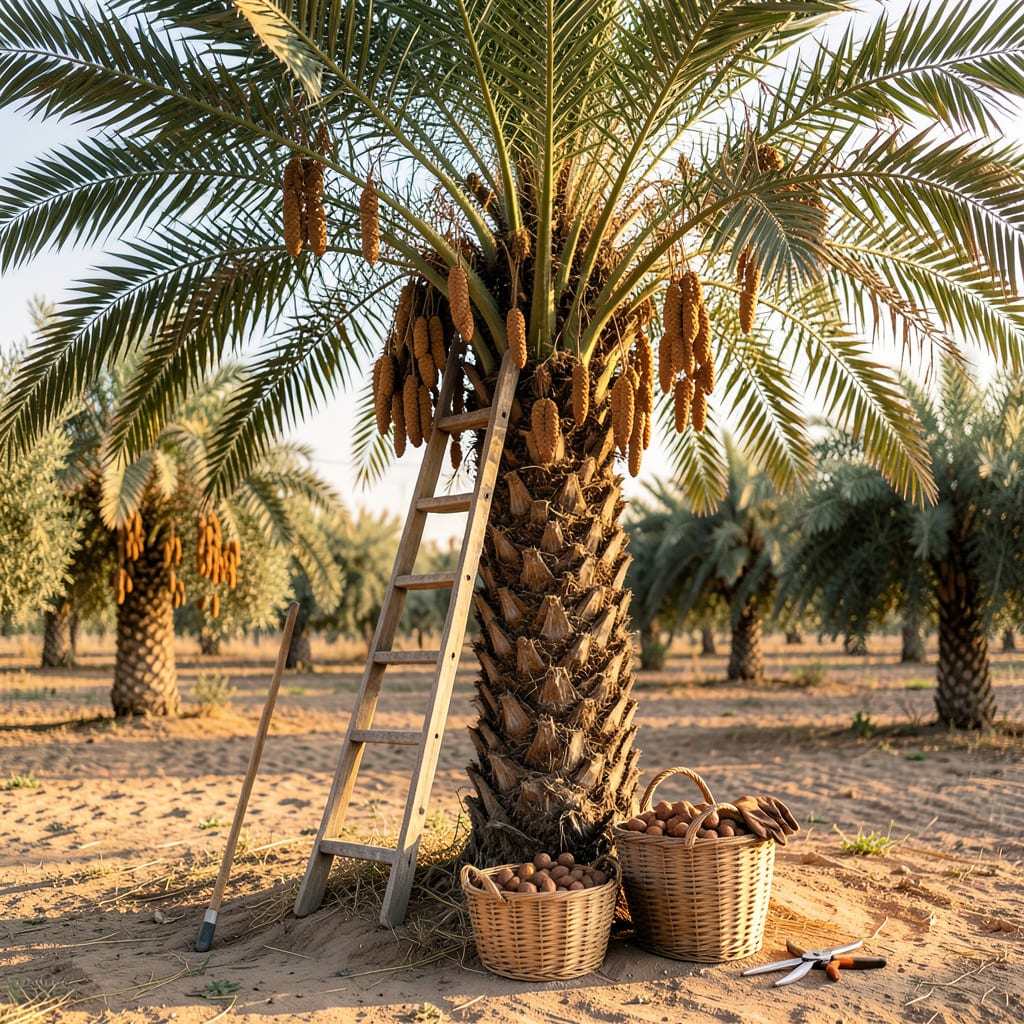
Nothing beats the taste of perfectly ripe dates fresh from your own 🌴 Date Palm. Harvesting at the right moment ensures maximum sweetness and quality.
I’ll guide you through the key signs of ripeness and the best techniques to pick your dates without damaging the tree or fruit. Let’s get started.


Harvesting date palm fruit at the right stage is crucial. I always check for the color change from green to brown or yellow first. The fruit should also feel wrinkled and separate easily from the bunch. 🌴
Timing varies by climate, but late summer to early fall is typical. I recommend harvesting in the cool morning hours to preserve fruit quality. Proper timing ensures the best flavor and texture.
I use sharp pruning shears to avoid tearing the fruit or damaging the tree. Always sterilize your tools before starting to prevent disease spread. This simple step protects both your harvest and the tree. ✂️
The khalal stage (crisp and crunchy) is ideal for fresh eating. For drying or storage, wait until the tamr stage when dates are fully ripe and wrinkled. Each stage offers different uses.
I’ve found that younger trees may produce smaller clusters, but the fruit is just as sweet. Mature trees can yield 100-200 pounds of dates annually under ideal conditions. Patience pays off with these palms. 🌱
Protective clothing is a must when harvesting. Date palms have sharp spines and rough fronds that can cause injury. Long sleeves and gloves keep me safe during the process.
After cutting the bunch, I let it rest in the shade for an hour before processing. This helps the fruit retain moisture and prevents premature drying. It’s a small step with big benefits.
For commercial growers, mechanical shakers can speed up the process. However, for home gardeners, hand-harvesting ensures the best quality and minimizes waste. I prefer the personal touch.
Finally, always inspect your dates for pests or damage before storage. Proper post-harvest care extends shelf life and maintains flavor. It’s worth the extra effort for perfect fruit every time. 🌿
Knowing when to harvest dates starts with recognizing the ripeness stages. I watch for color changes from green to yellow or brown, which signal the fruit is nearing its peak. The khalal stage is crisp and crunchy. 🌴
The rutab stage brings softer fruit with a sweet aroma, while the tamr stage is fully ripe and wrinkled. Each stage offers unique textures and flavors for different uses.
| Ripeness Stage | Color | Texture | Best Use |
|---|---|---|---|
| Kimri | Green | Hard | Not edible |
| Khalal | Yellow/Red | Crisp | Fresh eating |
| Rutab | Brown | Soft | Drying |
| Tamr | Dark Brown | Wrinkled | Storage |
I check the fruit’s aroma too—a sweet smell means it’s ready. The wrinkled skin at the tamr stage indicates maximum sweetness. Timing varies by climate and date variety. ☀️
In hotter climates, dates ripen faster, so I monitor them daily. Cooler areas may need extra weeks. Always taste-test a few fruits to confirm ripeness before full harvest.
I’ve learned that morning harvesting preserves flavor best. The fruit’s sugar content is highest then. Plus, cooler temps reduce the risk of bruising during handling. ✂️
For home growers, visual cues are most reliable. Commercial operations might use refractometers to measure sugar levels, but I find the color and texture method just as effective. 🌱
Harvesting dates at the wrong time can ruin your crop. I’ve seen overripe fruit fall to the ground, wasted. Picking too early means less sweetness and poor texture. Timing is everything. 🌴
Another common error is using dull tools that crush the fruit. Always use sharp pruners for clean cuts. This prevents damage to the cluster and the tree itself.
Harvesting too early or too late affects flavor and storage life.
Using dull tools can bruise the fruit and harm the tree.
Ignoring safety gear risks injury from sharp spines.
I also see gardeners skip protective gear. Date palms have sharp spines that can cause serious injury. Long sleeves, gloves, and eye protection are essential. Safety first! ✂️
Storing dates improperly leads to spoilage. I always use breathable containers and keep them in a cool, dry place. This extends shelf life and maintains quality.
Finally, don’t ignore the weather conditions. Harvesting in extreme heat can cause fruit to dry out too quickly. Aim for cool morning hours for best results. 🌱
Use sharp pruning shears or scissors for clean cuts, plus protective gloves and long sleeves. Date palms have sharp spines that can cause injury.
Look for brown or golden color, wrinkled skin, and a sweet aroma. Fruit should separate easily from the bunch at peak ripeness.
Harvest in the cool morning hours to preserve fruit quality and sugar content. Avoid extreme heat to prevent premature drying.
Picking too early or too late affects flavor and storage. Always check color, texture, and aroma before harvesting.
