
Beautiful Plants For Your Interior
Beautiful Plants For Your Interior
That white cottony stuff on your orange tree branches isn’t mold—it’s mealybugs, and they’re stealing your tree’s vitality. I’ve battled these pests on citrus trees for years, and the good news is they’re easier to eliminate than you think when you act quickly. The key is catching them early before they multiply into a full-blown […]
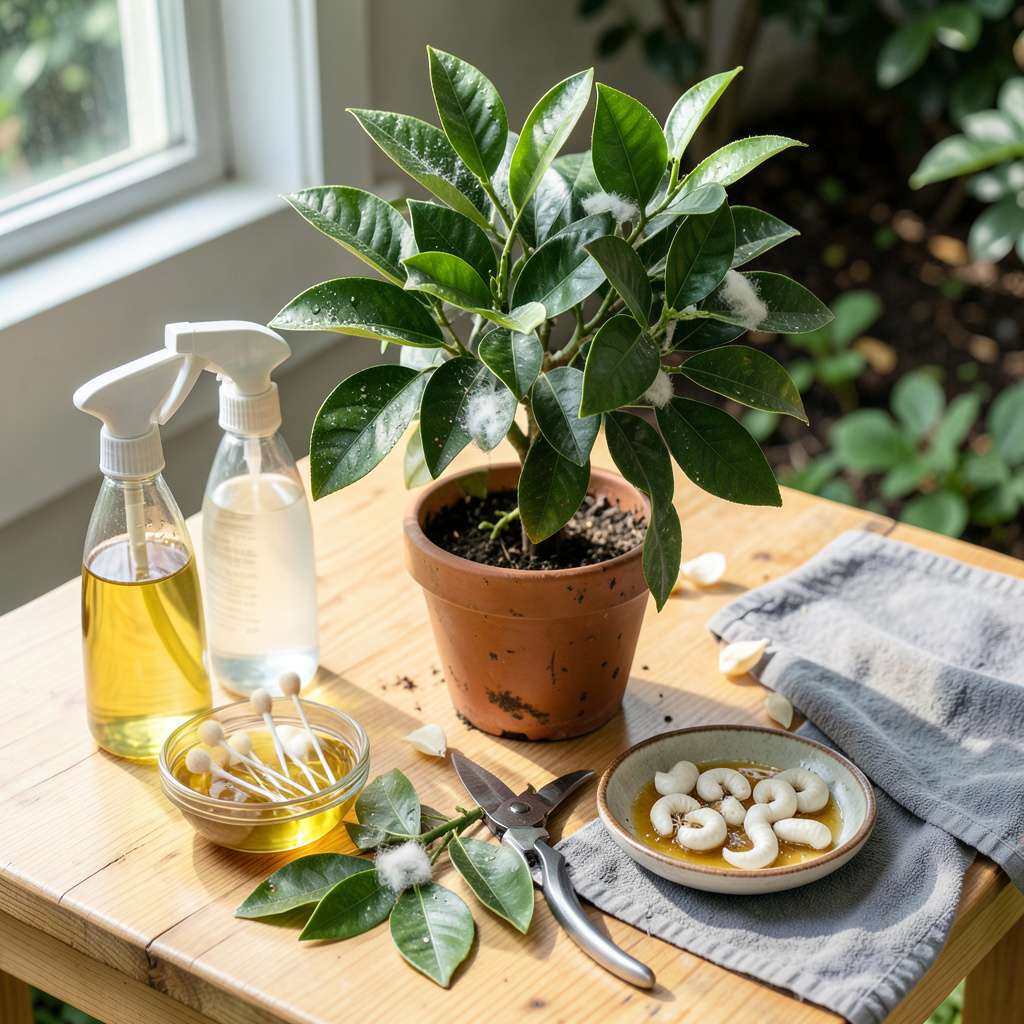
That white cottony stuff on your orange tree branches isn’t mold—it’s mealybugs, and they’re stealing your tree’s vitality. I’ve battled these pests on citrus trees for years, and the good news is they’re easier to eliminate than you think when you act quickly. The key is catching them early before they multiply into a full-blown infestation that weakens your tree and spreads to other plants.
What works isn’t fancy sprays or expensive treatments—it’s a simple combination of physical removal and targeted applications that disrupt their life cycle. My orange trees went from sticky leaves and stunted growth to healthy new foliage within two weeks using methods you probably already have in your kitchen. The difference is knowing exactly where to look and how to treat without harming your tree.
You’ll see results fast: the cottony masses disappear within 24-48 hours of treatment, and your tree starts recovering its strength. Prevention becomes second nature once you understand what attracts mealybugs in the first place. No more watching helplessly as your citrus leaves curl and drop—just clear steps that actually work.
Works for potted orange trees, backyard citrus, or even indoor dwarf varieties. Here’s how to take back your tree—without harsh chemicals that do more harm than good.
📚 In This Guide
Here’s the fast-acting method I use to clear infestations without harming your tree or fruit.
Move your orange tree away from other plants immediately—mealybugs spread rapidly through contact. I examine every leaf surface, stem junction, and the undersides where they love to hide. Look for white, cottony clusters about 1/8 inch long, often accompanied by sticky honeydew residue.
Use a magnifying glass if needed to spot early-stage nymphs, which appear as tiny yellow crawlers. Pay special attention to new growth where sap concentration is highest. This thorough inspection determines whether you’re dealing with a localized outbreak or full-tree infestation.
Dip a cotton swab in 70% isopropyl alcohol and dab it directly onto each mealybug cluster. The alcohol dissolves their protective waxy coating on contact, killing them instantly. For larger infestations, I use a soft-bristle toothbrush dipped in alcohol to scrub stems and leaf axils.
Work systematically from the top down to prevent dislodged pests from reinfesting cleaned areas. You’ll notice the cottony masses turning brown as they die. Dispose of the swabs immediately in a sealed bag to prevent reinfestation. This physical removal eliminates 80% of the population in the first treatment.
Mix 1 tablespoon of neem oil and 1 teaspoon of mild liquid soap per 1 quart of water in a spray bottle. Shake vigorously until emulsified. Spray the entire tree until leaves glisten, focusing on undersides where mealybugs congregate. The neem oil disrupts their life cycle while the soap breaks down their protective coating.
Apply in the early morning when temperatures are below 85°F to prevent leaf burn. You’ll see reduced activity within 24 hours and complete elimination in 7-10 days with repeat applications every 3 days. The treatment remains effective for up to 2 weeks after application.
Release 10-15 cryptolaemus montrouzieri (mealybug destroyer) beetles per tree once you’ve reduced the population. These beneficial insects lay eggs inside mealybug colonies and their larvae consume up to 250 pests during development. I’ve found they establish permanent residence when food sources remain available.
Alternatively, apply 1,000 green lacewing larvae at the base of the tree. They’ll crawl up and feed on both adult mealybugs and their eggs. You’ll observe shiny black fecal pellets on leaves as evidence of their predation. These predators provide ongoing protection against reinfestation.
Prune heavily infested branches immediately after treatment, making clean cuts 1/4 inch above healthy buds. This removes hidden egg sacs and improves air circulation. I apply a fresh 2-inch layer of mulch around the base to encourage beneficial ground predators like rove beetles.
Monitor weekly with yellow sticky traps placed near the tree. A sudden increase in tiny white specks indicates renewed activity. Spray with your neem solution at the first sign—early intervention prevents full-blown infestations. Your tree should show complete recovery with new, pest-free growth within 4-6 weeks.
After years of battling these persistent pests, I’ve learned the small details that make all the difference in complete eradication.
Inspection Technique: In Step 1, don’t just glance at leaves—use a bright flashlight at night when mealybugs are most active. Their white clusters glow under direct light, revealing hidden infestations in crevices. Pay special attention to the leaf axils where stems meet branches, as this is where 70% of egg sacs develop. A 10x magnifying glass helps spot the tiny yellow crawlers before they mature.
Alcohol Application: For Step 2, I’ve found that using 91% isopropyl alcohol (instead of 70%) evaporates too quickly to be effective. The 70% concentration specified is ideal because it stays wet long enough to penetrate their waxy coating. Work in small sections, treating one branch at a time to prevent the alcohol from drying before it can kill the pests.
Spray Timing: The 85°F temperature limit in Step 3 isn’t arbitrary—neem oil can cause phytotoxicity above this threshold. Apply your spray when dew is still present in early morning; the moisture helps the solution adhere better to leaf surfaces. If you must spray later, mist leaves with water first to create similar adhesion conditions.
Predator Introduction: When releasing beneficial insects in Step 4, do it at dusk when mealybugs are less mobile. The 10-15 cryptolaemus montrouzieri beetles will have time to establish themselves before mealybugs become active again. Keep ants away from the tree during this period—ants protect mealybugs for their honeydew and will attack your beneficial predators.
With consistent treatment, you’ll typically see improvement in 1-2 weeks, but full eradication may take 3-4 weeks. Natural methods (like neem oil or soap sprays) require repeated applications every 5-7 days until the pests are gone. Severe infestations may need longer—stay patient and persistent!
Yes! Mix 1-2 teaspoons of mild dish soap (like Castile) per quart of water and spray directly on mealybugs. Avoid harsh detergents—they can damage leaves. Test a small area first, and rinse after 15-20 minutes to prevent residue buildup.
They can return if eggs survive or new pests arrive. To prevent recurrence, reapply treatments weekly for a month, prune heavily infested branches, and introduce natural predators like ladybugs or lacewings. Keep your tree healthy with proper watering and fertilization!
Yes—mealybugs suck sap from leaves and fruit, causing stunted growth, yellowing, or dropped oranges. They also excrete honeydew, which attracts sooty mold. Act fast to protect your harvest! If fruit is heavily infested, remove and destroy it to stop spreading.
Neem oil is the top choice—it disrupts their life cycle and smothers adults. For a DIY fix, try rubbing alcohol (70% isopropyl) on a cotton swab for small infestations or insecticidal soap for larger areas. Always apply in the early morning or late evening to avoid leaf burn!
Dealing with mealybugs on your orange tree doesn’t have to be a losing battle! With natural remedies like neem oil, soapy water sprays, or beneficial insects, you can reclaim your tree’s health—without harsh chemicals. 🌿 The key is consistency: inspect leaves regularly, treat early, and repeat as needed until those pesky pests are gone for good.
Ready to take action? Start with a gentle soapy water spray today and monitor your tree’s progress. Your juicy, mealybug-free oranges are just a few steps away! 🍊✨
