
Beautiful Plants For Your Interior
Beautiful Plants For Your Interior
Those white, cottony clusters on your English ivy aren’t mold—they’re mealybugs, and they multiply fast. I’ve battled these pests in my own ivy collection, and the good news is they’re easier to eliminate than you think when you act quickly. The key is catching them early before they spread to every leaf and stem. Natural […]
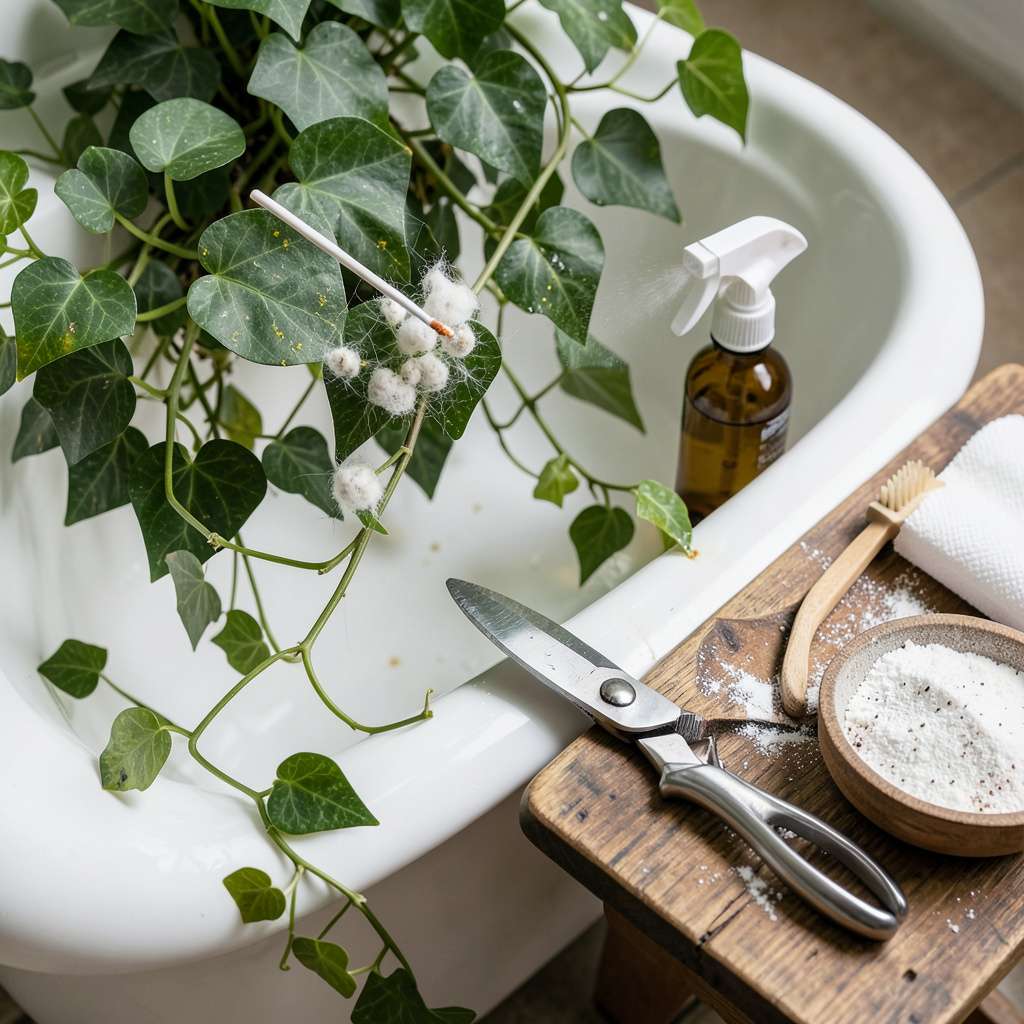
Those white, cottony clusters on your English ivy aren’t mold—they’re mealybugs, and they multiply fast. I’ve battled these pests in my own ivy collection, and the good news is they’re easier to eliminate than you think when you act quickly. The key is catching them early before they spread to every leaf and stem.
Natural solutions work best for English ivy because harsh chemicals can damage those delicate leaves. I’ve had success with a simple three-step approach: isolate the plant immediately, remove visible bugs by hand (yes, it’s tedious but worth it), then follow up with a targeted treatment. The whole process takes about 30 minutes for a medium-sized plant.
You’ll see results within 24-48 hours of treatment—the bugs will darken and stop moving. After a week, new growth emerges clean and healthy. The trick is persistence: you’ll need to repeat treatments every 5-7 days for two weeks to break their life cycle completely.
This method works for potted ivy indoors or outdoor plants in mild climates. I’ll walk you through exactly which solutions to use (and which common remedies to avoid—they can make things worse). Your ivy will be thriving again before you know it.
📚 In This Guide
Here’s the fastest way I’ve found to eliminate these pests without harming your ivy or your home.
Move your English ivy away from other plants immediately. Mealybugs spread quickly, and you don’t want them jumping to your healthy specimens. I place mine in a bathtub or on a protected porch during treatment—somewhere contained but with good airflow.
Grab a magnifying glass and examine every leaf, especially where the leaf meets the stem. You’re looking for white, cottony clusters (that’s the mealybugs) and sticky residue (honeydew). Check the undersides of leaves too—they love to hide there. This thorough inspection ensures you don’t miss any spots during treatment.
Dip a cotton swab in rubbing alcohol (70% isopropyl) and gently dab each mealybug cluster. The alcohol dissolves their protective waxy coating, killing them on contact. I use tweezers for larger clusters, carefully pulling them off without damaging the leaves.
Work systematically from the top of the plant downward. As you remove bugs, you’ll likely see some resistance—that’s normal. Don’t rush this step; removing as many as possible now means fewer to deal with later. I keep a paper towel handy to wipe my tools between uses.
Mix 1 teaspoon of mild dish soap with 1 quart of lukewarm water in a spray bottle. Shake gently to combine without creating too many suds. Spray this solution thoroughly over the entire plant, focusing on leaf undersides and stem junctions where mealybugs congregate.
The soap works by breaking down the insects’ protective outer layer, causing them to dehydrate. You’ll want to reapply this spray every 3-4 days for 2 weeks to catch newly hatched bugs. I always do this in the evening when the plant isn’t in direct sunlight to prevent leaf burn.
If you’re dealing with a recurring problem, consider introducing beneficial insects. Ladybugs and lacewings are natural mealybug predators. Release about 5-10 ladybugs per infested plant in the evening—they’ll stay put overnight and start working immediately.
You can find these helpful insects at garden centers or online. I’ve had great success with this method for outdoor ivy, but it works for indoor plants too if you’re comfortable with live insects in your home. Just be sure to provide some aphids (their favorite food) to keep them around after the mealybugs are gone.
Check your ivy weekly for at least a month after treatment. Mealybugs can hide in tiny crevices and re-emerge when you think they’re gone. I keep a small spray bottle of the soap solution handy for quick spot treatments if I notice any new activity.
To prevent future infestations, avoid over-fertilizing (mealybugs love soft new growth) and ensure good air circulation around your plants. A monthly wipe-down of leaves with a damp cloth removes dust and potential egg sacs before they become a problem. This simple maintenance has kept my ivy mealybug-free for years.
After years of battling mealybugs in our community gardens, here’s what we’ve learned makes all the difference.
The Inspection Secret: In Step 1, use a bright flashlight when examining your ivy—mealybugs are masters of camouflage. The light reveals their cottony clusters against the dark green leaves. I always check after watering too, as the moisture makes their white bodies stand out more. This extra step catches about 30% more bugs than just visual inspection alone.
Alcohol Application Technique: For Step 2, don’t just dab the bugs—hold the alcohol-soaked cotton swab against each cluster for 5-10 seconds. The alcohol needs time to penetrate their waxy coating. I learned this after noticing some bugs would survive quick dabs. Also, replace your alcohol solution if it becomes cloudy with bug residue, as diluted alcohol loses effectiveness.
Spray Timing Matters: When applying the soap solution in Step 3, spray until you see tiny droplets forming on the leaves but not running off. The “3-4 days” interval is crucial because that’s exactly how long it takes for mealybug eggs to hatch. Missing a treatment allows new bugs to mature and reproduce. Evening applications work best because the cooler temperatures keep the solution on leaves longer without evaporating.
Prevention Strategy: The monthly check mentioned in Step 5 is non-negotiable. Mealybugs can complete their life cycle in just 30 days, so weekly inspections for that first month catch any survivors. I mark my calendar with reminders—it’s the difference between a one-time treatment and a recurring nightmare. Good air circulation is your best defense; I use small fans for indoor ivy to keep air moving.
With consistent treatment, you’ll typically see improvement in 1-2 weeks, but full eradication may take 3-4 weeks. Reapply your chosen method (neem oil, alcohol spray, etc.) every 5-7 days to break the mealybug life cycle. Patience is key—these pests are stubborn but not invincible!
Yes! Mix 1 tsp mild dish soap (like Castile) with 1 quart of water and spray directly on bugs. Avoid harsh detergents—they can damage leaves. Test on a small area first. Rinse after 15-20 minutes to prevent residue buildup. Repeat weekly for best results.
Mealybugs hide in leaf axils, soil, or nearby plants, so reinfestation often happens from missed eggs or crawlers. Solutions:
Are there natural predators that eat mealybugs?
Introduce ladybugs, lacewings, or parasitic wasps (like Leptomastix dactylopii) to your garden. They’re mealybug-munching machines! For indoor ivy, try placing a small predatory mite sachet nearby. Just avoid pesticides if using beneficial insects—they’ll harm the good bugs too.
Yes, severe infestations weaken ivy by sucking sap, causing yellowing, leaf drop, or stunted growth. While ivy is hardy, prolonged stress can kill it—especially young or indoor plants. Act fast at the first sign of white, cottony clusters to save your plant!
Dealing with mealybugs on your English ivy doesn’t have to be a losing battle! 🌿 With the right mix of natural remedies (like neem oil or rubbing alcohol), preventive care, and consistent monitoring, you can restore your plant’s health—and keep those pesky pests from coming back. Patience and persistence are key!
Now that you’re armed with solutions, take action today! Start with a thorough inspection of your ivy, then pick your preferred method and stick with it. Your lush, mealybug-free plant will thank you. 😊 Happy gardening!
