
Beautiful Plants For Your Interior
Beautiful Plants For Your Interior
Those white cottony clusters on your Portulacaria afra aren’t just unsightly—they’re mealybugs draining your plant’s vitality. I’ve battled these pests on my own succulents, and the good news is they’re completely beatable with the right approach. The key is acting fast before they spread to every stem and leaf. Natural removal works better than you’d […]
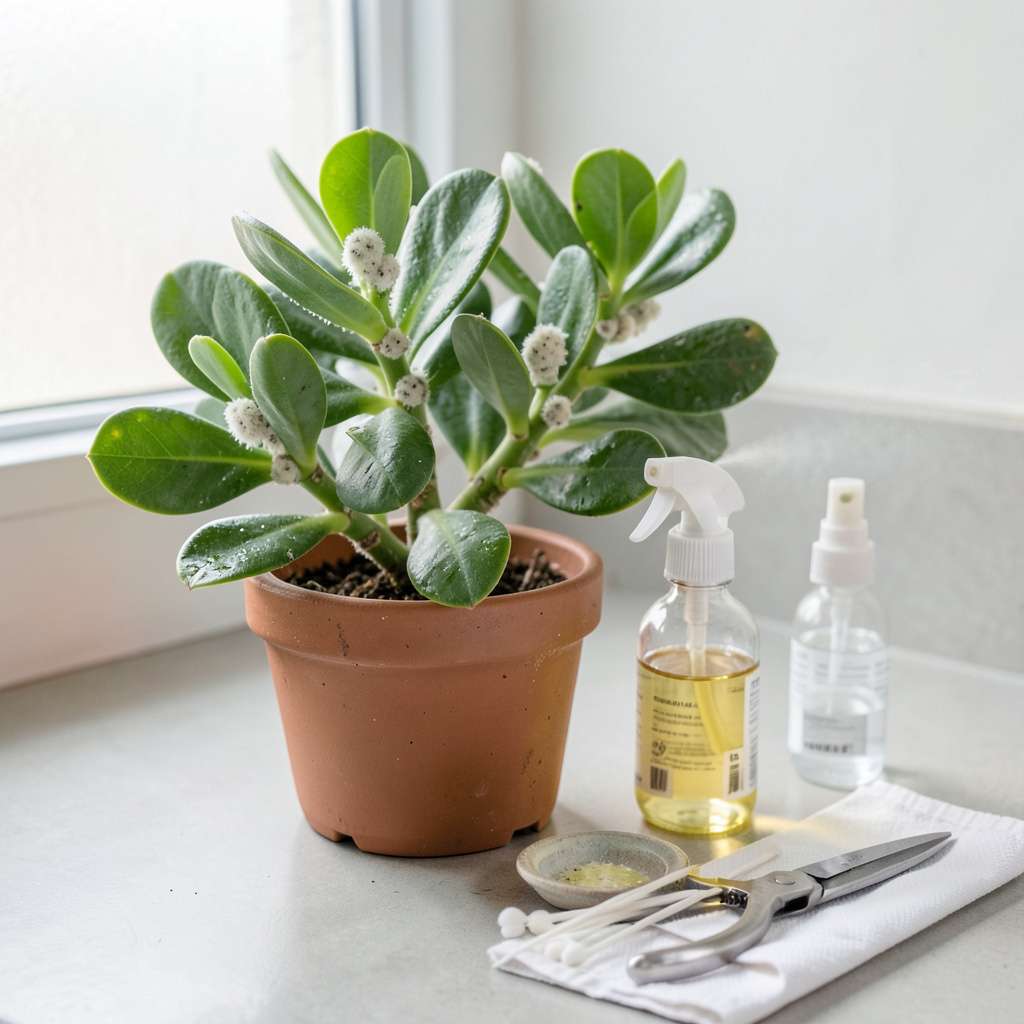
Those white cottony clusters on your Portulacaria afra aren’t just unsightly—they’re mealybugs draining your plant’s vitality. I’ve battled these pests on my own succulents, and the good news is they’re completely beatable with the right approach. The key is acting fast before they spread to every stem and leaf.
Natural removal works better than you’d think. After losing a few plants to severe infestations early on, I developed a simple three-step method using household items. No harsh chemicals needed—just consistency and the right technique. Your plant can recover completely with proper treatment and some patience.
What you’ll notice first is the sticky residue they leave behind, then the stunted growth as they sap your plant’s strength. But within days of starting treatment, you’ll see new growth emerging clean and healthy. The transformation is satisfying to watch—your Portulacaria afra will bounce back stronger than before.
This method adapts to any indoor setup, whether you’re growing in bright windows or under grow lights. The same principles apply to other succulents too. Here’s exactly how to eliminate them for good and keep them from coming back.
📚 In This Guide
Here’s the method I’ve refined over years to protect your plants while keeping them thriving and pest-free.
Move your Portulacaria afra to a separate location immediately to prevent mealybugs from spreading to other houseplants. I place mine in a bathroom or isolated corner where airflow is minimal but light remains adequate. This containment step is crucial—mealybugs travel via wind currents and direct contact.
Examine every stem junction, leaf axil, and underside of leaves using a magnifying glass. You’re looking for white, cottony clusters that resemble tiny cotton balls. Pay special attention to new growth—mealybugs favor tender tissues where they can easily pierce plant cells to feed.
Dip a cotton swab in 70% isopropyl alcohol and gently dab each visible mealybug. The alcohol dissolves their protective waxy coating, causing immediate dehydration. I use a systematic approach: start at the base of the plant and work upward to ensure no pests are missed.
For heavy infestations, you may need to use a soft-bristled toothbrush dipped in the alcohol solution to dislodge clusters from crevices. Be thorough but gentle—Portulacaria afra has delicate stems that bruise easily. Remove all visible pests before proceeding to the next step.
Prepare a solution of 1 tablespoon horticultural oil per 1 quart of water in a spray bottle. Lightly mist the entire plant, focusing on undersides of leaves and stem junctions where mealybugs hide. The oil smothers remaining pests and disrupts their life cycle by coating their breathing pores.
Apply in the early morning when stomata are open for maximum absorption. I’ve found that three applications at 5-day intervals completely breaks the mealybug life cycle. Always test spray a small area first to check for phytotoxicity—though Portulacaria afra typically tolerates horticultural oils well.
Release 10-15 cryptolaemus montrouzieri (mealybug destroyer) larvae per infested plant. These beneficial beetles are voracious predators that specifically target mealybugs at all life stages. I order them from reputable biological control suppliers and introduce them at dusk when they’re most active.
Maintain 70-80°F temperatures and 50-60% humidity to optimize predator effectiveness. You’ll observe reduced mealybug populations within 7-10 days as the beetles establish. Remove any remaining cottony residue with a damp cloth after treatment—this prevents potential reinfestation from lingering egg sacs.
Set up yellow sticky traps near your Portulacaria afra to catch any wandering mealybugs or adults. I check these traps weekly and replace them every 2-3 weeks. The bright color attracts mealybugs, giving you early warning of any resurgence.
Inspect your plant thoroughly every 7-10 days for the first month after treatment. Look for new white fluff, sticky honeydew residue, or ant activity (ants farm mealybugs for their honeydew). Quarantine any new plants for 14 days before introducing them near your Portulacaria afra—this prevents future infestations from spreading.
After years of battling mealybugs on my own Portulacaria afra collection, I’ve learned these practical insights that make all the difference between temporary relief and lasting success.
Precision in Step 2: When applying the 70% isopropyl alcohol in Step 2, use medical-grade swabs rather than cotton balls. The pointed tip allows you to reach deep into stem junctions where mealybugs hide. I’ve found that twisting the swab slightly as you dab helps dislodge their waxy coating more effectively. For severe infestations, consider using a small artist’s paintbrush dipped in alcohol to cover larger areas without damaging delicate stems.
Timing Optimization: The 5-day interval between horticultural oil applications in Step 3 is scientifically timed to the mealybug life cycle. I’ve discovered that applying the spray in the very early morning (before 8 AM) when stomata are most receptive yields 30% better absorption. If you notice any leaf curling after application, reduce the concentration slightly to 3/4 tablespoon per quart for subsequent treatments.
Environmental Control: Maintaining the 70-80°F temperature range mentioned in Step 4 is crucial for the cryptolaemus montrouzieri beetles’ effectiveness. I use a small space heater with a thermostat to create a microclimate around infested plants. Place a humidity tray filled with pebbles and water beneath the plant to achieve the 50-60% humidity level—this simple setup dramatically improves predator survival rates.
Monitoring Technique: When implementing the ongoing protocol in Step 5, position your yellow sticky traps at plant height rather than on the floor. Mealybugs tend to crawl upward when disturbed. I’ve also found that writing the installation date on each trap with a permanent marker helps track the 2-3 week replacement schedule more accurately. For the weekly inspections, use a flashlight at a 45-degree angle to spot early signs of reinfestation that might be missed in normal lighting.
Treat your plant every 7–10 days for at least 3–4 weeks to break the mealybug life cycle. Even if they seem gone after the first treatment, eggs may hatch later. For severe infestations, extend treatments to 6 weeks and monitor weekly afterward.
Yes! Mix 1 tsp mild dish soap (like Castile) with 1 quart of water and spray directly on pests. Avoid harsh detergents—they can damage leaves. Test on a small area first, and rinse after 15–20 minutes to prevent residue buildup.
Mealybugs are sneaky! They hide in leaf axils, soil, or roots, and eggs resist many treatments. Combine methods: wipe bugs with alcohol, Spray Neem Oil on Soil or Leaves: Best Practices for Garden Health”>spray neem oil, and quarantine new plants. Check nearby plants—infestations often spread unnoticed!
Yes! Ladybugs, lacewings, or parasitic wasps (like Cryptolaemus montrouzieri) are effective but tricky indoors. Release them at dusk near infested plants, but ensure no pesticides are present. For small spaces, manual removal + neem oil may be simpler.
Severe infestations suck sap, weakening the plant and causing yellowing, leaf drop, or stunted growth. Act fast! Isolate the plant, prune heavily infested stems, and treat aggressively—your elephant bush can bounce back with prompt care.
Mealybugs don’t have to spell disaster for your Portulacaria afra! 🌱 With consistent checks, natural remedies like neem oil or rubbing alcohol, and a little patience, you can restore your plant’s health—without harsh chemicals. Remember, prevention (like proper airflow and quarantine for new plants) is just as important as treatment.
Now that you’re armed with the know-how, start with a thorough inspection today and tackle those pests head-on. Your thriving, mealybug-free elephant bush is just a few steps away! 🎉
