
Beautiful Plants For Your Interior
Beautiful Plants For Your Interior
That orchid on your desk isn’t just decoration—it’s a living thing that can thrive in your office with the right care. I’ve kept office orchids blooming for years by mastering just a few key conditions that most people overlook. The difference between a sad, wilted plant and one that produces new flowers every season comes […]
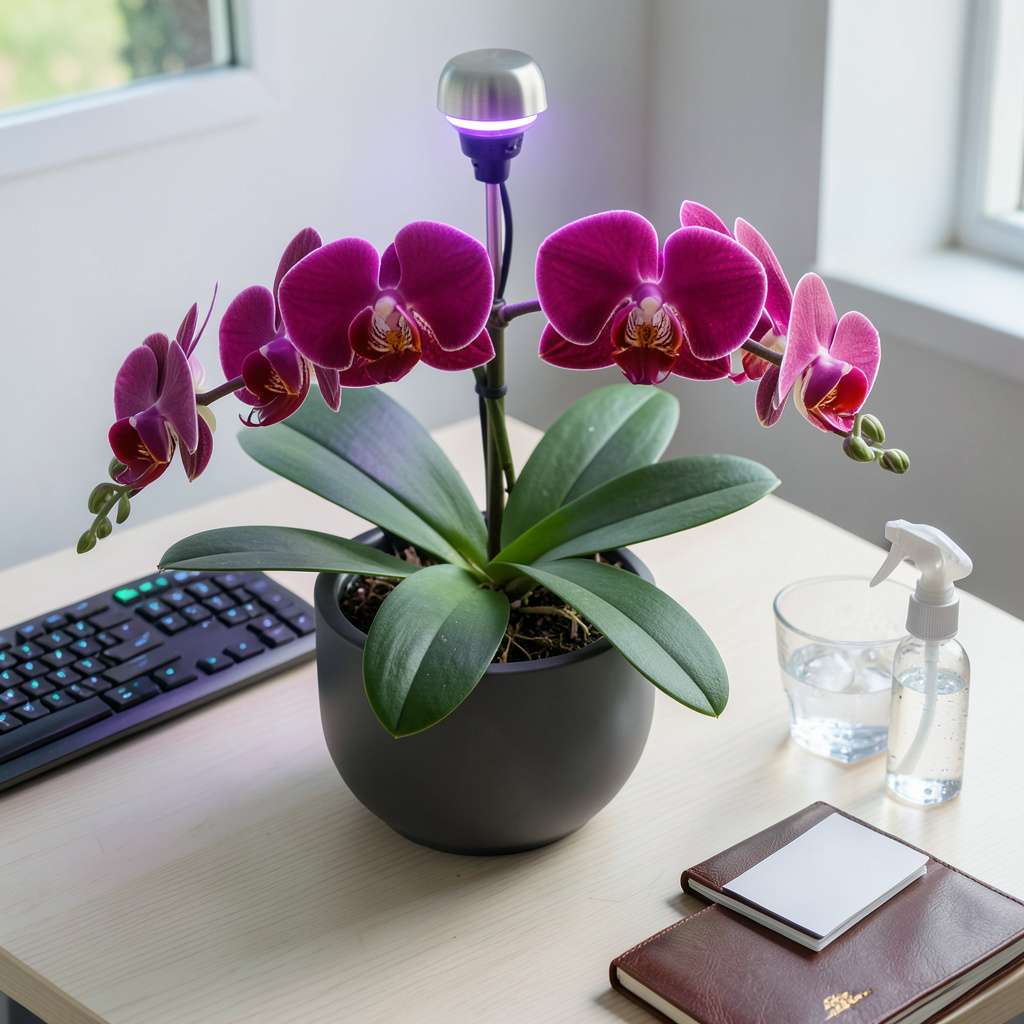
That orchid on your desk isn’t just decoration—it’s a living thing that can thrive in your office with the right care. I’ve kept office orchids blooming for years by mastering just a few key conditions that most people overlook. The difference between a sad, wilted plant and one that produces new flowers every season comes down to understanding its needs in an artificial environment.
Light is the first challenge—most offices have either harsh fluorescent lighting or dim corners. My solution? A spot near (but not touching) an east-facing window, or 12-14 inches from a simple LED grow bulb if natural light is scarce. Watering is where most people fail: orchids hate soggy roots, so I water mine just once every 10-14 days, letting the bark mix dry out completely between drinks.
The office environment actually works in your favor for temperature—most orchids prefer the same 65-80°F range that keeps humans comfortable. Humidity is the real test, as dry office air mimics desert conditions. A small pebble tray with water beneath the pot solves this elegantly, creating a microclimate that keeps leaves plump and roots happy.
What you’ll discover is that office orchids often outperform home-grown ones because of consistent conditions. No drafty windows, no temperature swings—just steady light, controlled watering, and the occasional admiring glance from coworkers. The same plant that might struggle on your windowsill at home can become your office’s most reliable splash of natural beauty.
📚 In This Guide
Transform your workspace with this foolproof method for keeping orchids vibrant between fluorescent lights and air conditioning.
Place your orchid near an east-facing window where it receives bright, indirect light for 6-8 hours daily. North-facing windows work if supplemented with a small LED grow bulb positioned 12-18 inches above the plant. Avoid direct southern exposure—office glass magnifies heat and will scorch leaves.
The ideal spot lets you read a book comfortably without squinting—that’s the perfect light intensity. You’ll know it’s working when leaves maintain a rich green color (not dark forest green, which signals too little light, or yellowish, which means too much). Rotate the pot quarter-turn weekly to prevent lopsided growth toward the light source.
Water thoroughly every 7-10 days using 3 ice cubes placed directly on the growing medium—or ¼ cup room-temperature water poured slowly around the pot’s edge. The ice cube method works exceptionally well in climate-controlled offices because it delivers moisture gradually as it melts, preventing root shock from cold water.
Before watering, check two critical indicators: silver-gray roots (ready for water) or condensation disappearing from the pot’s inner walls. Never let the plant sit in standing water—empty the decorative cache pot 20 minutes after watering. Office humidity typically runs 20-30%, so mist leaves lightly 2-3 times weekly with distilled water to prevent desiccation.
Keep your orchid in temperatures between 65-80°F during the day with a 10°F drop at night to mimic natural conditions. Most offices maintain this range automatically, but avoid placing the plant near vents, drafty windows, or direct AC airflow. A small USB-powered fan set to low 6-8 inches away provides ideal air circulation without creating damaging drafts.
Watch for temperature stress signals: wrinkled leaves indicate heat stress, while soft, mushy leaves suggest cold damage. If your office runs particularly dry (common with forced-air heating), place the pot on a tray filled with ½ inch of pebbles and water—this creates a microclimate with 40-50% humidity around the plant without waterlogging the roots.
Use a balanced 20-20-20 orchid fertilizer diluted to half-strength and apply every other watering (about every 2-3 weeks). In office settings where plants receive less intense light, this reduced concentration prevents salt buildup in the growing medium that can burn roots. I recommend marking your calendar—overfertilizing in low-light conditions causes more harm than underfertilizing.
Flush the growing medium with plain water every 4th watering to remove accumulated salts. You’ll see fertilizer working when new leaves emerge with vibrant color and firm texture, and when existing leaves maintain their sheen. If leaf tips develop brown edges, you’re either overfertilizing or using water with too many minerals—switch to distilled or rainwater immediately.
After flowers drop, cut the spike back to 1 inch above the second or third node (those little brown lines on the stem) using sterilized scissors. This encourages a secondary bloom spike within 8-12 weeks. Move the plant to the brightest available spot and maintain consistent care—this is when many office orchids fail because people assume they’re dormant.
You’ll know a new spike is forming when you see a small green protuberance emerging from the node. At this stage, increase phosphorus slightly (switch to a 10-30-20 fertilizer) and ensure nighttime temperatures stay at the cooler end of the ideal range (60-65°F). The spike will grow 1-2 inches per week under proper office conditions, with buds forming at the tip once it reaches mature length.
After years of watching office orchids struggle (and learning from our own mistakes), here’s what actually makes the difference between a thriving plant and one that barely survives.
Light Quality Over Quantity: The 6-8 hours of bright, indirect light mentioned in Step 1 is non-negotiable, but quality matters more than duration. I’ve found that east-facing windows with sheer curtains create ideal conditions, while north-facing windows often require that LED grow bulb positioned exactly 12-18 inches above the plant. Watch your orchid’s leaves—they should be a rich, vibrant green, not the dark forest green that indicates insufficient light or the yellowish tint that signals too much exposure.
Watering Wisdom: The ice cube method in Step 2 is brilliant for office environments because it prevents the root shock that often occurs with direct watering. However, I’ve noticed that in particularly dry offices (below 20% humidity), you may need to increase to 4 ice cubes every 10 days. Always check for those silver-gray roots before watering—they’re your plant’s way of telling you it’s thirsty. And never skip emptying that decorative cache pot after 20 minutes; standing water is the fastest way to kill an orchid.
Temperature Consistency: Most offices naturally maintain the 65-80°F daytime range mentioned in Step 3, but the 10°F nighttime drop is what triggers reblooming. If your office doesn’t cool down at night, try moving your plant to a slightly cooler spot (like near a window but not in a draft) for those evening hours. The USB fan recommendation is spot-on—just ensure it’s on the lowest setting and positioned exactly 6-8 inches away to prevent leaf desiccation while promoting air circulation.
Fertilizer Strategy: The half-strength 20-20-20 fertilizer every 2-3 weeks in Step 4 is perfect for office conditions, but here’s what nobody tells you: always water thoroughly before fertilizing. This prevents root burn and ensures even distribution. I mark my calendar for the 4th watering flush—it’s amazing how much salt buildup you’ll see in that water. If you notice brown leaf tips despite proper watering, switch to distilled water immediately; tap water minerals are often the culprit in office settings.
Water your orchid every 7–10 days, but always check the roots first! Stick your finger an inch into the bark mix—if it’s dry, it’s time. Overwatering is the #1 killer, so ensure the pot drains fully. In air-conditioned offices, mist leaves lightly 2–3 times a week to boost humidity.
Skip the ice! While some suggest it for slow watering, orchids hate cold roots. Room-temperature water is best. If you’re worried about overwatering, try a self-watering pot or place the orchid in a tray with pebbles and water (just keep roots above the waterline).
Yellow leaves usually mean too much water or not enough light. Check the roots—mushy roots = overwatering; crispy roots = underwatering. Move your orchid to a brighter spot (but avoid direct sun) and trim any rotting roots with sterilized scissors. Repot if needed!
Opt for a Phalaenopsis (moth orchid) or Paphiopedilum (lady’s slipper)—they thrive in fluorescent lighting! Place under a cool-white LED grow light (12–14 hours/day) if natural light is zero. Avoid drafts from AC vents, which can stress the plant.
After flowers drop, cut the spike 1 inch above the second node (little bumps on the stem). Keep fertilizing with a balanced orchid food (20-20-20) every 2–4 weeks. A 10–15°F temperature drop at night (like near a window) can trigger reblooming in 6–12 weeks!
With just a little attention, your office orchid can thrive—and even brighten your workspace for months! 🌸 Remember: consistent (but not excessive) watering, gentle light, and occasional feeding are the keys to success. Don’t stress over mistakes; orchids are resilient and reward patience with stunning blooms.
Ready to take the next step? Pick a reminder day (like “Orchid Friday”) to check its needs, or snap a photo to track progress. Your desk plant—and your coworkers—will thank you! 😊
