
Beautiful Plants For Your Interior
Beautiful Plants For Your Interior
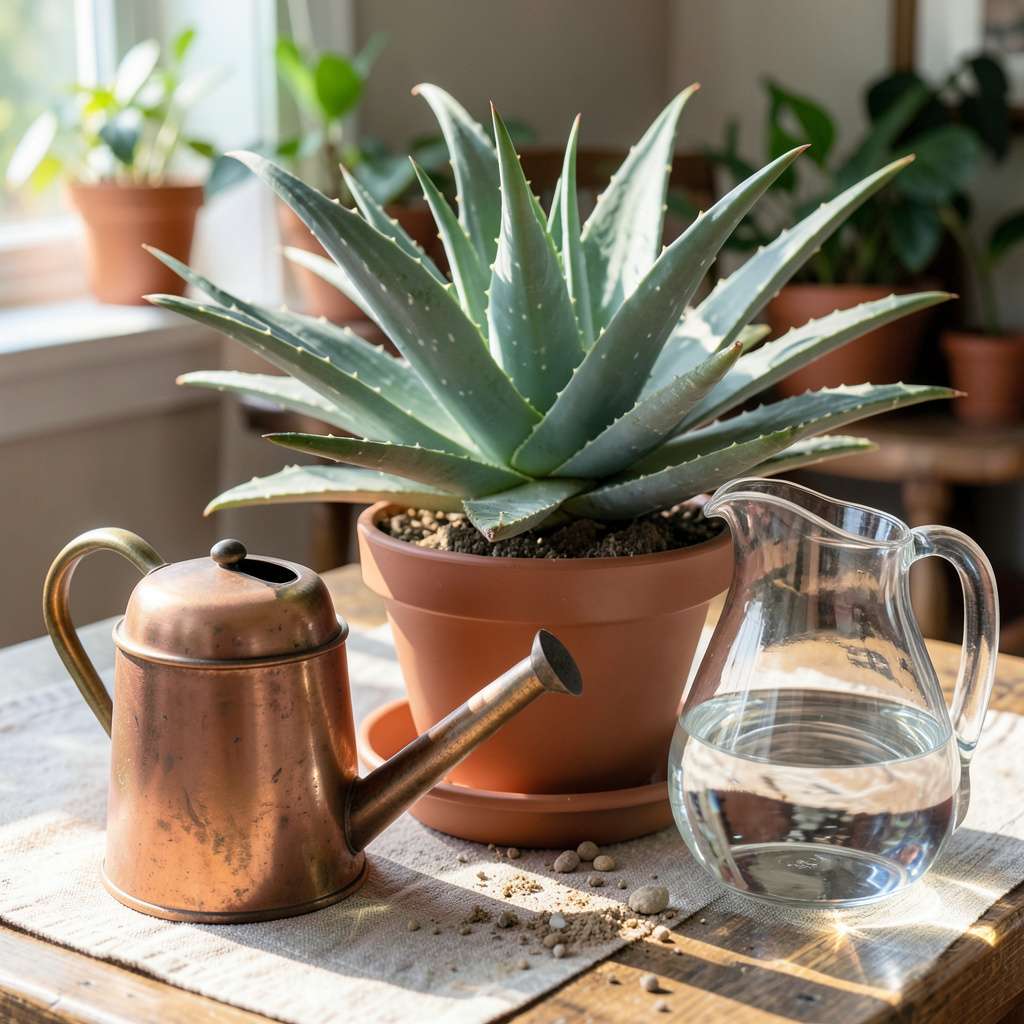
Aloe plants need water every 2-3 weeks in warm months and even less in winter. Always check the soil—water only when the top 2 inches are completely dry to prevent root rot.
I’ve learned through years of gardening that aloe’s watering needs come from its desert origins. These succulents store moisture in their thick leaves, making them incredibly drought-tolerant. 🌵 What many beginners miss is that aloe thrives on neglect—it’s far more likely to suffer from too much water than too little. The key is observing your plant’s unique environment: bright windowsills dry out faster than shaded corners, and terracotta pots wick away moisture quicker than plastic ones.
My personal rule is to always test before watering by sticking my finger 2 inches deep into the soil. If it feels even slightly damp, I wait another week. This simple habit has saved countless plants from root rot, which is the #1 killer of indoor aloes. Remember, these plants evolved to survive months without rain—they’re built to handle dry spells better than soggy conditions.
💡 In This Article
Aloe plants have evolved remarkable water storage systems in their thick, fleshy leaves. These specialized cells, called parenchyma, can hold up to 95% water by weight—far more than most houseplants.
🌵 When you overwater, you’re essentially forcing the plant to store more moisture than it naturally needs, which disrupts its carefully balanced internal water regulation system.
The roots of aloe plants are particularly sensitive to excess moisture. In their native arid environments, these roots developed to absorb water quickly during rare rainfall, then enter a dormant state during dry periods. When kept constantly moist, the roots can’t access oxygen properly, leading to root rot within 7-10 days.
The ideal soil moisture for aloe should drop to 25-30% saturation between waterings—about as dry as a well-wrung sponge.
What makes aloe so drought-resistant is its crassulacean acid metabolism (CAM) photosynthesis. Unlike most plants that open their stomata during daylight, aloe opens them at night when temperatures are cooler and humidity higher. This adaptation reduces water loss by up to 90% compared to regular plants.
During daytime, the stomata remain closed, conserving precious moisture while still allowing photosynthesis to occur.
The plant’s waxy cuticle also plays a crucial role in water conservation. This protective layer can be up to 5 times thicker than that of non-succulent plants, dramatically reducing evaporation. When you water too frequently, you’re working against millions of years of evolutionary adaptations designed to thrive in water-scarce environments.
The plant essentially becomes “lazy” and stops developing its natural drought-resistant characteristics.
Here’s what happens at the cellular level when you overwater: The root cells become waterlogged and can’t absorb nutrients properly. Oxygen deprivation causes anaerobic respiration, producing ethanol that damages cell membranes. Within 48 hours of constant moisture, beneficial soil microbes start dying off, leaving the plant vulnerable to fungal infections.
This is why proper drainage isn’t just helpful—it’s absolutely essential for aloe survival. ✨
Interestingly, aloe plants in the wild often grow in rocky, well-draining soil that allows water to flow away quickly. When we pot them in regular potting mix, we’re already creating an unnaturally moist environment.
That’s why professional growers recommend amending soil with 50-60% inorganic materials like perlite, pumice, or coarse sand to mimic their natural habitat conditions.
Use the finger test—insert your finger 2 inches deep into the soil. If it feels completely dry, it’s time to water. For more accuracy, try the chopstick method: insert a wooden stick 3 inches deep, wait 10 minutes, and check if it comes out clean.
Yellowing leaves usually signal overwatering. This happens when roots sit in soggy soil, leading to root rot. Check your drainage—ensure pots have holes and soil contains 50-60% inorganic material like perlite. Stop watering immediately and let soil dry completely.
Never use ice cubes—they release water too slowly and can create cold pockets that shock roots. Aloe prefers room-temperature water applied all at once until it drains freely. Cold water can stress the plant and inhibit nutrient absorption.
In humid climates, aloes need 25-30% less water than in dry areas. High humidity slows evaporation, keeping soil moist longer. Watch for soft leaves—this means the plant is absorbing too much moisture from the air. Adjust by extending time between waterings.
Misting does more harm than good—it increases humidity around leaves, which can lead to fungal issues. Aloe stores water in its leaves and doesn’t absorb moisture through foliage. Focus on deep, infrequent watering at the soil level instead.
