
Beautiful Plants For Your Interior
Beautiful Plants For Your Interior
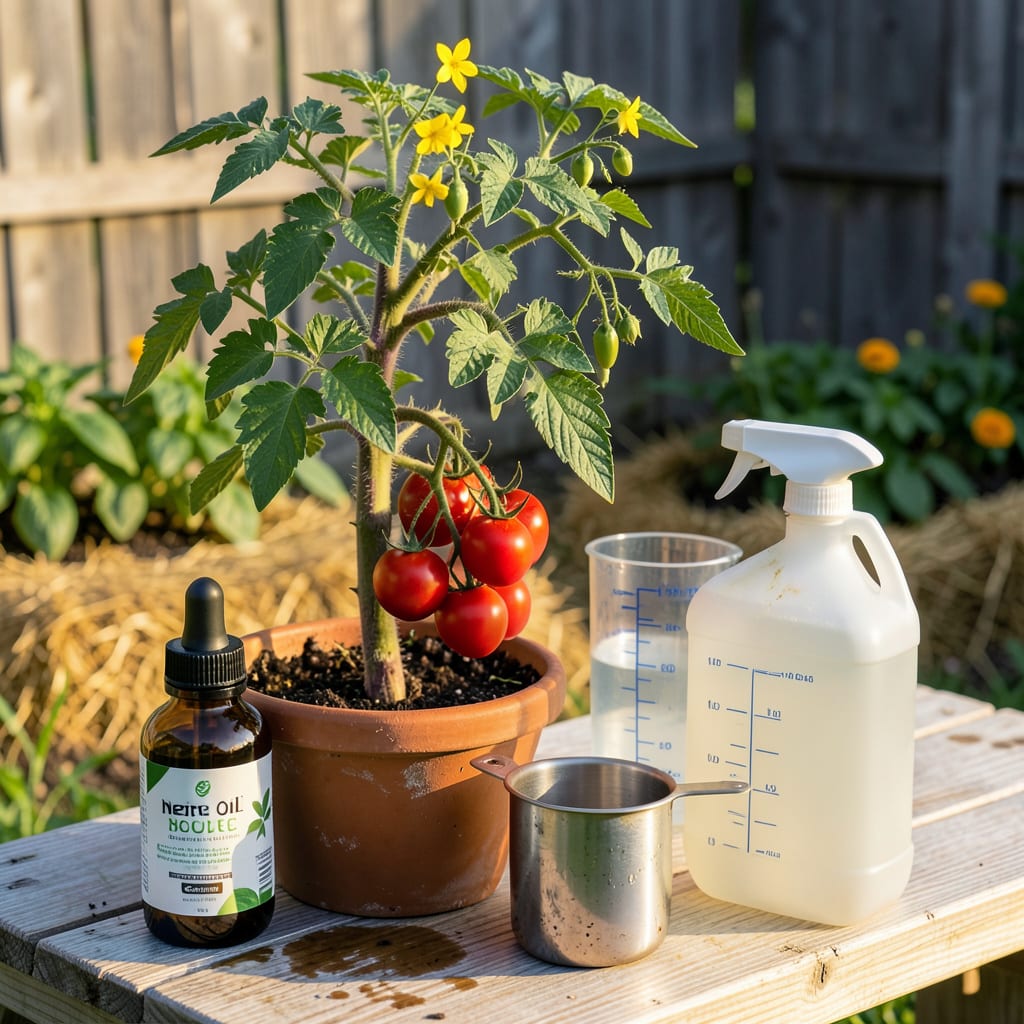
For general garden use, mix 1 to 2 tablespoons of neem oil per gallon of water with ½ teaspoon of mild liquid soap as an emulsifier. Always test on a small area first and avoid applying in direct sunlight.
This ratio works because neem oil’s active compounds need proper dispersion to coat leaves effectively without causing phytotoxicity. 🌱 I’ve found that using slightly warmer water helps the oil blend more uniformly, while the soap breaks down the oil particles for better coverage. The 1-2 tablespoon range gives you flexibility—start with less for delicate plants like herbs or seedlings, and increase for tougher foliage or severe pest infestations. Remember that neem oil degrades quickly in sunlight, so evening applications maximize its pest-control benefits.
💡 In This Article
The active ingredient in neem oil, azadirachtin, disrupts insect life cycles but also affects plant metabolism at higher concentrations. Delicate plants like lettuce or basil have thin cuticles that absorb more oil, making them vulnerable to leaf burn at concentrations above 1 tablespoon per gallon.
Meanwhile, woody ornamentals like roses can tolerate up to 2 tablespoons per gallon because their thicker waxy coatings resist absorption. 🌿
Edible crops require extra caution. Studies show that leafy greens absorb neem oil residues more readily than fruiting plants like tomatoes. For example, spinach leaves treated with 1.5 tablespoons per gallon showed 22% more residue retention than tomato foliage at the same concentration.
This matters because azadirachtin breaks down in sunlight, but residues on edibles should be minimized—always follow the 7-day pre-harvest interval for food crops.
Pest severity dictates concentration too. Aphids and spider mites often succumb to 1 tablespoon per gallon, while stubborn scale insects or fungal diseases like powdery mildew may require 2 tablespoons per gallon with more frequent applications.
The oil smothers soft-bodied pests by clogging their spiracles, but harder-shell pests need higher concentrations to penetrate their protective coatings. 🐛
Growth stage plays a surprising role. Seedlings and young transplants have underdeveloped cuticles, so they’re best treated with ½ to 1 tablespoon per gallon in a fine mist. Mature plants can handle stronger solutions, but avoid spraying during flowering—neem oil’s strong aroma can deter pollinators like bees.
For fruit trees, apply during dormancy or after harvest to avoid residue on developing fruit.
Neem oil’s potency isn’t just about volume—it’s about azadirachtin concentration, which varies by brand. Cold-pressed neem oil typically contains 1,500-3,000 ppm of azadirachtin, while clarified hydrophobic extracts can reach 5,000 ppm.
Always check the label: a 3,000 ppm product at 1 tablespoon per gallon delivers the same active dose as 2 tablespoons of a 1,500 ppm oil. This explains why some gardeners swear by ½ tablespoon while others need 2 tablespoons for the same plants!
Environmental factors like humidity and temperature also alter effectiveness. In high humidity (above 80%), neem oil emulsions stay suspended longer, allowing for better coverage at lower concentrations. But in drought conditions, plants may absorb more oil through stressed cuticles, requiring dilution to ¾ tablespoon per gallon to prevent damage. 🌡️
Here’s a quick reference for common plants:
Pro tip: Always perform a patch test by spraying a single leaf and waiting 24 hours for signs of burning or discoloration. If the leaf remains healthy, proceed with full application. This simple step prevents widespread damage, especially with sensitive varieties like impatiens or ferns. ✨
Over-concentration can burn plant leaves, especially on delicate varieties. Stick to 1-2 tablespoons per gallon maximum, and always do a patch test first. More isn’t better—neem oil works through consistent application, not higher doses.
Never combine with sulfur-based fungicides or chemical insecticides. Neem oil works well with insecticidal soaps or horticultural oils, but always test mixtures on a small area first. Wait 2 weeks between neem and sulfur applications to avoid plant damage.
For prevention, apply every 2-3 weeks. For active infestations, spray every 7 days until pests are gone. Evening applications work best since neem breaks down in sunlight. Reduce frequency for edibles—stop 7 days before harvest.
Separation means poor emulsification. Use ½ teaspoon of liquid soap per gallon and shake vigorously for 30 seconds. Hard water can cause issues—try distilled water if problems persist. Always mix fresh batches before each use.
Most edibles tolerate neem oil well, but avoid direct contact with fruit/vegetables. Leafy greens are most sensitive—use ½ tablespoon per gallon max. Always wash produce thoroughly before eating, even with organic sprays.
