
Beautiful Plants For Your Interior
Beautiful Plants For Your Interior
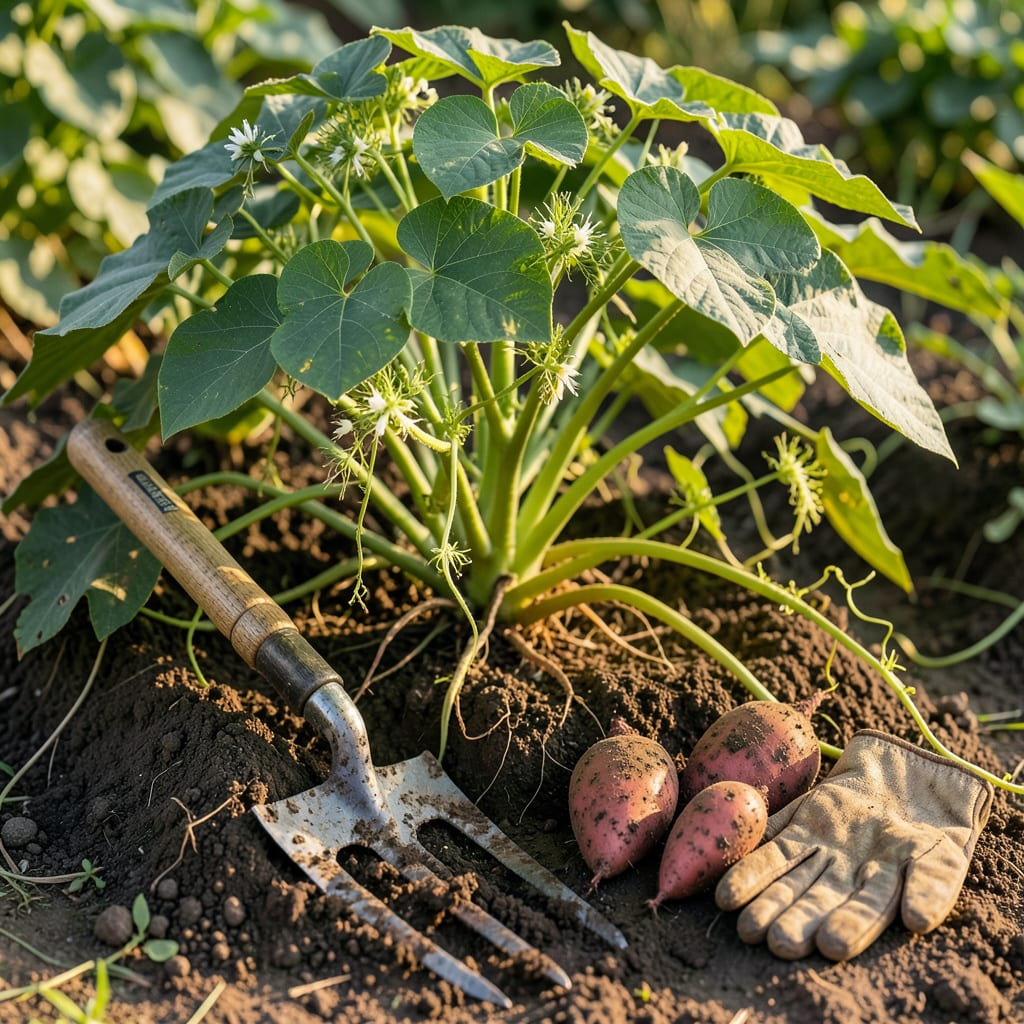
Ever dug up Sweet Potatoes too soon and found tiny, underdeveloped tubers? Timing is everything with this crop. The 🍠 doesn’t give obvious signals like other plants, making harvest timing tricky.
I’ll show you the exact window to pull them from the ground for the best yield. From planting to harvest, understanding the growth cycle is key to success.


Timing your sweet potato harvest perfectly ensures the best flavor and yield. Most varieties need 90 to 170 days from planting to maturity, depending on the cultivar and growing conditions.
Climate plays a huge role in this timeline. Warmer regions may see faster growth, while cooler areas can extend the maturity period significantly. 🌱
| Variety | Days to Maturity | Climate Suitability |
|---|---|---|
| Beauregard | 90-100 days | Warm climates |
| Centennial | 100-110 days | Moderate to warm |
| Georgia Jet | 110-120 days | Cooler regions |
| Jewel | 120-170 days | Long growing seasons |
Soil temperature is another critical factor. Sweet potatoes thrive when soil is consistently 75-85°F. Cooler soils slow growth, potentially adding weeks to your harvest timeline.
I’ve found that mulching with black plastic helps warm the soil faster in spring, giving plants a head start. This can shave 10-14 days off your total growing time in marginal climates.
For gardeners in short-season areas, starting slips indoors 4-6 weeks before transplanting can help meet the days to maturity requirement before frost arrives.
Remember that day length affects tuber formation. Sweet potatoes begin bulking up when days start getting shorter, typically after the summer solstice. This natural cue helps synchronize your harvest timing.
In my experience, Beauregard is the most reliable for early harvests, often ready in just 90 days under ideal conditions. It’s a great choice for gardeners eager to dig their first tubers.
For those with longer growing seasons, Jewel offers superior storage potential but requires patience, often needing the full 170 days to reach peak size and sweetness.
Always check your local frost dates and aim to harvest at least 1-2 weeks before the first expected frost to prevent cold damage to the tubers. ☀️
While days to maturity gives a general timeline, nature provides clearer signals. I watch for leaf yellowing as the first sign that tubers are nearing readiness beneath the soil.
The most reliable indicator is when vines begin dying back. This natural decline shows the plant is shifting energy from foliage to tuber development, meaning harvest time is near.
I always check tuber size by gently digging near the plant base. Mature sweet potatoes typically measure 3-4 inches long with a firm, smooth skin that resists scratching.
Another telltale sign is skin color development. Immature tubers have thin, easily damaged skin, while ready ones develop a thicker, more protective outer layer that handles digging well.
Weather plays a role too. I aim to harvest before the first frost, as cold temperatures can damage tubers. In my zone, this usually means digging by mid-October at the latest.
For the sweetest flavor, I’ve learned that curing properly after harvest is just as important as timing the dig. But that’s a topic for another section. For now, watch those vines and leaves closely! 🌿
Even experienced gardeners can make costly errors when harvesting sweet potatoes. I’ve learned the hard way that digging too early results in small, underdeveloped tubers that lack sweetness and size.
Harvesting too late is equally problematic, as overmature sweet potatoes can become fibrous or split underground. This often happens when gardeners ignore the first frost warning in their area.
🚫 Digging when soil is wet – causes bruising and rot
🚫 Using sharp tools carelessly – pierces tubers
🚫 Skipping the curing process – reduces sweetness
🚫 Harvesting during extreme heat – stresses the plants
I always check soil moisture before digging. Sweet potatoes come out cleanest when the soil is dry but not bone-dry, reducing the risk of cuts and bruises during harvest.
Another common mistake is ignoring plant signals. If the vines are still lush and green, the tubers likely aren’t ready. I wait until I see yellowing leaves and dying back vines as my cue.
Finally, proper curing is non-negotiable. Skipping this step leads to poor storage life and bland flavor. I cure mine at 80-85°F with high humidity for 5-10 days for the best results. ✂️
Digging before 90 days often yields small, underdeveloped tubers lacking sweetness. The plant needs time to convert starches to sugars, so patience pays off with better flavor and size.
Leaving them too long risks splitting or fibrous textures. Aim to harvest before the first frost—cold temps can damage tubers. Most varieties peak between 100-120 days.
No! Fast growers like Beauregard may finish in 90 days, while Jewel can need up to 170 days. Check your seed packet for the specific range.
Monitor local forecasts and harvest at least 1-2 weeks before the first expected frost. Use a soil thermometer—when temps drop below 50°F, it’s time to dig.
