
Beautiful Plants For Your Interior
Beautiful Plants For Your Interior
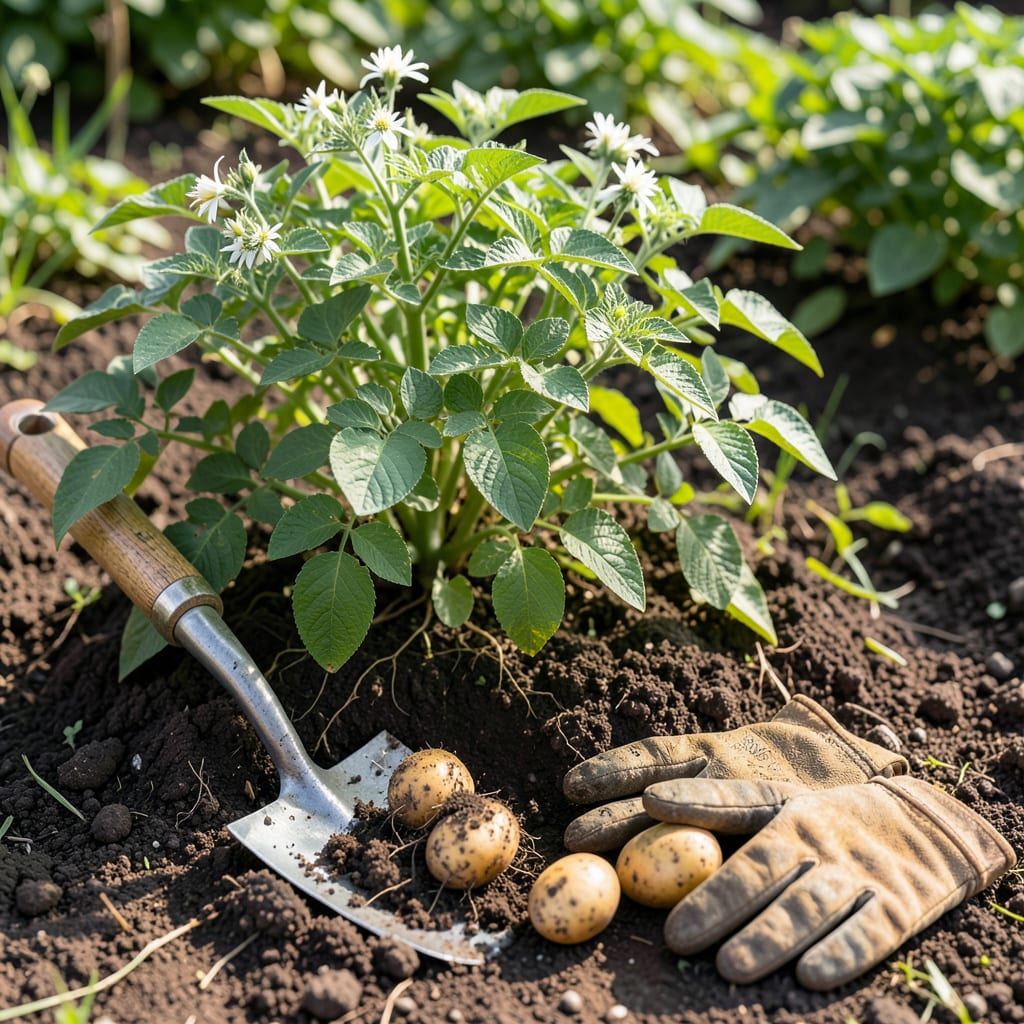
I still remember my first Potato harvest—digging up those 🥔 hidden treasures and wondering if I’d waited too long. Timing is everything when it comes to getting the best flavor and texture from your crop.
Whether you’re growing early, mid-season, or late varieties, knowing the signs of readiness can save you from a disappointing yield. Let me walk you through the key indicators that your spuds are ready to come out of the ground.


I’ve learned that not all potato varieties mature at the same pace. The timeline can range from 60 to 120 days, depending on the type you’ve planted. Getting this right ensures the best flavor and texture for your harvest.
Early varieties like Yukon Gold or Red Pontiac can be ready in as little as 70 days, while late types such as Russet may need the full 120 days. The variety you choose directly impacts your harvest window and storage potential.
| Variety | Maturity Time | Harvest Signs |
|---|---|---|
| Early (e.g., Yukon Gold) | 60-80 days | Flowers appear, skin firms up 🌱 |
| Mid-Season (e.g., Kennebec) | 80-100 days | Foliage yellows, tubers reach size ✂️ |
| Late (e.g., Russet) | 100-120 days | Tops die back completely, thick skin 🌿 |
For early potatoes, I start checking around 60 days. If the plants are flowering and the tubers are 1-2 inches in size, they’re likely ready for harvesting as new potatoes. These are perfect for immediate use.
With mid-season varieties, I wait until the foliage begins to yellow. This usually happens around 90 days. A quick dig test can confirm if the tubers have reached the desired size, typically 2-3 inches.
Late varieties require the most patience. I don’t harvest until the tops have completely died back, which can take up to 120 days. The skin should be thick and firm, making them ideal for long-term storage.
I always consider the planting date as a baseline. If I planted in early spring, I adjust my harvest expectations accordingly. Cooler climates might extend the timeline slightly, while warmer regions can speed it up.
Environmental factors play a role too. Consistent moisture and full sun help potatoes mature on schedule. If the weather has been unseasonably cool or dry, I add a few extra days to my estimate.
For the best results, I combine the calendar timeline with physical signs. When the foliage turns yellow and starts to die back, it’s nature’s way of saying your potatoes are nearly ready. A gentle dig with my hands often reveals the truth.
Remember, harvesting too early can leave you with tubers that have thin skins and poor storage life. On the other hand, waiting too long risks rot or pest damage. Finding that sweet spot is key.
I’ve found that keeping a gardening journal helps track these timelines year after year, making each harvest more predictable and rewarding ☀️
While the maturity timeline helps, I rely on visual cues to confirm my potatoes are ready. The first sign I look for is yellowing foliage, which indicates the plant is redirecting energy to the tubers below.
Another clear signal is flower formation. When I see blooms, it often means new potatoes are developing. For a more precise check, I perform a gentle dig test near the plant’s base to inspect tuber size and skin firmness.
For early harvests, I look for flowers and small tubers. These “new potatoes” have thin skins but offer a delicate flavor. I use a hand trowel to carefully extract a few without disturbing the rest of the plant.
With mature potatoes, I wait until the foliage dies back. At this stage, the skins toughen up, making them perfect for storage. I check the soil moisture too—dry conditions make harvesting easier and reduce rot risk.
The skin toughness test is my go-to method. I gently rub a dug-up tuber with my thumb. If the skin stays intact, it’s ready. If it peels off, I give it another week or two in the ground.
Finally, I always consider weather forecasts. If heavy rain is expected, I’ll harvest a bit early to prevent waterlogging. These small adjustments help me get the timing just right every season ✂️
I’ve seen many gardeners struggle with potato harvest timing, often making avoidable mistakes. The most common error is harvesting too early, which leaves tubers with thin skins that rub off easily.
Another frequent misstep is waiting too long. Overdue potatoes risk rot or pest damage, especially in damp conditions. I’ve learned to watch for yellowing foliage as a key indicator that it’s time to act.
Harvesting too early: Skin rubs off, poor storage 🌱
Waiting too long: Risk of rot or pest damage ☀️
Ignoring weather: Waterlogged soil harms tubers 💧
Not checking soil: Dry soil eases harvesting ✂️
I always check soil moisture before harvesting. Wet soil can cause tubers to rot, while dry conditions make digging easier. A simple finger test in the soil near the plants helps me decide.
Ignoring weather forecasts can also lead to trouble. If heavy rain is expected, I’ll harvest a day or two early to prevent waterlogging. This small step saves me from losing a portion of my crop.
Finally, I test a few tubers before committing to a full harvest. If the skin stays firm and the size meets expectations, I know it’s time. This method ensures I don’t pull up the entire crop prematurely.
By avoiding these common pitfalls, I’ve consistently improved my potato yields and quality each season 🌿
Harvesting too soon results in thin skins that rub off easily. These tubers won’t store well and often lack full flavor development.
Yes! Gently dig around the plant’s base to remove 1-2 inches tubers for immediate use. Leave the rest to mature for later harvest.
Late varieties are ready when the foliage completely dies back and the skin becomes thick. This typically occurs around 100-120 days after planting.
Perform a gentle dig test near the plant’s base. If the tubers are 1-3 inches in size and the skin doesn’t rub off, they’re ready.
