
Beautiful Plants For Your Interior
Beautiful Plants For Your Interior
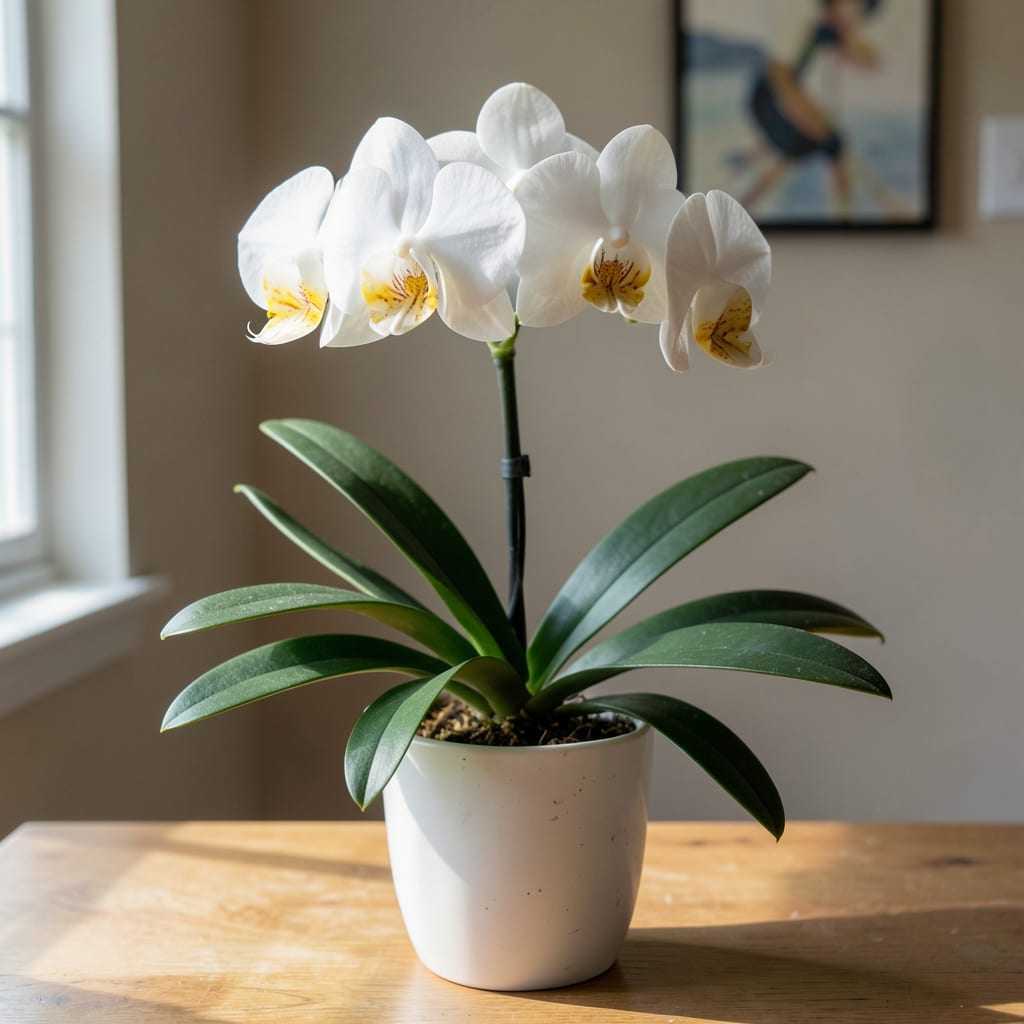
I’ve always been fascinated by Orchids 💐 and their beautiful blooms. When grown indoors, these stunning flowers can brighten up any room, but their flowering period can be unpredictable.
Understanding how to care for your Orchid is key to enjoying its blooms for longer. Let’s explore the factors that affect their blooming duration and how you can encourage your Orchid to flourish indoors.
When growing Orchids indoors, their blooming period can vary significantly based on several key factors. Understanding these elements is crucial for maximizing the duration of their beautiful flowers.
The primary factors that influence Orchid bloom duration include light, temperature, watering, and humidity. Each of these plays a vital role in determining how long your Orchid will bloom.
Maintaining optimal light conditions is essential for Orchid health and blooming. Most Orchids prefer bright, indirect light, which can be achieved by placing them near an east- or west-facing window. The ideal light duration is typically 4-6 hours of indirect sunlight per day 🌞.
Temperature control is another critical factor. Orchids generally thrive in daytime temperatures between 65-75°F (18-24°C) and nighttime temperatures around 55-65°F (13-18°C). Avoid placing Orchids near heating vents, radiators, or drafty windows to maintain stable temperatures 🌡️.
Watering practices significantly impact Orchid bloom duration. Overwatering can lead to root rot, while underwatering can cause stress. Water your Orchid when the potting mix feels dry to the touch, usually every 7-10 days depending on environmental conditions 💧.
Humidity levels also play a crucial role. Orchids generally prefer a humid environment, with ideal humidity levels between 40-70%. You can increase humidity around your Orchid by using a humidifier or placing the pot on a tray filled with water and pebbles 🌿.
By understanding and managing these factors, you can create an optimal environment for your Orchid to bloom indoors. Proper care will not only extend the blooming period but also promote overall plant health 🌱.
It’s worth noting that different Orchid species may have unique requirements. Researching the specific needs of your Orchid variety can help you tailor your care routine for the best results 📚.
Regular monitoring of your Orchid’s condition and adjusting your care practices accordingly is key to success. By paying attention to your plant’s responses to different conditions, you can fine-tune its care for optimal blooming 🔍.
Creating a consistent environment is crucial for encouraging long-lasting blooms. Avoid sudden changes in light, temperature, or watering schedule to keep your Orchid happy and blooming 🌸.
With proper care and attention to the factors affecting bloom duration, you can enjoy your Orchid’s beautiful flowers for an extended period. Remember that patience and observation are essential components of successful Orchid cultivation 🕰️.
To keep your Orchids blooming for longer periods indoors, it’s essential to provide them with the right conditions and care. I’ve found that with proper attention, these beautiful plants can thrive and produce stunning flowers for an extended time 🌼.
One of the most effective ways to extend the blooming period is to maintain optimal growing conditions. This includes providing the right amount of light, temperature, and humidity. By ensuring your Orchid receives the right balance of these factors, you can encourage longer blooming periods 🌞.
Use a balanced Orchid fertilizer (20-20-20) every 2 weeks during the growing season to provide essential nutrients for healthy blooms.
Repot your Orchid every 2-3 years to refresh the potting mix and provide a larger pot if necessary, promoting healthy root growth and blooming.
After blooming, you can cut back the flower spike about an inch above the node from which it emerged to encourage a new bloom on the same spike.
In addition to these tips, it’s crucial to monitor your Orchid’s condition and adjust your care routine accordingly. By paying attention to your plant’s responses to different conditions, you can fine-tune its care for optimal blooming 🔍.
Creating a consistent environment is also vital for encouraging long-lasting blooms. Avoid sudden changes in light, temperature, or watering schedule to keep your Orchid happy and blooming 🌸.
With proper care and attention to the factors affecting bloom duration, you can enjoy your Orchid’s beautiful flowers for an extended period. Remember that patience and observation are essential components of successful Orchid cultivation 🕰️.
By following these tips and maintaining a consistent care routine, you can maximize your Orchid’s blooming potential and enjoy its stunning flowers for longer periods indoors 💐.
Regular care and attention will help your Orchid thrive and produce beautiful blooms. With the right conditions and proper care, your Orchid can be a stunning addition to your indoor space for years to come 🌿.
When growing Orchids indoors, it’s easy to make mistakes that can shorten their blooming period. Being aware of these common errors can help you avoid them and keep your Orchids blooming for longer 🌼.
One of the most common mistakes is overwatering. Orchids are prone to root rot if the potting mix is too wet for too long. To avoid this,
Overwatering is a common mistake that can lead to root rot and reduce blooming. Check the potting mix moisture before watering.
Another mistake is insufficient light. While Orchids don’t require direct sunlight, they need bright, indirect light to bloom well. Placing them near an east- or west-facing window can provide the right amount of light 🌞.
Temperature fluctuations can also affect blooming. Orchids generally prefer daytime temperatures between 65-75°F (18-24°C) and nighttime temperatures around 55-65°F (13-18°C). Avoid placing Orchids near heating vents or drafty windows 🌡️.
Low humidity is another common issue. Orchids thrive in humid environments, typically between 40-70% relative humidity. You can increase humidity around your Orchid by using a humidifier or placing the pot on a tray with water and pebbles 🌿.
By being aware of these common mistakes and taking steps to avoid them, you can create a more favorable environment for your Orchids to bloom indoors. Regular monitoring and adjustments to your care routine will help ensure your Orchids thrive and produce beautiful blooms for an extended period 🔍.
Remember, patience and observation are key to successful Orchid cultivation. By paying attention to your plant’s responses to different conditions, you can fine-tune its care for optimal blooming 🕰️.
With proper care and attention, you can enjoy your Orchid’s beautiful flowers for a longer time. By avoiding common mistakes and maintaining optimal conditions, you can maximize your Orchid’s blooming potential and enjoy its stunning flowers indoors 💐.
Most Orchids bloom for 2-6 weeks when grown indoors, though some varieties like Phalaenopsis can bloom for 3-6 months with proper care. The blooming period varies depending on the Orchid species and growing conditions. Proper care can help extend the blooming duration.
Yes, you can encourage your Orchid to bloom again. After the flowers drop, you can cut the flower spike above a node to promote a new bloom on the same spike. Some Orchids may require a period of cooler temperatures or reduced watering to trigger reblooming.
Orchids may stop blooming due to factors like insufficient light, improper temperature, or inadequate watering and humidity. Check your care routine and adjust as needed to provide optimal conditions for blooming.
Water your Orchid when the potting mix feels dry to the touch, usually every 7-10 days. Adjust the frequency based on your home’s humidity and temperature. Proper watering is crucial for maintaining healthy blooms.
