
Beautiful Plants For Your Interior
Beautiful Plants For Your Interior
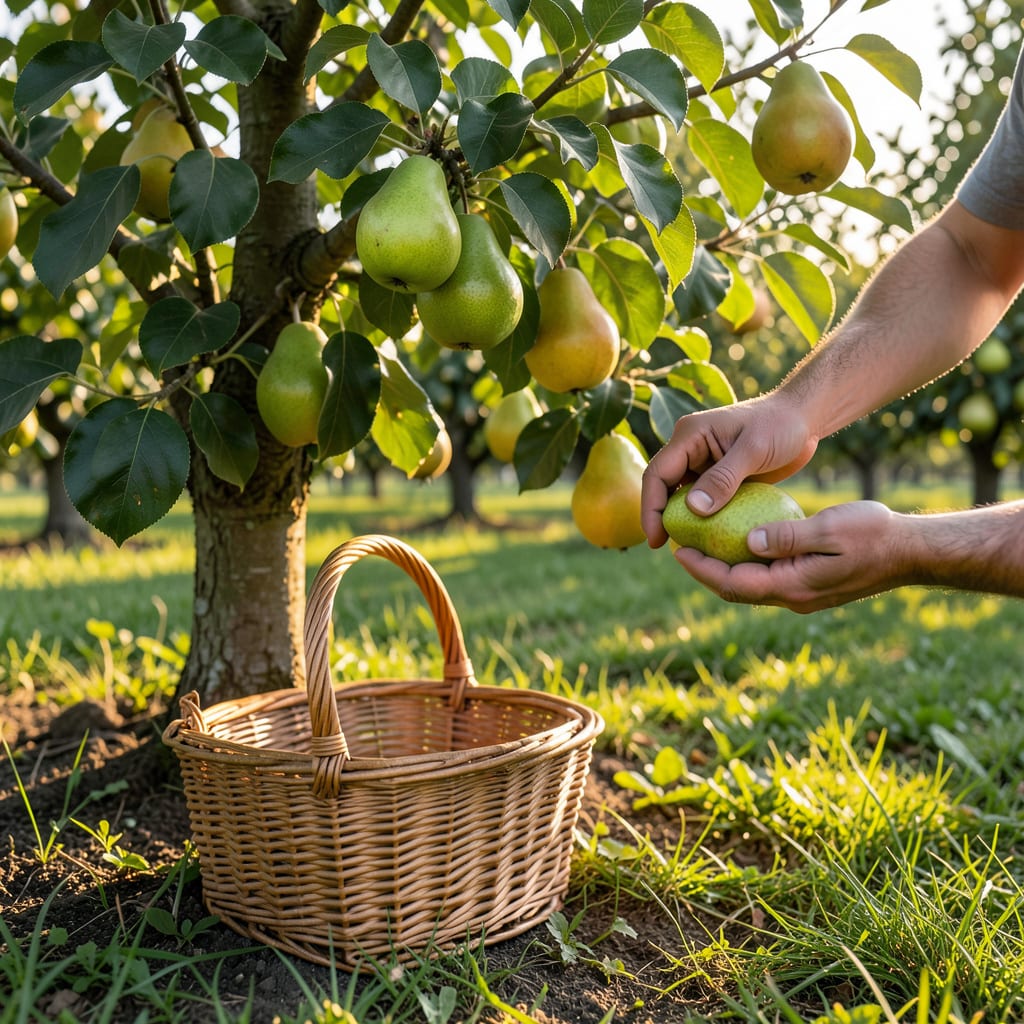
There’s nothing more frustrating than picking 🍐 Pear fruit that’s either rock-hard or already overripe. The difference between a perfect harvest and a disappointing one often comes down to timing.
I’ll show you the easiest ways to spot when your pears are ready—from the tilt test to color changes—so you can enjoy them at their peak.


I’ve found the tilt test is the most reliable way to check if pears are ready to pick. Unlike apples, pears don’t ripen well on the tree, so timing is everything. The tilt test helps you determine the perfect harvest window before they overripen. ☀️
To perform the test, gently lift the pear and tilt it horizontally. If it separates easily from the branch with the stem intact, it’s ready. This method works best for Bartlett, Anjou, and Bosc varieties. 🌳
The tilt test works because pears develop an abscission layer at the stem when ripe. This natural separation makes it easier to pick without damaging the fruit or tree. I always check a few pears from different parts of the tree for accuracy. ✂️
For Bartlett pears, you’ll notice a color change from green to yellow as they ripen. Anjou and Bosc varieties may retain their green hue but will still pass the tilt test. Don’t rely on color alone—always combine it with the tilt method. 🌿
If the pear doesn’t separate easily, it’s not ready. Forcing it off can damage the fruit and the tree. In this case, wait 2-3 days and test again. Weather conditions like heat or rain can speed up or slow down ripening. 💧
I’ve made the mistake of waiting too long before. Overripe pears become mushy and fall off the tree naturally. If you see pears dropping, harvest the remaining ones immediately, even if they seem slightly underripe. They’ll continue ripening off the tree. 🌱
For best results, perform the tilt test in the early morning when temperatures are cooler. This is when the fruit is most firm, giving you the most accurate reading. Avoid testing after rain, as wet fruit can be slippery and misleading. ☀️
Remember that pear varieties have different ripening times. Bartletts typically ripen in late summer, while Anjou and Bosc may take until early fall. Check your specific variety’s expected harvest window for guidance. 🌳
With practice, you’ll get a feel for the perfect moment to pick. The tilt test, combined with visual cues, will ensure your pears are at peak ripeness every time. Trust the process, and you’ll enjoy the sweetest harvest! 🌻
Beyond the tilt test, I look for color changes in my pears. Most varieties shift from green to yellow or develop a red blush when ripe. Bartlett pears are a perfect example—they turn from green to golden yellow.
Another sign is texture change. Gently press near the stem—ripe pears will have a slight give, not rock-hard like unripe fruit. Size matters too; full-sized pears are usually ready, though this varies by variety.
| Sign | What to Look For |
|---|---|
| Color Shift | Yellow, red, or green-yellow hue |
| Texture | Slight softness near stem |
| Size | Full mature size for variety |
Don’t forget the aroma test. Ripe pears often emit a sweet fragrance near the stem. I’ve found this especially true for Anjou pears, which smell amazing when ready.
For Bosc pears, the skin may develop a slightly rough texture. This isn’t a flaw—it’s a sign of ripeness. Always check a few fruits from different parts of the tree, as they may ripen unevenly.
Weather plays a role too. In warmer climates, pears may ripen faster. If you’re in USDA zones 5-9, monitor closely as harvest season approaches. A sudden heatwave can speed up ripening.
Finally, remember that pears ripen from the inside out. If you’re unsure, pick one and let it sit at room temperature. If it ripens off the tree, the rest are likely ready for harvest.
🌿Timing your pear harvest wrong can ruin weeks of growth. I’ve seen gardeners lose entire crops by waiting for pears to ripen on the tree, which leads to mushy fruit. Pears ripen best off the branch, so resist the urge to delay.
Another frequent error is ignoring variety differences. Bartlett pears turn yellow when ready, while Anjou pears stay green but develop a slight give near the stem. Know your tree’s traits to avoid disappointment.
⚠️ Avoid These Harvest Pitfalls
Don’t pull pears—always twist gently with an upward motion to prevent stem damage. Rough handling causes bruising and shortens storage life.
Mishandling during picking is a silent killer. I always use clean pruners or my hands to twist the fruit upward. If the pear doesn’t separate easily, it’s not ready—leave it for another day or two.
Weather plays a role too. A cold snap can accelerate ripening, while excessive rain may dilute flavor. Check your local climate and adjust your harvest timing accordingly. In USDA zones 5-9, late summer is typically prime time.
Finally, don’t overlook the stem test. If the stem breaks rather than separates cleanly, the fruit isn’t ready. Patience and observation are your best tools for a perfect pear harvest ☀️
Use the tilt test: gently lift and tilt the pear horizontally. If it separates easily with the stem intact, it’s ready. This works best for Bartlett, Anjou, and Bosc varieties.
Underripe pears feel rock-hard when pressed and won’t separate from the branch during the tilt test. They also retain a solid green color with no yellow or red tint.
Bartletts turn from green to yellow, but Anjou and Bosc often stay green. For these, rely more on the tilt test and slight softness near the stem.
A heatwave can speed up ripening, while excessive rain might delay it. In USDA zones 5-9, monitor closely as harvest season approaches.
