
Beautiful Plants For Your Interior
Beautiful Plants For Your Interior
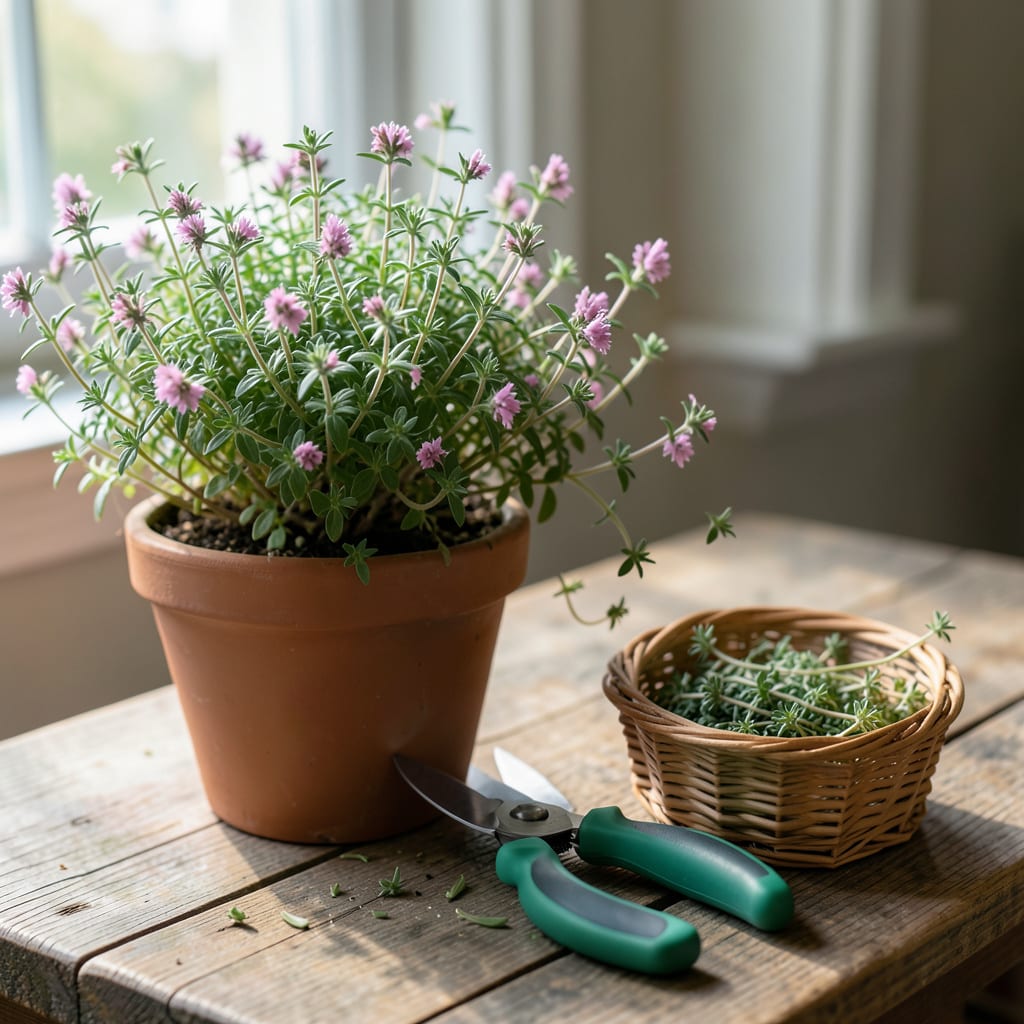
I remember the first time I harvested 🌿 Thyme – the aroma was unreal. Getting the timing right transforms your cooking and keeps your plants thriving for years.
Let me share the best methods I’ve learned for collecting those flavorful sprigs without harming your garden. You’ll be amazed at how simple it is to do it properly.


I’ve found that timing is everything when it comes to harvesting fresh thyme. The best moment is when the essential oils are at their peak, usually in the morning after dew evaporates but before the heat of the day sets in.
The ideal harvest window for thyme is from June to October, when the plant is mature and the leaves are most fragrant. This is when the flavor is strongest and the plant can handle a trim.
If your thyme isn’t ready, you’ll notice soft green stems and little aroma from the leaves. In this case, give it more time to mature. Patience pays off with more flavorful harvests.
I always check for woody stems at the base as a sure sign. This means the plant is established enough to handle harvesting. The leaves should release a strong scent when rubbed between your fingers.
Weather plays a role too. I avoid harvesting right after rain or during extreme heat, as both can stress the plant. A dry, sunny morning is perfect for the best flavor and quickest drying.
For maximum essential oil concentration, I aim to harvest before the plant flowers. While thyme flowers are edible, the leaves are most potent just before blooming begins.
In my experience, young thyme plants need at least 90 days of growth before their first harvest. After that, you can collect sprigs every 2-3 weeks throughout the growing season.
I’ve noticed that thyme grown in full sun develops stronger flavors faster. If your plants are in partial shade, they may take a bit longer to reach peak aroma.
Remember, regular harvesting actually encourages bushier growth. So don’t be shy about trimming your thyme—it’ll reward you with more flavorful sprigs next time. ✂️
I always use sharp garden shears or clean scissors for harvesting thyme. This ensures clean cuts that won’t damage the stems or introduce disease to your herb plants.
My preferred method is the stem-cutting approach. I snip just above a leaf node where new growth emerges. This encourages the plant to branch out and become bushier.
I never harvest more than one-third of the plant at a time. This prevents shock to the system and allows for continuous growth throughout the season. Your thyme will thank you with more sprigs next time.
After cutting, I
For best results, I harvest thyme regularly during the growing season. This stimulates new growth and prevents the plant from becoming woody and leggy. A well-maintained thyme plant can produce for years.
I’ve found that young thyme plants benefit from gentler harvesting. Start with just a few sprigs at a time until the plant is fully established. Mature plants can handle more frequent and substantial harvests.
I’ve seen many gardeners make simple errors that harm their thyme plants. The most common is harvesting too much at once, which can shock the plant and stunt its growth. Always leave at least two-thirds of the plant intact.
Another frequent issue is using dull tools. Ragged cuts can introduce disease and slow healing. I always keep my pruners sharp for clean snips that help the plant recover quickly.
I never harvest thyme when it’s wet from rain or morning dew. The excess moisture can lead to mold growth and spoil your harvest. Always wait for dry conditions to ensure the best quality.
Timing mistakes are also common. Harvesting in the heat of the day can cause the essential oils to evaporate, reducing flavor. I stick to early morning after the dew has dried for the best results.
Lastly, don’t ignore your plant’s growth stage. Harvesting too early from young plants can weaken them. I wait until my thyme is at least 6 inches tall with woody stems before taking any sprigs.
By avoiding these common pitfalls, your thyme will stay healthy and productive for years to come. ✂️
Early morning after dew dries is ideal for maximum flavor. The essential oils are most concentrated then. Avoid harvesting during rainy weather or extreme heat.
Never remove more than 1/3 of the plant in a single harvest. This prevents shock and allows for continuous growth throughout the season.
Use sharp garden shears or clean scissors for clean cuts. Always cut just above a leaf node at a 45° angle to encourage bushier regrowth.
Signs include soft green stems, little aroma from leaves, or height under 4 inches. Wait until stems are woody and the plant reaches 6+ inches tall.
