
Beautiful Plants For Your Interior
Beautiful Plants For Your Interior
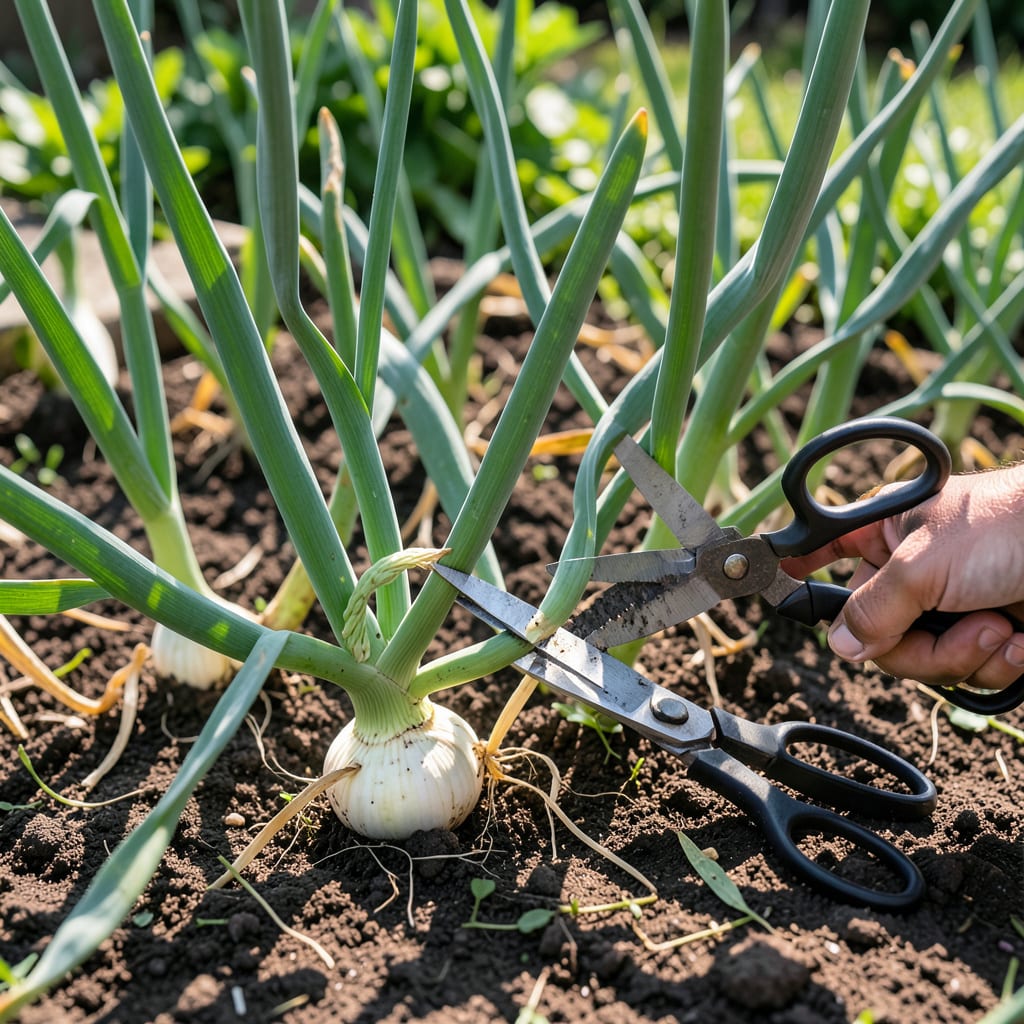
That first curl of the 🧄 garlic scape is your signal – but wait too long and you’ll miss the perfect window. These delicate shoots pack incredible flavor, but only when harvested at just the right stage.
I’ll show you the exact visual cues to watch for and why timing matters so much for both your scapes and the bulbs below. Let’s make every harvest count.


The perfect garlic scapes harvest time starts with watching for that first curly cue. These green shoots emerge from hardneck garlic plants in late spring, signaling the transition from bulb growth to flower production.
I always check my plants daily once I spot the first scape emerging. The window for harvest is brief—just a few days—so staying vigilant is key to catching them at their peak tenderness.
The most reliable sign is when the scape forms a full loop. This typically happens when the shoot reaches about 8-12 inches long. At this stage, the stem is still tender but has developed its characteristic garlic flavor.
I’ve found that scapes harvested at this curly stage are the most flavorful. If you wait until they straighten out, they become tough and fibrous, losing much of their culinary appeal.
Another important visual cue is the thickness of the stem. A ready-to-harvest scape should be about as thick as a pencil. Thin, flimsy scapes aren’t mature enough and won’t have developed their full flavor profile.
The flower bud at the tip is your final indicator. When it begins to swell but hasn’t opened yet, that’s your signal to harvest. Once the bud opens, the scape becomes woody and less palatable.
In my garden, I typically see scapes ready for harvest in late May to early June, depending on the variety and growing conditions. Hardneck garlic varieties like Rocambole and Purple Stripe are most likely to produce scapes.
Remember that harvesting scapes isn’t just about the scape itself. Removing them actually benefits your garlic bulbs by redirecting the plant’s energy toward bulb development rather than flower production.
I make it a habit to check my garlic patch every morning during scape season. The difference between a perfectly timed harvest and a missed opportunity can be just a day or two. ✂️
Harvesting garlic scapes properly ensures you get the best flavor while keeping your garlic plants healthy. The process is simple but timing and technique matter greatly for both the scapes and the developing bulbs.
I always use sharp pruners or scissors to make clean cuts. This prevents tearing the plant tissue, which could invite disease or stress the garlic. The right tools make all the difference in maintaining plant health.
The most critical step is cutting at the right location. I make my cut just above the top set of leaves, where the scape emerges from the plant. This allows the rest of the foliage to continue photosynthesizing for bulb growth.
Never pull or twist the scapes off, as this can damage the plant. A clean, sharp cut is always best. I’ve found that early morning is the ideal time to harvest, when the plants are well-hydrated but before the heat of the day.
After harvesting, I give my garlic plants a light watering to help them recover. The removal of scapes redirects energy to the bulbs, so proper hydration supports this growth phase. This simple step boosts bulb development significantly.
Remember that each hardneck garlic plant typically produces just one scape. Softneck varieties rarely produce scapes, so focus your attention on hardneck types like Rocambole or Purple Stripe for the best results. ✂️
Timing your garlic scapes harvest incorrectly can cost you both flavor and bulb size. I’ve seen many gardeners miss the optimal window by waiting too long or harvesting too early, which affects both the scapes and the developing bulbs.
One of the most common errors is waiting until the scapes straighten out. At this point, they’ve passed their prime and become tough and fibrous. The ideal time is when they form that classic curl, not after.
⚠️ Warning: Harvesting too late reduces both scape quality and bulb size. Remove scapes before they straighten to keep plants productive.
Another mistake is cutting the scapes too short. I always leave enough stem above the leaves to avoid damaging the plant. Cutting too close to the base can stress the garlic and reduce its ability to photosynthesize effectively.
Some gardeners also forget that not all garlic produces scapes. Softneck varieties rarely develop them, so don’t be alarmed if you don’t see any. Focus on your hardneck varieties like Rocambole or Purple Stripe for scape production.
Finally, avoid harvesting scapes when the flower bud has opened. At this stage, the scape becomes woody and bitter. I check my plants daily during scape season to catch them at just the right moment before the bud blooms. ✂️
Aim for 8-12 inches with a full curl. Shorter stems lack flavor, while longer ones turn tough and fibrous.
Harvesting redirects energy to bulb growth. Left uncut, scapes form flowers, reducing bulb size by 20-30%.
They become woody and bitter. The 2-3 day window after curling is critical for tender, flavorful shoots.
Only hardneck types like Rocambole do. Softneck varieties rarely develop scapes, so focus on hardneck plants.
