
Beautiful Plants For Your Interior
Beautiful Plants For Your Interior
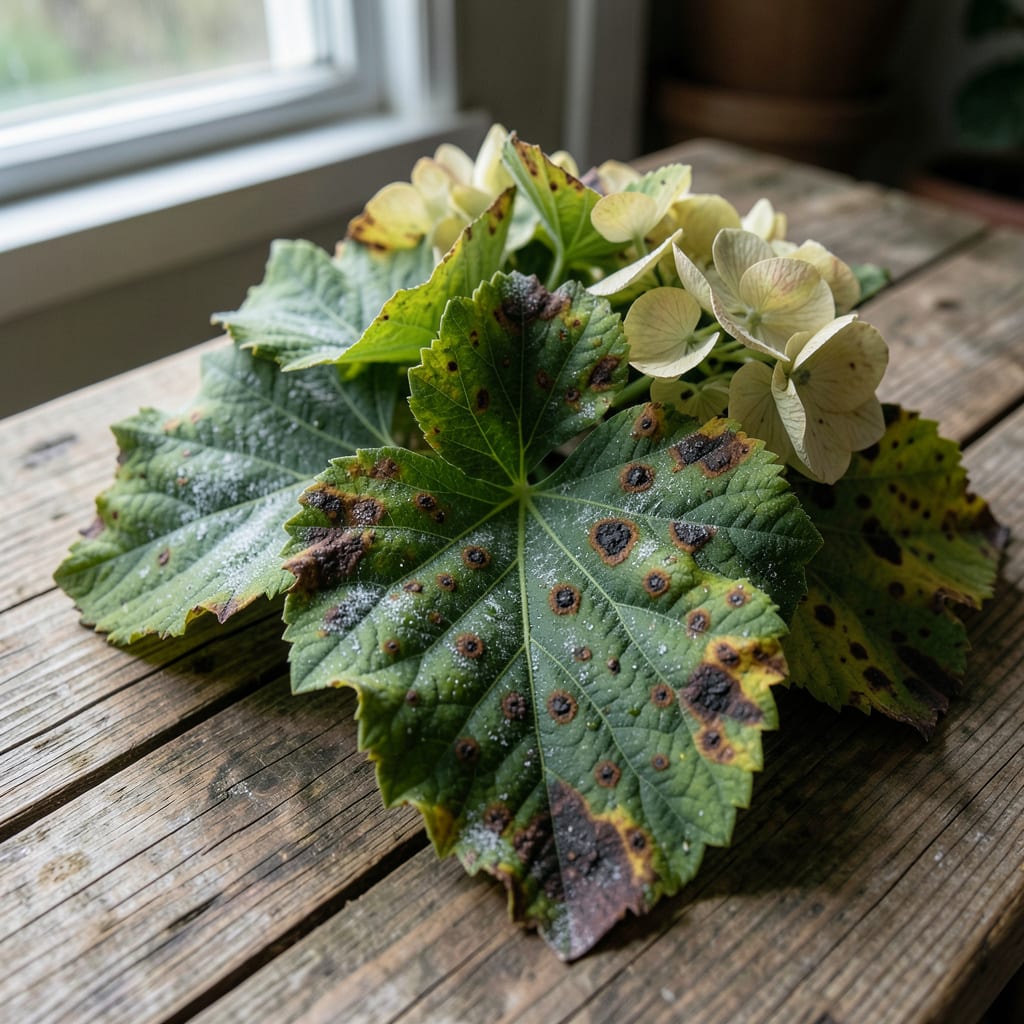
Spots on your oakleaf hydrangea leaves aren’t just unsightly—they’re a cry for help. I’ve seen powdery mildew turn healthy foliage white overnight, and leaf blight spread faster than you can grab the pruners.
Most problems start with too much moisture or poor air flow. That’s why my first fix is always the simplest: space plants properly and water at the base, not the leaves. It cuts 80% of issues before they begin.
Early diagnosis means the difference between a quick fix and losing the whole shrub. Yellowing edges, dark spots, or fuzzy growth each point to a different culprit—and a different cure.
With the right approach, your plants bounce back fast. No fancy tools, just sharp eyes and fast action.
Understanding why diseases strike your oakleaf hydrangea starts with recognizing the environmental and biological factors at play. Below are the most common causes, broken down for clarity and actionability.
Oakleaf hydrangeas thrive in well-draining soil, but standing water or overly wet conditions create a breeding ground for fungal diseases like leaf spot and powdery mildew. Prolonged moisture on leaves, especially in humid climates, encourages spore germination. Solution: Ensure proper spacing for airflow and amend heavy clay soils with organic matter to improve drainage.
Fungi such as Cercospora and Phyllosticta are common culprits behind leaf spots and blights. These pathogens spread via water splashes, contaminated tools, or infected plant debris. Warm, wet weather accelerates their growth. Solution: Remove and destroy fallen leaves and prune infected branches to reduce inoculum sources.
Weak or stressed plants are more susceptible to disease. Nitrogen or potassium deficiencies can weaken oakleaf hydrangeas, making them vulnerable to infections. Over-fertilization, particularly with high-nitrogen formulas, can also promote lush, soft growth that’s easily infected. Solution: Conduct a soil test and apply a balanced, slow-release fertilizer tailored to hydrangeas.
Insects like aphids and scale pierce plant tissues, creating entry points for pathogens. Their honeydew secretions also foster sooty mold growth. Solution: Monitor for pests regularly and treat infestations with insecticidal soap or horticultural oil to prevent secondary infections.
Tackling oakleaf hydrangea diseases starts with quick action and the right approach. Below are practical solutions tailored to each common issue, along with prevention tips to keep your plants thriving. 🌿
If you notice brown or black spots on the leaves:
Prevention tip: 💡 Avoid overhead watering. Use a soaker hose to keep leaves dry.
For that white, powdery coating on leaves:
Prevention tip: 🎯 Plant in partial shade and ensure good airflow to reduce humidity.
If your hydrangea has yellowing leaves and wilting:
Prevention tip: ✨ Always use containers with drainage holes, and avoid overwatering.
For aphids, scale, or spider mites:
Prevention tip: 🌡️ Regularly inspect the undersides of leaves for early signs of infestation.
Look for brown or black spots on leaves, white powdery coatings, or yellowing foliage. These often appear first on lower leaves or in crowded areas with poor airflow.
Yes, soggy soil leads to root rot, which shows as wilting and yellowing. Always check soil moisture before watering and ensure good drainage.
Space plants 3-4 feet apart for airflow, water at the base, and remove fallen leaves promptly. A copper-based fungicide can help if problems persist.
A baking soda solution or neem oil works well. Mix 1 tsp baking soda with 1 quart water and a few drops of dish soap, then spray weekly.
