
Beautiful Plants For Your Interior
Beautiful Plants For Your Interior
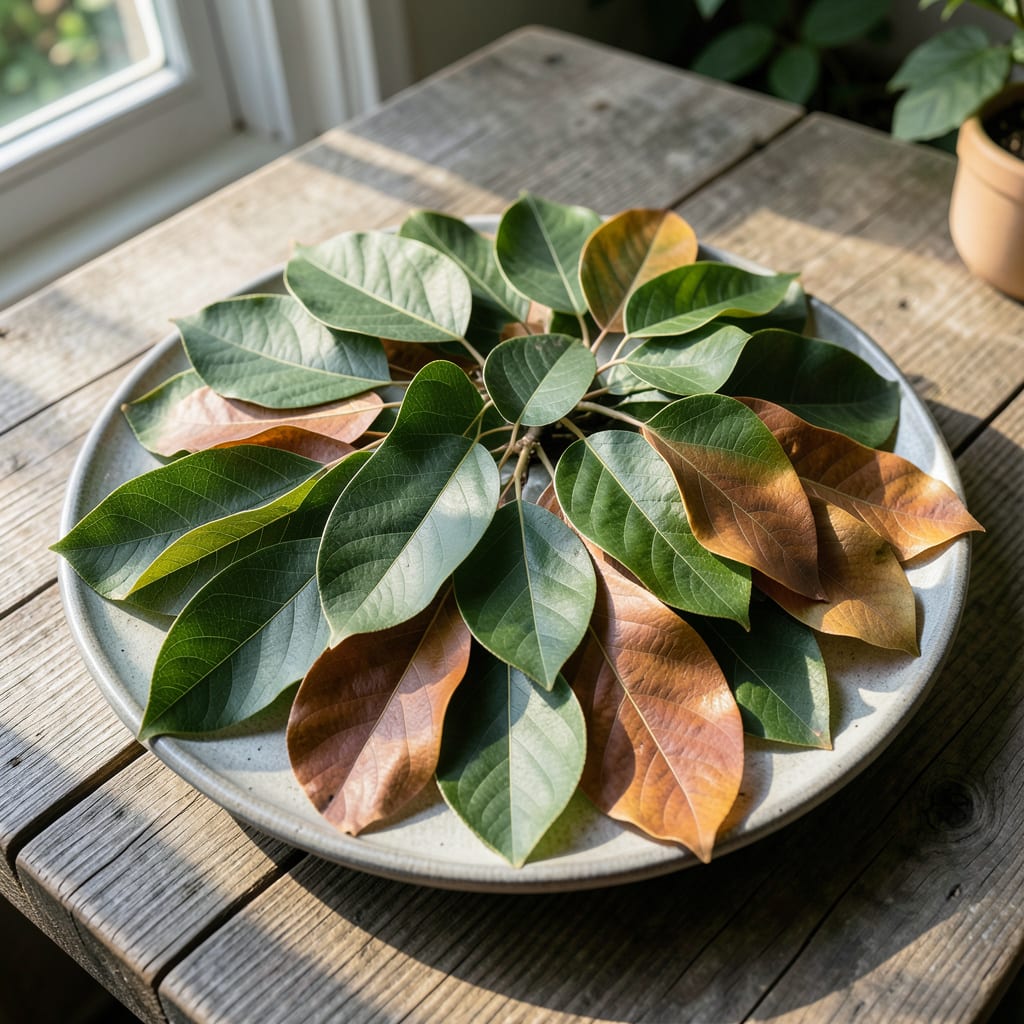
Those glossy, dark green leaves catch the light like polished jade in summer. Common persimmon trees wear their foliage with quiet elegance, each leaf oval-shaped with smooth edges that feel almost waxy to the touch.
By fall, they transform into a fiery display of orange and red. The leaves tell you everything about the tree’s health—vibrant color means happy roots, while yellowing often signals it’s time to check your watering routine.
📚 In This Guide
Here’s how I approach leaf identification and care to keep your tree thriving through every season.
Common persimmon leaves are oval to elliptical with smooth, entire margins that often curl slightly at the edges. They typically measure 2.5 to 6 inches long and 1 to 2.5 inches wide, with a pointed tip and rounded base. The surface feels leathery to the touch, which helps the tree conserve moisture during dry periods.
I check for the characteristic dark green color above and a paler, slightly fuzzy underside. In autumn, they transform into stunning shades of orange, red, or purple—this color change is your first clue that the tree is preparing for dormancy. If the leaves appear yellow with green veins, that’s often a sign of iron deficiency.
Persimmon leaves grow in an alternate arrangement along the branches, meaning each leaf emerges at a different height rather than in pairs. The stem (petiole) attaching the leaf to the branch is usually 0.5 to 1 inch long and slightly grooved on top. This detail helps distinguish it from similar-looking trees like dogwood.
I always look for the slight twist where the petiole meets the branch—it’s a subtle but reliable identifier. If you see leaves growing in pairs or clusters, you’re likely looking at a different species. Also, persimmon leaves don’t have stipules (small leaf-like appendages at the base), which many other trees do.
Healthy persimmon leaves should feel firm and exhibit a consistent color without spots or holes. If you notice brown or black spots, it could indicate a fungal infection like leaf spot, which thrives in wet conditions. I thin out crowded branches to improve airflow and reduce humidity around the leaves.
Yellowing between the veins often signals iron chlorosis, especially in alkaline soils. I apply iron chelates to the soil in early spring to correct this. For pest issues, check the undersides for tiny mites or scale insects—these often appear as white or brown bumps. A strong spray of water or horticultural oil can usually resolve minor infestations.
In spring, I inspect new leaves for signs of aphids, which cluster on the tender growth. A gentle wipe with a soapy cloth removes them before they multiply. During summer, ensure the tree receives full sun—persimmons struggle in shade, and their leaves will appear sparse and pale if light is insufficient.
As fall approaches, resist the urge to remove fallen leaves immediately. They act as a natural mulch, retaining soil moisture and suppressing weeds. However, if the tree has had fungal issues, I rake and remove the leaves to prevent the disease from overwintering in the debris.
These practical insights will help you identify and care for your tree with confidence.
Leaf Shape Clues: When examining leaves in Step 1, focus on that 2.5 to 6 inches long range—the size is a dead giveaway. The oval to elliptical shape with smooth margins is unique, but the slight curl at the edges is what really sets persimmon leaves apart from lookalikes like dogwood. I always check both the length and width to be sure.
Stem Identification: In Step 2, that 0.5 to 1 inch long petiole with its slight groove is your best friend for confirmation. The twist where it meets the branch is subtle but reliable. If you don’t see it, look again—it’s often the only way to distinguish persimmon from similar trees.
Health Monitoring: Step 3’s advice about brown or black spots is critical—those are early signs of fungal trouble. I’ve found that catching these spots when they’re still small (dime-sized or less) makes treatment much easier. Thin branches early in the season to prevent humidity buildup.
Seasonal Care: The full sun requirement in Step 4 isn’t just a suggestion. I’ve seen persimmon trees in partial shade produce sparse, pale leaves that never reach their full potential. If your tree isn’t thriving, check its light exposure first.
Yellowing or browning leaves often indicate overwatering, nutrient deficiency, or fungal diseases. Check soil moisture and drainage, and ensure the tree gets balanced fertilizer. Fungal issues may require treatment with a fungicide.
Persimmon leaves typically change color in the fall, around late September to November, depending on the climate. Cooler temperatures trigger the vibrant shift to orange, red, or purple hues.
While not commonly consumed, young persimmon leaves are edible and used in some traditional teas or salads. However, they contain tannins, which can be bitter. Always wash them thoroughly and consume in moderation.
Leaf spots are often caused by fungal infections like anthracnose. Remove affected leaves, improve air circulation, and apply a copper-based fungicide. Avoid overhead watering to prevent further spread.
If leaves are severely damaged, prune affected branches to encourage new growth. Ensure proper watering and mulching to support recovery. Healthy trees often regrow leaves within a season.
