
Beautiful Plants For Your Interior
Beautiful Plants For Your Interior
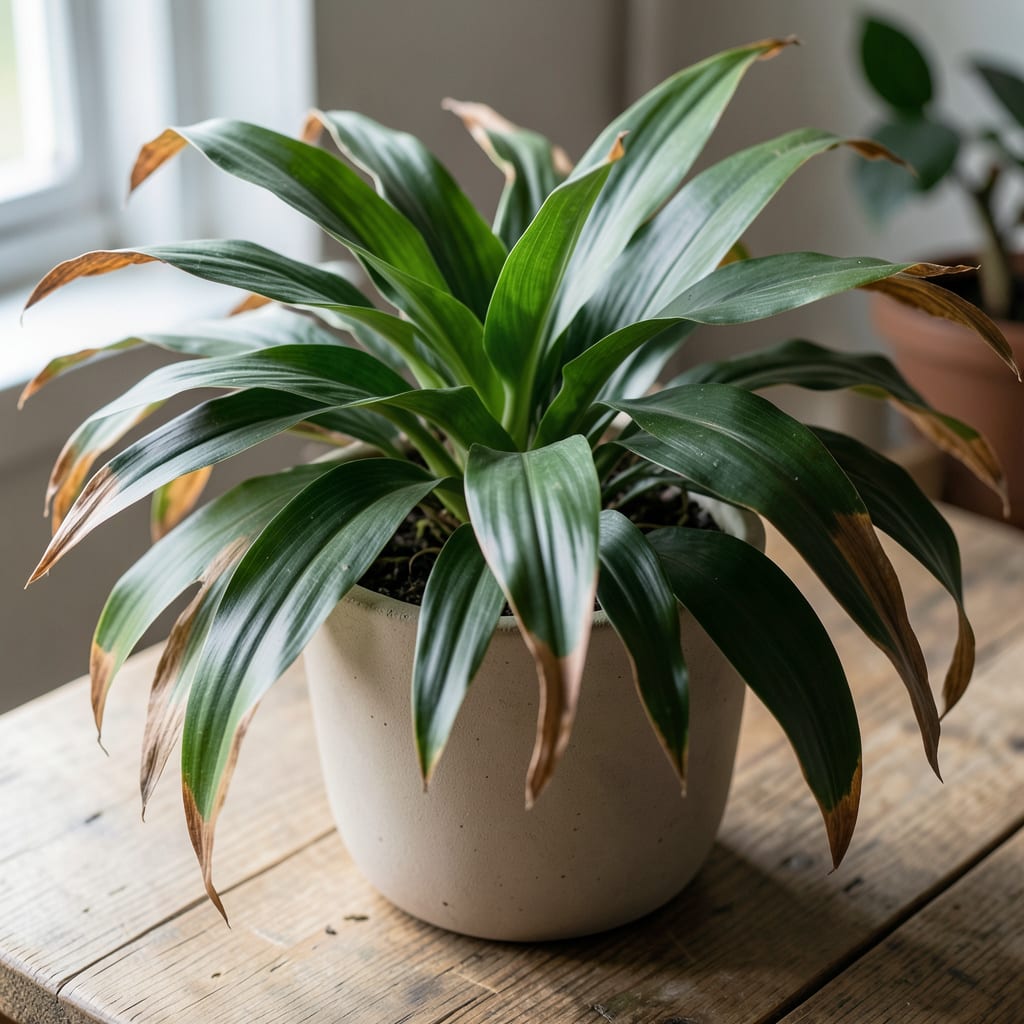
Those crispy brown tips on your Chinese evergreen aren’t a death sentence. I’ve nursed dozens back from the brink with some simple adjustments.
Most cases trace back to overwatering, dry air, or a nutrient imbalance. The plant’s telling you it needs a change—either in your routine or its environment.
With a few tweaks to watering, humidity, or soil, you’ll see new growth replacing the damage in 4-6 weeks. The key is acting before the problem spreads.
Works for all varieties, whether you’re growing them in bright indirect light or lower-light spots.
Brown tips on your Chinese Evergreen (Aglaonema) are a distress signal, often tied to environmental or care imbalances. Below are the most common causes, explained with actionable insights.
Chinese Evergreens thrive in 60-70% humidity. Dry air (common in heated or air-conditioned spaces) causes moisture to evaporate too quickly from the leaf edges, leading to brown, crispy tips. This is a classic symptom of transpiration stress, where the plant loses water faster than it can absorb it.
Root rot from soggy soil disrupts nutrient uptake, starving the leaves of essential resources. When roots suffocate, they can’t deliver water or minerals efficiently, and the oldest leaves (tips first) show damage. Ensure your pot has drainage holes and the soil dries slightly between waterings.
While Chinese Evergreens tolerate low light, intense sunlight scalds the leaf tips by breaking down chlorophyll. This photooxidative damage appears as brown, papery edges. Filtered or indirect light (1,000–2,000 foot-candles) is ideal.
Fluoride, chlorine, and salts in tap water accumulate in the soil, leading to tip burn. These chemicals interfere with the plant’s ability to absorb calcium and magnesium, causing necrotic tissue at the leaf margins. Use filtered or distilled water, or let tap water sit out overnight before using.
A lack of potassium or calcium often manifests as brown tips. Potassium regulates water movement within the plant, while calcium strengthens cell walls. If the soil pH drifts too high or low (ideal: 6.0–6.5), these nutrients become unavailable. A balanced, diluted fertilizer every 4–6 weeks can prevent this.
Here’s how to tackle each cause of browning tips on your Chinese evergreen and restore its lush, vibrant look.
Increase humidity around your plant by misting it daily or placing a tray of water with pebbles beneath the pot. Grouping plants together also helps. Prevention tip: Keep a small humidifier nearby for consistent moisture.
Check the soil: if it’s bone-dry, water thoroughly until it drains from the bottom. If soggy, let it dry out before watering again. Use a well-draining potting mix and a pot with drainage holes. Prevention tip: Water only when the top inch of soil feels dry to the touch.
Move your plant to bright, indirect light—avoid direct sun, which can scorch the leaves. If the room is too dark, supplement with a grow light. Prevention tip: Rotate the pot occasionally for even light exposure.
Flush the soil with distilled water to remove excess salts from tap water or fertilizers. Repot the plant with fresh soil if the buildup is severe. Prevention tip: Use filtered or rainwater for watering and fertilize sparingly.
Wipe leaves with a damp cloth to remove pests like spider mites or mealybugs. For fungal issues, trim affected areas and improve air circulation. Prevention tip: Inspect leaves regularly and keep the plant clean.
With these fixes, your Chinese evergreen will bounce back in no time! ✨
These plants thrive in 60-70% humidity. Dry air pulls moisture from the leaves too quickly, causing those crispy edges. A simple pebble tray with water can help boost humidity.
Water only when the top 1-2 inches of soil feel dry. Overwatering leads to root rot, which also causes brown tips. Always use pots with drainage holes.
Yes! Use clean, sharp scissors to snip off the brown parts, following the leaf’s natural shape. This improves appearance and prevents further damage from spreading.
Often not. Fluoride and chlorine in tap water can build up and burn the tips. Let tap water sit out overnight or use filtered water to avoid this.
