
Beautiful Plants For Your Interior
Beautiful Plants For Your Interior
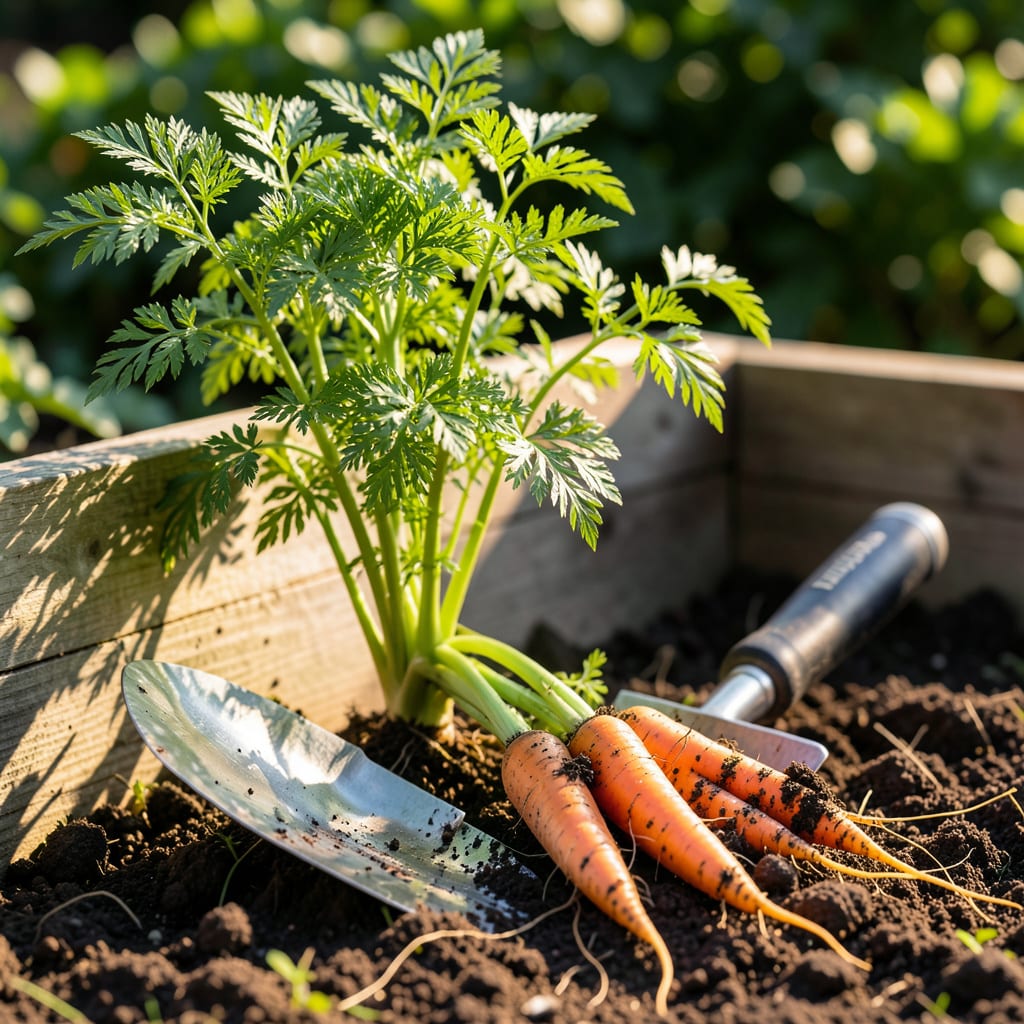
Ever pulled up a Carrot 🥕 only to find it underwhelming? Timing is everything when it comes to harvesting these root vegetables.
While most varieties take 50-80 days, visual cues often tell you more than the calendar. I’ll show you the most reliable signs your carrots are ready.


Not all carrots are created equal when it comes to maturity time. Different varieties have distinct growth rates and ideal harvest windows. I’ve grown everything from quick Nantes types to longer-season Imperators, and timing varies significantly.
Most gardeners don’t realize that soil temperature and day length can shift these timelines by 10-20 days. That’s why knowing your variety’s baseline is so important.
| Variety | Days to Harvest | Best For |
|---|---|---|
| Nantes | 50-60 days | Quick harvests, containers |
| Danvers | 65-75 days | Heavy clay soils |
| Chantenay | 70-80 days | Short roots, rocky soil |
| Imperator | 75-90 days | Long storage, classic shape |
The Nantes variety is my go-to for early harvests. These sweet, cylindrical roots are ready in as little as 50 days if conditions are ideal. They’re perfect for gardeners impatient for that first taste of homegrown flavor.
Danvers carrots take a bit longer at 65-75 days but handle heavier soils better than most. I’ve had great success with these in my slightly clay-rich garden beds. Their tapered shape makes them easier to pull from dense soil.
The Chantenay type is a workhorse at 70-80 days. These shorter, stockier carrots are my choice for rocky or shallow soils. Their blocky shape develops quickly, and they hold well in the ground if left a few extra days.
Imperator carrots are the marathon runners, needing 75-90 days to reach their full potential. These are the classic long, tapered carrots you see in stores. I always plant these for my main crop, as they store exceptionally well.
Remember that these are average ranges under ideal conditions. In cooler climates or during early spring plantings, add 10-15 days to these estimates. Conversely, warm soil can speed up maturity by a week or more.
I’ve found that succession planting every 2-3 weeks ensures a continuous harvest. Start with Nantes for early picks, then transition to Danvers and Chantenay for mid-season, finishing with Imperators for late summer storage.
This approach gives me fresh carrots from early summer through fall without any gaps in supply.
🌱You don’t need to dig up your entire carrot crop to check for readiness. I’ve learned that visual cues above the soil are just as reliable as any calendar estimate. The shoulder diameter is the first clue I look for.
When the top of the root (just below the foliage) reaches 3/4 to 1 inch wide, your carrots are likely ready. This measurement works for most varieties, though Imperators may need a bit more girth.
I always check the color at the soil line next. A vibrant orange hue peeking through the dirt is a sure sign of maturity. If it’s still pale or white, give them more time.
The foliage height is another good indicator. Most varieties show 6-8 inch tall tops when roots are ready. But be careful—overly tall foliage can mean they’ve passed their prime.
For container-grown carrots, I gently brush away soil at the base. If I see 1-2 inches of the root, and it looks thick and colorful, it’s time. This method works especially well with Nantes types in shallow pots.
A common mistake I see is harvesting too early when roots are still pencil-thin. These won’t have developed their full sweetness. Conversely, leaving them too long can lead to woody, tough textures—especially in hot weather.
I’ve found that morning harvests yield the sweetest, crispest carrots. The roots are most turgid after a cool night, making them easier to pull and more flavorful. Always use a garden fork to loosen soil first if your dirt is compacted.
🌿While variety plays a major role, I’ve found that growing conditions can significantly alter your carrots’ days to harvest. Even the same variety can mature 10-20 days faster or slower based on environmental factors.
Soil temperature is the biggest game-changer. Carrots grow best when soil is 60-65°F. In cooler springs, they may take 2 extra weeks to mature. Conversely, warm soil can speed up growth noticeably.
Soil Temperature: 60-65°F is optimal; cooler soils delay growth
Sunlight: 6+ hours daily ensures steady development
Watering: Consistent moisture prevents stunted or split roots
Sunlight exposure directly affects growth rate. In my experience, carrots receiving full sun (6+ hours) mature faster than those in partial shade. Shady spots can add 10-15 days to your timeline.
Watering consistency is crucial. I aim for 1 inch per week, keeping soil evenly moist. Too little water slows growth; too much can cause forking or splitting. Mulching helps maintain consistent moisture levels.
Planting density also matters. Overcrowded carrots compete for resources, often maturing 5-10 days later than properly spaced ones. I thin seedlings to 2-3 inches apart for best results. ☀️
Check the shoulder size and color at the soil line. Cool soil or partial shade can add 10-15 days to maturity. Be patient—rushing often results in pencil-thin roots with poor flavor.
Yes, but not indefinitely. Mature carrots hold well for 2-3 weeks in cool soil. In warm weather, they may become woody or bitter. Harvest before hard frosts or when temps exceed 80°F.
Soil temperature, sunlight, and variety all play roles. Nantes may ready in 50 days, while Imperators need 90 days. Consistent 1 inch weekly watering prevents delays.
Overmature carrots develop split roots or tough, woody textures. Check for cracked shoulders or foliage turning yellow. Harvest immediately if you notice these signs.
