
Beautiful Plants For Your Interior
Beautiful Plants For Your Interior
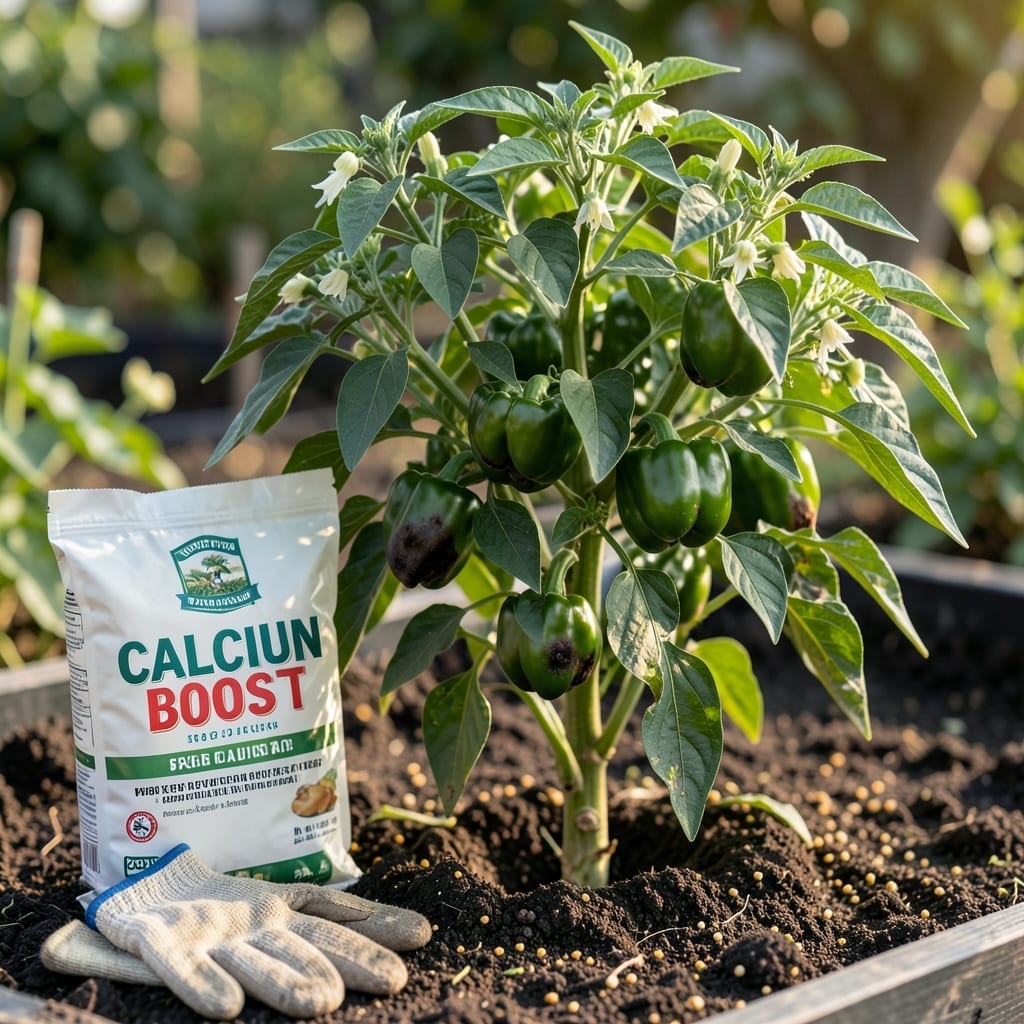
Your 🌶️ Pepper plants might be silently starving for calcium, a nutrient so vital that its absence can ruin an entire harvest before you even notice.
Recognizing the early signs and applying organic fixes can save your crop and boost future yields. What starts as subtle leaf discoloration can quickly escalate to blossom end rot.
Discover how to spot the warning signals and implement effective solutions before it’s too late. Let’s protect your plants together.
I’ve seen too many gardeners lose pepper plants to calcium deficiency simply because they missed the early warnings. This nutrient is critical for cell walls, so its absence hits hard and fast.
The first red flag is often new leaf distortion. Young leaves emerge cupped or hooked, looking more like claws than healthy foliage. This happens because cell division fails without calcium.
🌱 Signs of Calcium Deficiency in Peppers
| Symptom | Location | Description |
|---|---|---|
| Blossom End Rot | Fruit | Sunken, dark brown patches on pepper bottoms |
| Stunted Growth | Whole Plant | Slower than normal development, weak stems |
| Leaf Deformities | New Leaves | Cupped, misshapen leaves with pale edges |
| Necrotic Spots | Leaves | Small, dead tissue patches between veins |
| Weak Roots | Roots | Poor root development, reduced uptake of other nutrients |
Another telltale sign is blossom end rot, which appears as dark, sunken lesions on the bottom of developing peppers. This is the most heartbreaking symptom because it ruins otherwise healthy fruit.
Don’t confuse calcium deficiency with magnesium or potassium issues. Unlike those, calcium problems start at the newest growth and affect fruit quality most severely. Older leaves typically stay green.
Stunted growth is another common indicator. If your pepper plants seem shorter than they should be, with weak, spindly stems, calcium could be the culprit. This happens because cell elongation is impaired.
I always check for necrotic spots on leaves too. These brown or black patches appear between the veins, especially on younger leaves. It’s a sign that tissue is dying due to the lack of calcium.
Remember that uneven watering can mimic calcium deficiency. Peppers need consistent moisture to absorb calcium properly. If the soil swings from bone dry to soggy, the roots can’t take up nutrients effectively.
In my experience, the earliest sign is often overlooked: slow root development. If your seedlings have weak root systems, they may struggle to absorb calcium even if it’s present in the soil.
Catching these signs early gives you the best chance to save your pepper plants. The sooner you act, the less damage your harvest will sustain. ☀️
When I spot calcium deficiency in my pepper plants, I immediately turn to organic solutions that restore balance without harsh chemicals. These methods are safe, effective and often use household items.
The most popular fix is eggshell tea. I crush clean eggshells and steep them in warm water for 24 hours. This creates a calcium-rich liquid that I use to water my plants weekly.
🌱 Top Organic Calcium Fixes
Bone meal is another excellent option. I mix 1-2 tablespoons into the planting hole or sprinkle it around established plants. It releases calcium slowly over the growing season.
For quick results, I use foliar sprays. A solution of 1 tablespoon calcium chloride per gallon of water can be sprayed directly on leaves and fruit. This bypasses the roots for immediate uptake.
I also recommend gypsum for sandy soils. It adds calcium without altering pH, making it perfect for acid-loving plants. Apply 1 pound per 100 sq ft and water in well.
Remember that consistent soil moisture is key for calcium uptake. I maintain even watering to help my peppers absorb nutrients effectively. With these organic fixes, I’ve saved many pepper crops from deficiency. 🌿