
Beautiful Plants For Your Interior
Beautiful Plants For Your Interior
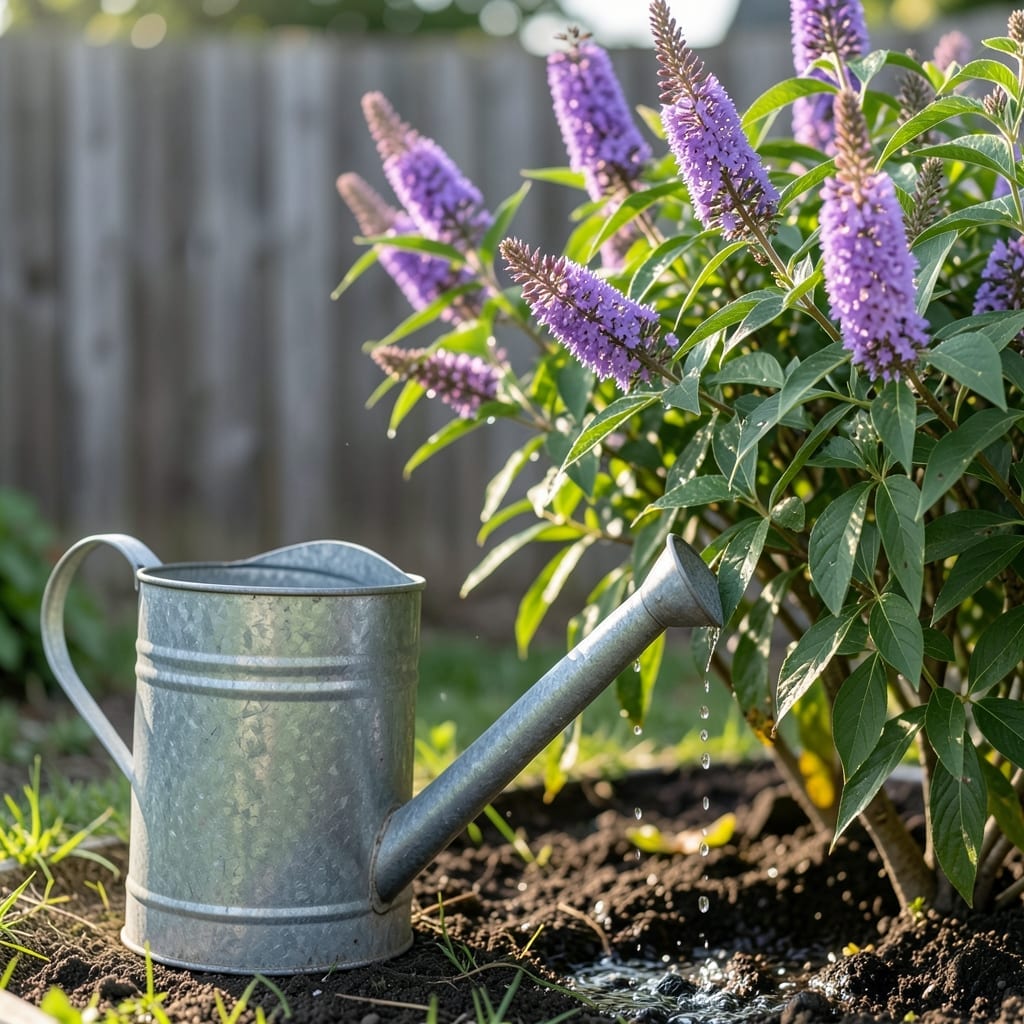
Butterfly bushes bring vibrant color and pollinators to any garden, but their water needs can make or break their growth. I’ve seen too many struggle with overwatering or drought stress.
The 🦋 Butterfly Bush thrives with a simple, consistent approach. Weekly deep soaks in spring and summer keep roots strong without drowning them.
Let me show you how to adjust for seasons, soil, and signs your plant is begging for a drink—or begging you to stop.


Butterfly bushes need consistent moisture but hate soggy roots. I’ve found the key is deep watering at the right intervals to encourage strong root growth.
In spring and fall, a weekly deep soak works perfectly, while summer heat demands more frequent attention. Always water in the early morning for best results.
| Season | Frequency | Water Amount |
|---|---|---|
| Spring | Weekly | Deep soak (1-1.5 gallons) |
| Summer | 2x per week | Deep soak (1.5-2 gallons) |
| Fall | Bi-weekly | Moderate soak (1 gallon) |
| Winter | Monthly | Light watering (0.5 gallon) |
Newly planted butterfly bushes need extra care the first year. I recommend watering every 3-4 days for the first month, then gradually reducing to the seasonal schedule.
Established plants are drought-tolerant but bloom best with regular water. During extreme heat, check soil moisture 2 inches down—if dry, water immediately.
Watch for drooping leaves or yellowing foliage, which often signal under-watering. Conversely, mushy stems or black spots may indicate overwatering and poor drainage.
In clay soil, water less often but deeply to prevent runoff. For sandy soil, increase frequency as it drains quickly. I always mulch around the base to retain moisture and regulate temperature.
Using a soaker hose or drip irrigation delivers water directly to the roots, reducing waste and preventing fungal issues on leaves. Avoid overhead watering, especially in humid climates.
If rainfall exceeds 1 inch per week, you can skip your scheduled watering. I use a rain gauge to track precipitation and adjust accordingly. This simple tool prevents overwatering during wet spells.
Remember, butterfly bushes are hardy but not invincible. A consistent schedule, adjusted for season and soil type, will keep yours thriving and buzzing with pollinators all season long 🌿
Butterfly bushes adapt to various soil types, but drainage is the game-changer. I’ve learned that clay soil holds moisture longer, requiring less frequent but deeper watering to prevent runoff.
Sandy soil drains quickly, so I increase watering frequency to 2-3 times weekly in summer. Loamy soil strikes the perfect balance, needing standard weekly deep soaks.
For poor drainage, I recommend amending soil with compost or planting on a slight mound. This prevents root rot while ensuring adequate moisture.
In container-grown butterfly bushes, drainage holes are non-negotiable. I use a well-draining potting mix and water when the top inch of soil feels dry.
During rainy seasons, I check soil moisture before watering. If the top 2-3 inches are damp, I skip the scheduled watering to avoid over-saturation.
Raised beds offer excellent drainage. I find they need 20% more water than in-ground plants due to faster drying, especially in hot climates.
Remember, yellow leaves often signal poor drainage, while wilting in dry soil indicates under-watering. Adjust your approach based on these cues.