
Beautiful Plants For Your Interior
Beautiful Plants For Your Interior
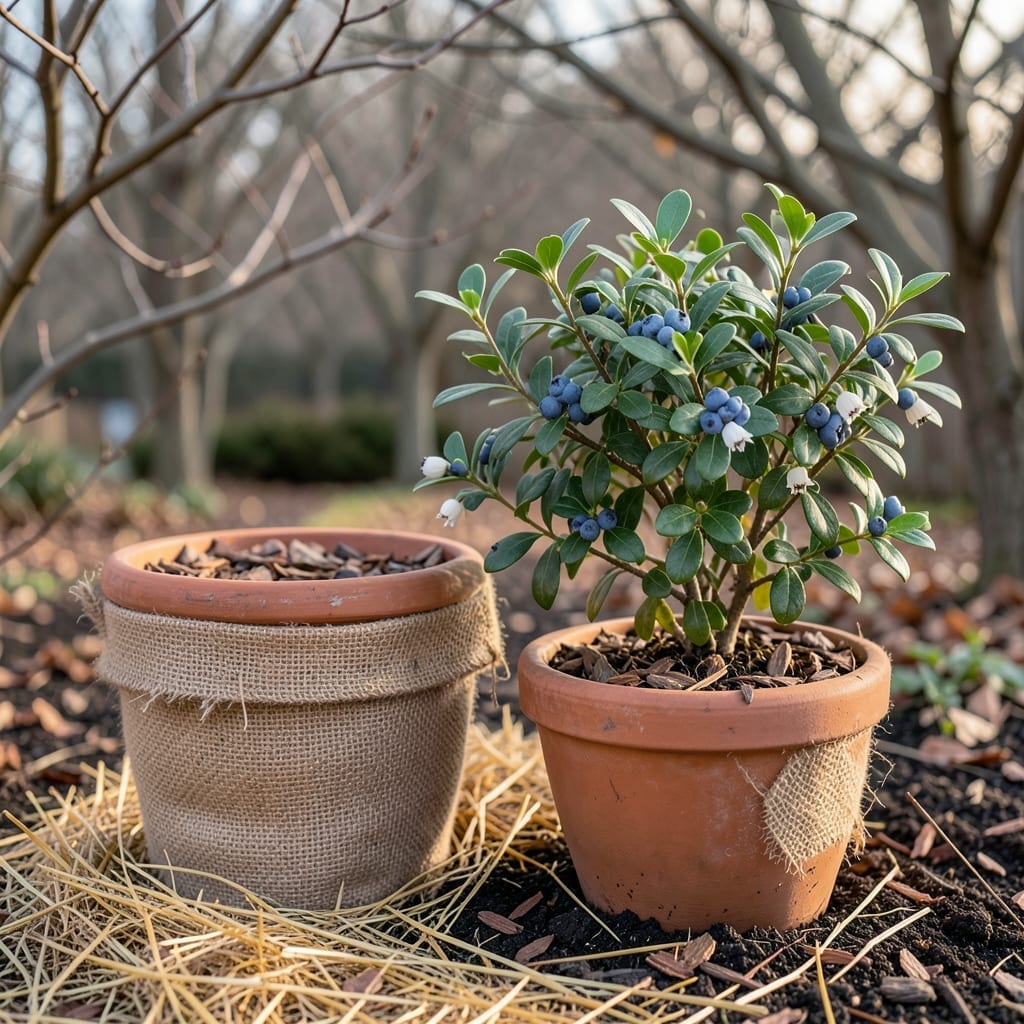
Winter doesn’t have to mean the end of your blueberry harvest. With the right care, potted 🫐 plants can thrive year-round, even in freezing temperatures.
I’ve seen too many gardeners lose their container blueberries to winter’s harsh conditions. The good news? A few simple adjustments can make all the difference.
From insulation tricks to timing your preparations, I’ll show you how to protect your plants. No more guessing if your potted shrubs will survive the cold.
Discover the proven methods to keep your blueberries healthy and productive, season after season. Let’s get started.
Winterizing potted blueberry plants starts with timing. I begin preparations 6 weeks before the first frost to give plants time to harden off. This means stopping fertilization and reducing watering to encourage dormancy.
First, I check the potting mix moisture—it should be dry to the touch before winter sets in. Overly wet soil can freeze and damage roots, so I adjust my watering schedule accordingly.
I always use insulating materials like bubble wrap or foam sheets to wrap the pots. This protects the root system from freezing temperatures, which is critical for survival.
For extra protection, I group my potted blueberries together and place them in a sheltered spot, like near a south-facing wall. This creates a microclimate that’s a few degrees warmer.
Mulching is another key step. I apply a 2-3 inch layer of pine bark or straw around the base of the plant. This helps retain soil warmth and prevents temperature swings.
During winter thaws, I check the soil moisture and water lightly if it’s dry. But I’m careful not to overwater, as soggy soil can lead to root rot in cold conditions.
If extreme cold is forecasted, I’ll temporarily move my pots to a garage or shed for a few days. This provides short-term protection from harsh freezing winds and subzero temperatures.
Finally, I avoid pruning in late fall—this can stimulate new growth that won’t harden off in time. Instead, I prune in early spring before new growth starts.
By following these steps, my potted blueberries stay healthy and ready to bounce back when spring arrives 🌱
Not all blueberry bushes handle winter equally well in potted environments. I’ve found that selecting cold-hardy cultivars is key to ensuring your plants survive and thrive through freezing months.
Varieties like ‘Top Hat’ and ‘Patriot’ are excellent choices for container gardening due to their compact size and ability to withstand sub-zero temperatures. These types are bred to tolerate USDA zones 3-7.
| Variety | Hardiness Zone | Mature Height |
|---|---|---|
| Top Hat | 3-7 | 1-2 ft |
| Patriot | 3-7 | 4-6 ft |
| Pink Lemonade | 4-8 | 4-5 ft |
For smaller spaces, I recommend ‘Top Hat’ because it stays compact and produces abundant fruit even in limited root space. It’s perfect for patio containers and doesn’t require much pruning.
‘Patriot’ is another favorite of mine for its vigorous growth and high yield. It’s highly resistant to cold snaps and can handle temperatures as low as -25°F with proper protection.
If you’re in a milder climate, ‘Pink Lemonade’ offers a unique twist with its pink berries and semi-dwarf habit. It’s less cold-hardy but still a great option for zones 4-8.
Remember, even the hardiest varieties need winter care. I always mulch heavily and move pots to a sheltered location to prevent root damage from freezing and thawing cycles. 🌱