
Beautiful Plants For Your Interior
Beautiful Plants For Your Interior
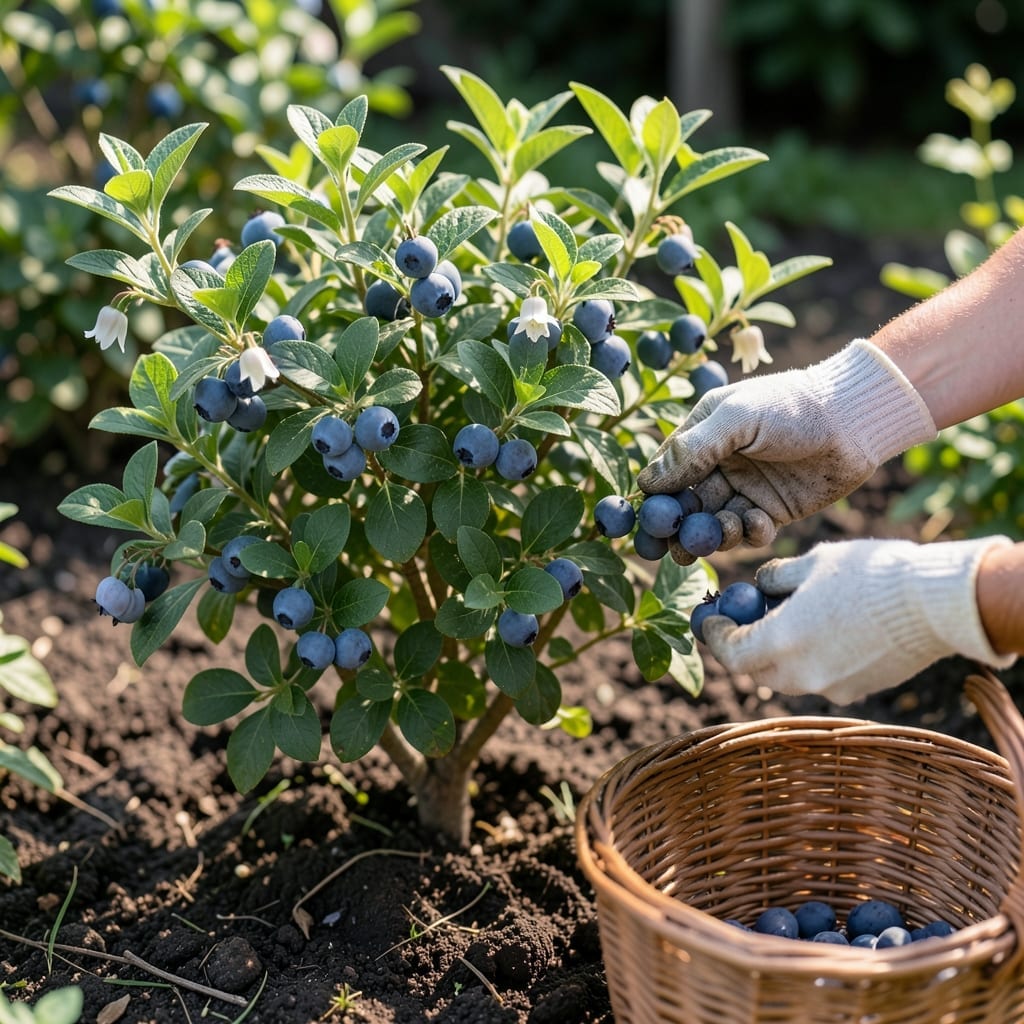
There’s nothing worse than biting into a tart blueberry when you were expecting sweet perfection. The 🫐 difference between an underripe and perfectly ripe berry can turn your harvest from disappointing to delicious.
Timing your blueberry harvest right means paying attention to more than just color. While that deep blue hue is a good start, the real clues lie in texture and taste.
I’ve learned that even fully blue berries can still be sour if they’re not quite ready. The key is knowing what to look for beyond just appearance.
Let me show you exactly how to identify when your Blueberry bushes are at their peak for picking. Your taste buds will thank you.

I’ve found that blueberry harvest time starts with watching the color progression on the bush. Berries transition from green to red, then to deep blue as they ripen. But don’t rely on color alone—uniform ripeness across the cluster is key. 🌿
A glossy skin often signals peak ripeness, while a dull finish might mean they’re past their prime. Some varieties develop a red blush near the stem, which is a great visual cue. I always check multiple berries in a cluster to confirm consistency.
| Ripeness Stage | Visual Cue | Harvest Readiness |
|---|---|---|
| Early | Green to red color | ❌ Not ready |
| Mid | Purple-blue with red blush | ⚠️ Check texture |
| Peak | Deep blue and glossy | ✅ Ready to pick |
| Late | Dull blue or wrinkled | ❌ Overripe |
I always look for that deep blue hue that covers the entire berry. If there’s still green or red near the stem, it’s not quite ready. The glossy appearance is another sign of peak sweetness, while dullness can indicate overripeness.
Another trick I use is the cluster check. Blueberries ripen at slightly different times, even on the same bush. I examine the whole cluster to ensure most berries are uniformly blue before harvesting. This prevents picking some underripe while leaving others too long.
Don’t forget the red blush indicator. Many blueberry varieties, like Bluecrop, develop a slight red tint near the stem when fully ripe. This is nature’s way of saying, “I’m ready!” It’s a subtle but reliable sign I’ve come to trust.
The skin texture also tells a story. A ripe blueberry will have a smooth, taut skin that almost glows. If it looks wrinkled or shriveled, it’s likely past its prime and may taste mealy or fermented.
I’ve learned that color uniformity is just as important as the shade itself. A berry that’s half green, half blue isn’t ready, even if parts of it look ripe. Patience is key—waiting a few more days can make all the difference in flavor.
For home gardeners, I recommend daily checks as harvest time approaches. Blueberries can go from perfectly ripe to overripe in just 2-3 days, especially in warm weather. A quick walk through the garden each morning helps me catch them at their peak. ☀️
Finally, remember that regional climate affects ripening. In cooler areas, blueberries may take longer to reach full color, while hot climates can speed up the process. Adjust your expectations based on your local conditions and the specific variety you’re growing.
I always remind gardeners that color alone isn’t enough to determine blueberry harvest time. Even deep blue berries might still be tart if they’re not fully ripe inside. That’s why I rely on the squeeze test and stem check for confirmation. 🌿
Gently press a berry between your fingers—it should feel firm but slightly soft, not hard. If it squishes easily, it’s likely overripe. Next, give it a light tug. A ripe blueberry will detach easily from the stem without resistance.
The flavor test is my favorite method. Sample a few berries from different clusters. A perfectly ripe blueberry will have a balanced sweetness with just a hint of tartness. If it’s sour, wait a few more days.
One common mistake I see is picking berries too early because they look blue. Remember, blueberries often develop a dull, powdery coating called bloom when fully ripe. This natural protective layer is a great visual indicator of readiness.
For the best results, check your bushes every 2-3 days during peak season. Blueberries don’t ripen uniformly, so you’ll likely need multiple harvests. I find that morning picking works best when berries are cool and firm.
If you notice birds eyeing your crop, it’s probably time to harvest. Wildlife often knows the perfect timing better than we do. Just be sure to act quickly to protect your hard-earned berries from becoming a feast for the birds. ✂️