
Beautiful Plants For Your Interior
Beautiful Plants For Your Interior
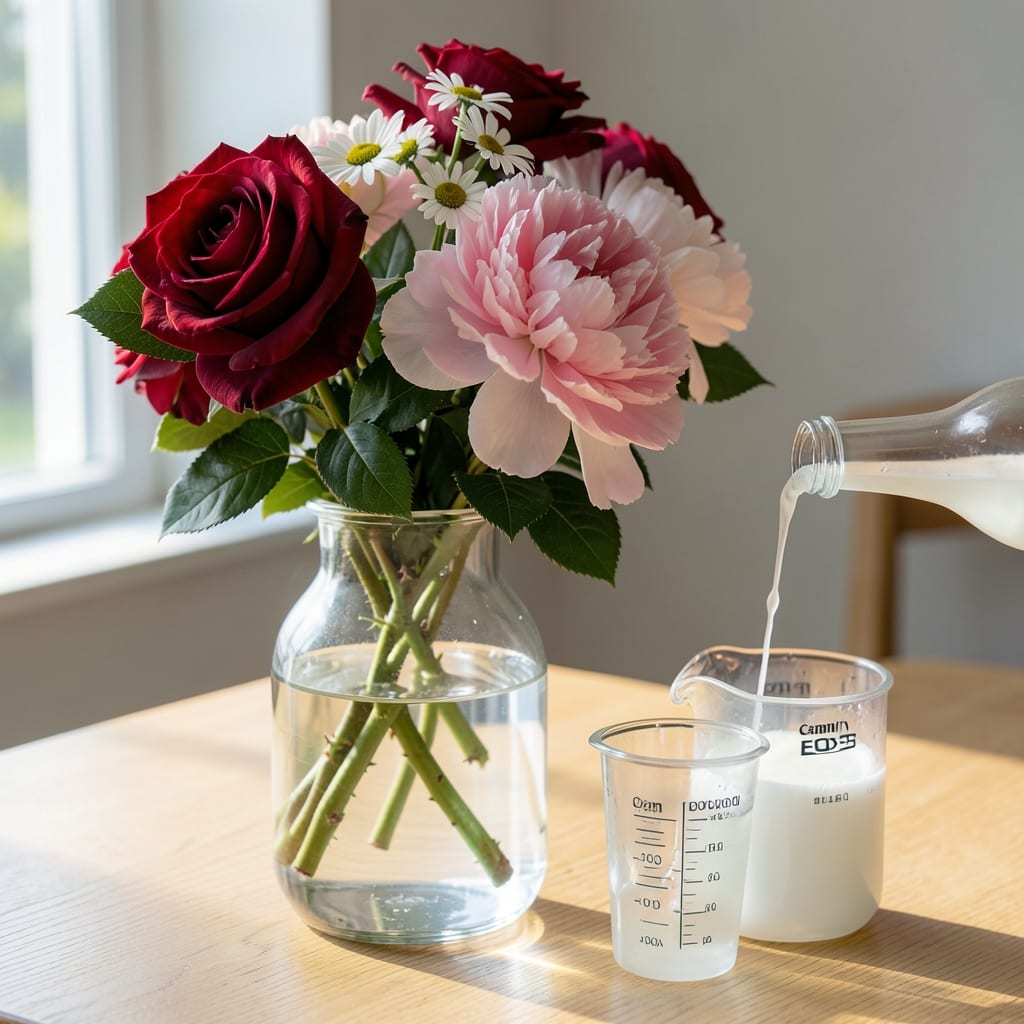
Bleach works by releasing hypochlorous acid in water, which disrupts bacterial cell walls. These microorganisms multiply rapidly in vase water, clogging stem xylem vessels that transport water to petals. The 1/4 teaspoon per quart ratio creates just enough chlorine to inhibit growth without damaging plant tissues. 🔥
Stem blockage is the primary killer of cut flowers. As bacteria colonize the cut surface, they form a slimy biofilm that prevents water absorption. This is why florists often recut stems before arranging—it removes existing blockages. Bleach essentially prevents this biofilm from reforming.
The solution’s pH also matters. Bleach raises water alkalinity slightly, which helps preserve flower pigments. However, too much (over 1/2 teaspoon per quart) can bleach petals and burn stem tissues. I’ve seen roses turn white at the edges when exposed to excessive chlorine. ✨
For maximum effectiveness, change the bleach solution every 2-3 days. This removes accumulated organic matter that would otherwise deplete the chlorine. Also, use room temperature water—cold water slows chlorine activation, while hot water can damage flowers before the bleach takes effect.
This method works particularly well for hardy flowers like carnations and chrysanthemums. More delicate blooms like tulips may show chlorine sensitivity sooner. Always test on a single flower first if you’re unsure about a particular species’ tolerance. 💫
Use 1/4 teaspoon per quart of room temperature water. This small amount effectively kills bacteria without harming your flowers. Exceeding 1/2 teaspoon risks damaging petals and stems.
Bleach is stronger against bacteria but requires precise measurement. Vinegar is gentler but needs sugar added to nourish blooms. Both extend vase life, but bleach works faster for heavily contaminated water.
Replace the solution every 2-3 days to maintain effectiveness. This prevents organic buildup from depleting the chlorine and keeps stems unclogged. Always recut stems when changing water.
Tulips and other sensitive flowers may react poorly to chlorine. Start with half the recommended amount and monitor for 24 hours. If petals discolor or wilt, switch to a gentler preservative like vinegar.
Excess bleach can bleach petals (turning them white) and burn stem tissues. Roses often show edge browning first. If you overdo it, immediately rinse stems and place in clean water.